

What winter here does to a heat pump
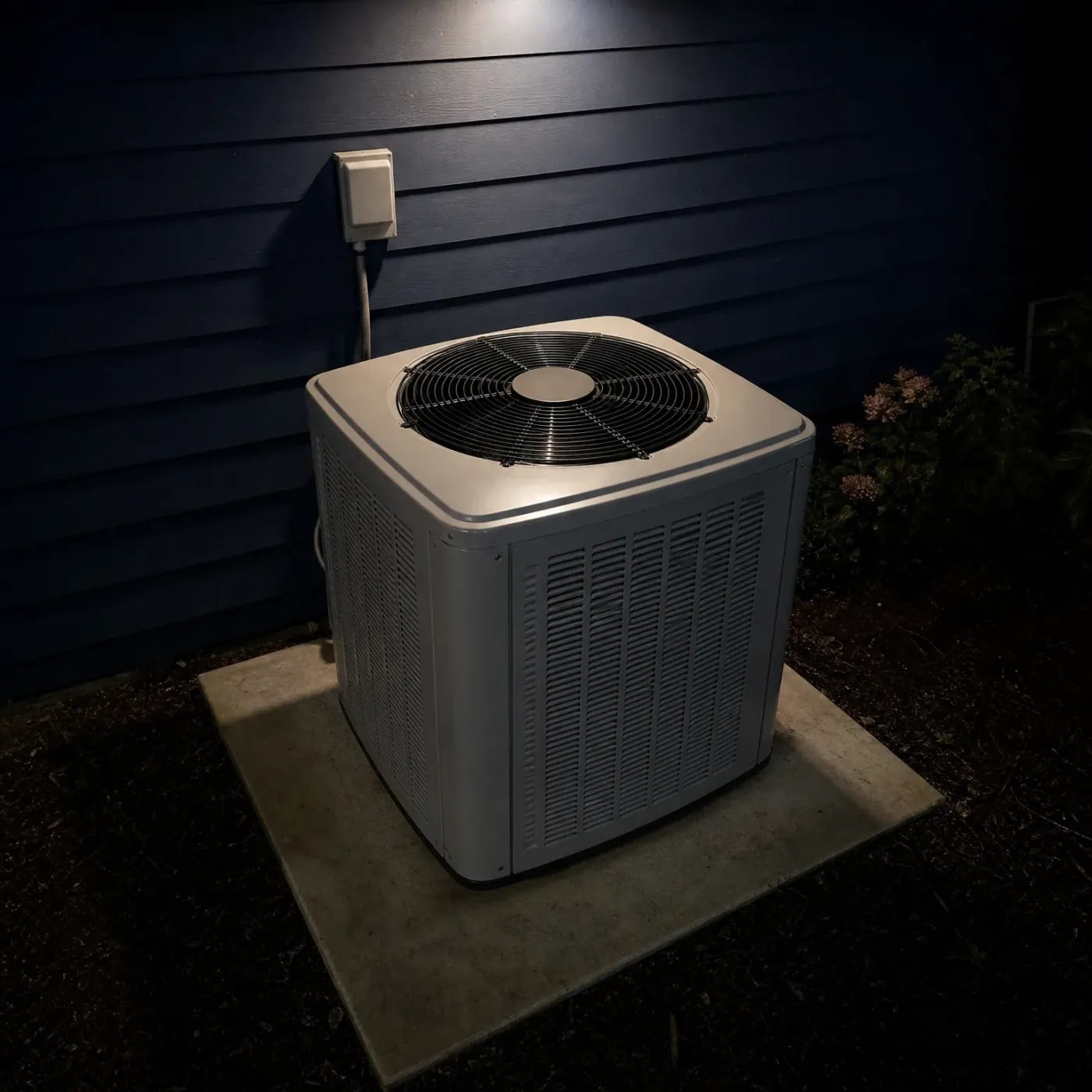
Your heat runs seven months a year here, October through April, and the overnight low averages 27°F across the three coldest months. That number matters because of where a standard heat pump starts to struggle. Below 40°F it puts out less heat than its rating says. Below about 35°F it often needs backup heat to make up the difference. Montgomery County's average winter low sits under both marks.
This is not a few bad nights. The overnight low falls to freezing or below about 90 nights a year, close to half the nights across the whole heating season, and every one of those nights is already past the point where a standard heat pump is working harder than its rating suggests. The cold doesn't show up as a rare event here. It shows up most of the winter.
It rarely gets extreme. Nights at 0°F or below happen fewer than one time a year, so the backup heat a cold-climate heat pump carries is not fighting Arctic cold, just a long stretch of ordinary chill. Field tests of cold-climate models bear this out: across two winters of occupied homes, backup heat covered only a small share of the heat made between 0°F and 35°F, and the unit running on backup alone was rare even above 0°F. A heat pump built and rated for cold climates, carrying the ENERGY STAR Cold Climate mark, is tested to hold at least 70 percent of its 47°F output at 5°F. A standard heat pump isn't built or rated for that, and this county's winter asks for it most nights.