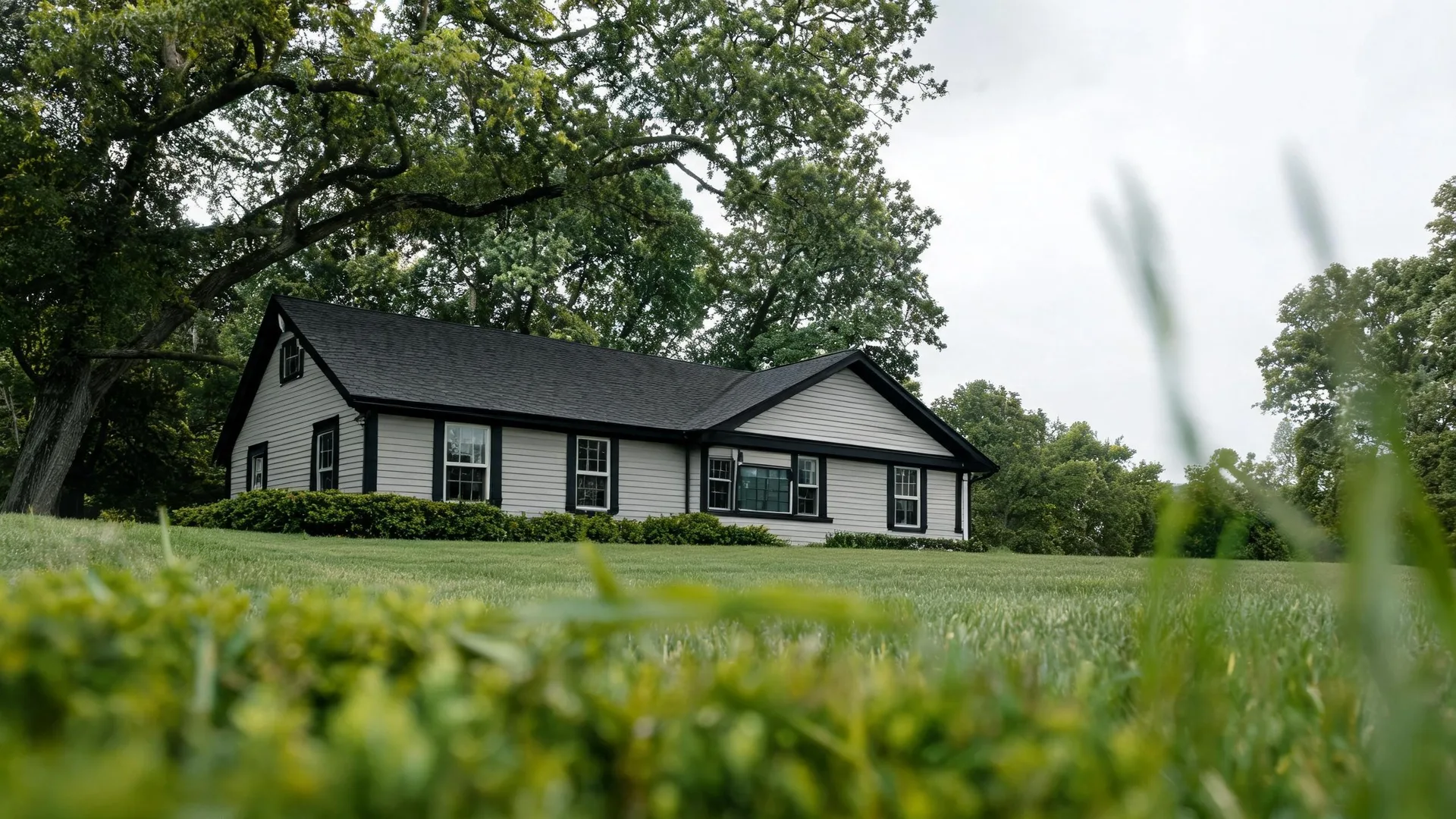
A single-story white house with black roof shingles and black window trim stands on a mown lawn, framed by large deciduous trees and blurred grass in the foreground under an overcast sky.

Heat Pump Repair in Gaithersburg, MD

Tell us about the job

Takes about a minute. No obligation.

RepairHeat PumpMontgomery County, MD
Step 1 of 2

What ZIP code is the job in?

May is when a weak heat pump shows itself

Heat pumps in Gaithersburg switch over to cooling in June. The strain of that first real heat load is what pushes a weak capacitor or low charge into a full stop, so trouble often starts in May, before the season even begins.

Get it looked at before the heat sets in

A heat pump that struggles in September will struggle again in October when heat season starts. Calling before the system has to carry a full day's heat gives a contractor room to diagnose it right instead of patching it under pressure.

7 months
October through April, your system heats
4 months
June through September, it cools
27°F
the average winter night it heats against
85°F
the average summer afternoon it cools against
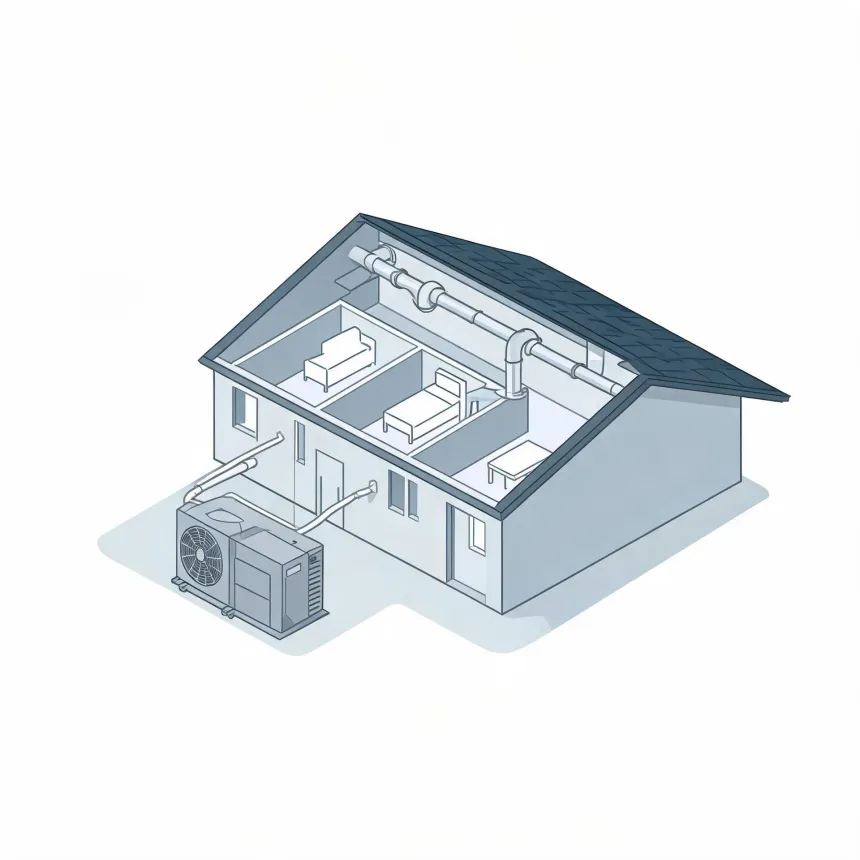
Isometric line illustration of a cutaway single-story house showing interior rooms with furniture and attic ductwork connected to an outdoor condenser unit beside the building.
Your system heats October through April and cools June through September.

NOAA nClimDiv, 1991–2020 normals

Montgomery County asks real work of a heat pump in both directions, but nothing about winters here is unusual for one.

When a heat pump struggles, it's almost always a weak capacitor, a low charge, or a part wearing out, the same cause it would be anywhere.

Electricity here runs 17.86 cents a kWh, so a heat pump limping along costs you more every month it waits

Power costs 17.86 cents a kWh statewide
443 damaging wind events from 2015 to 2024
58 hail events from 2015 to 2024

A heat pump that's short cycling or running constantly is pulling power the whole time it does it. That cost doesn't wait for a convenient month. If yours has been running rough for a week or two already, the meter has been turning the whole time, at a higher rate than most states pay. Waiting to see if it gets better usually just means paying more to find out it didn't. Getting a contractor to find the actual part at fault, the capacitor, the charge, whatever it turns out to be, stops that cost where it is instead of letting it run through another bill.

Half the homes in Montgomery County were built in 1980 or later. If yours is one, repair makes sense.

A heat pump that came with a newer house usually still has life left in it. The job is finding what's actually wrong with it now, not replacing a system that isn't done yet.

Find a contractor
A man in a faded olive work shirt and dark trousers climbs porch steps toward a navy front door, carrying a green canvas tool bag in his right hand, with a potted shrub in a blue planter beside the door.
A gray heat pump outdoor unit mounted on a concrete pad next to a residential house with lap siding and stone accents.

Worth fixing, not worth replacing

If your heat pump came with the house, get the actual fault diagnosed before anyone talks replacement. A contractor can check the capacitor, the charge, the contactor, whatever's failing, and most of the time that part gets swapped and the system runs out the rest of its life.

What you can check yourself

Look at the outdoor unit first. If the fan isn't spinning or the coil is packed with leaves and debris, clear it and see if that was the whole problem. Check the thermostat batteries and settings, and look at the breaker panel for anything tripped. Inside, pull the air filter and hold it up to light. If you can't see through it, swap it out. A clogged filter can make the whole system struggle and look like a bigger failure than it is.

What to leave alone

Don't open the outdoor unit's electrical panel or touch the refrigerant lines. A low charge has to be measured and refilled by someone licensed to handle it, and guessing at it can damage the compressor. If the unit is icing over, turn it off and let it thaw rather than chipping at the ice, then get someone to find out why it formed in the first place.

A heat pump that's struggling doesn't fix itself by staying on. Short cycling puts the compressor through a start every few minutes. That start is what wears a compressor down, not the running. Ice on the outdoor coil blocks airflow, so the system pulls harder to move the same heat, and the ice builds faster because of it. A refrigerant leak behaves the same way. The charge that's low today is lower next week, and a compressor run low on charge for too long can fail outright instead of just underperforming. A few more days of running rough rarely leaves things where they started. It usually turns a small repair into a bigger one.

Most heat pump failures come down to one part, not the whole system. A capacitor weakens. A contactor pits and sticks. A sensor drifts out of calibration. The fix is swapping that one piece. What makes a system worth replacing is different. That's a compressor that's failed outright, or a leak inside the coil itself rather than at a fitting. Those sit inside the sealed part of the system, and that part can't be swapped on its own. If a contractor checks it and the compressor still turns and the coils are sound, whatever else is wrong is almost always worth fixing. Age by itself doesn't fail a heat pump. A bad part does, and parts get replaced one at a time.