A row of white Colonial-style houses with glowing windows photographed at dusk along a road bordered by a stone wall.

Furnace Repair in Gaithersburg, MD

Tell us about the job

Takes about a minute. No obligation.

RepairFurnace or heatingMontgomery County, MD
Step 1 of 2

What ZIP code is the job in?

The first cold snap finds the weak part

Furnace here sits idle most of the year, then starts running in October and keeps going through April. Whatever was already weak in yours, a cracked heat exchanger, a failing igniter, a clogged flame sensor, tends to show itself in those first weeks when the system finally has to work.

September is a quieter time to catch it

Once heat season starts in October, every furnace in the area is running at once and a tech is working through a backlog. In September a repair is a plain diagnosis, done before the system is under load and before a small problem has months to turn into a bigger one.

7 months
October through April, your furnace is on duty
27°F
the average winter night it heats against
53%
of homes here heat with gas, so most furnaces here burn gas
23 winter storms
in ten years, the nights a failure hurts most
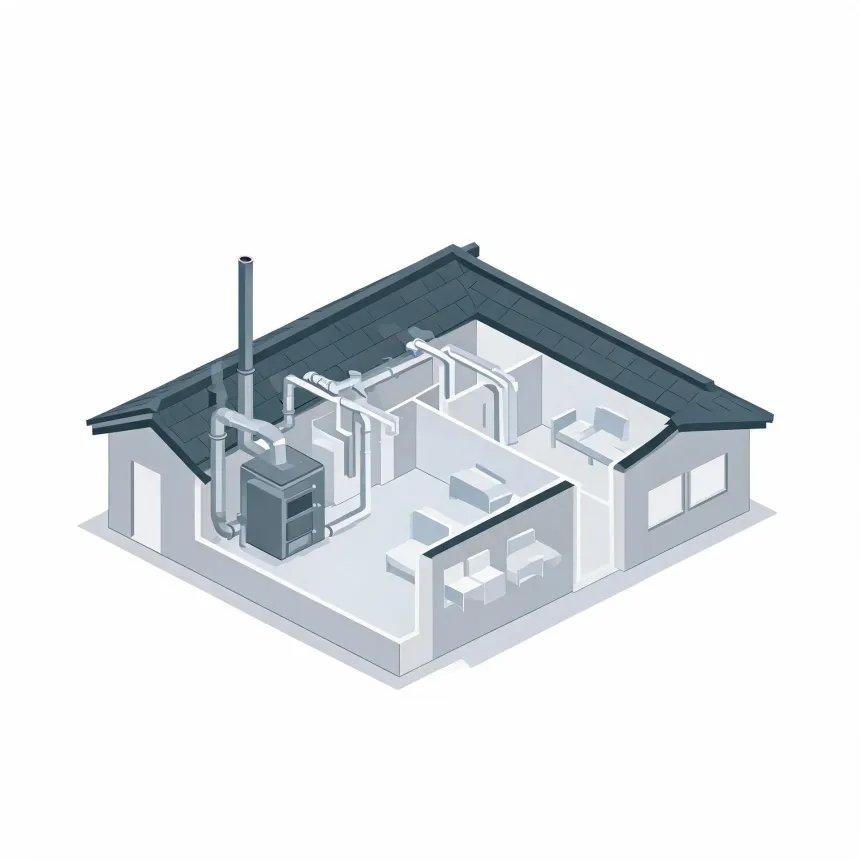
Isometric cutaway illustration of a single-story house showing interior rooms with a dark furnace unit, connected ductwork, a vertical flue pipe through the roof, and simple furniture, on a white background.
Your furnace works hardest from November through March.

NOAA nClimDiv, 1991–2020 normals

An igniter fails by wearing out a little more every time it heats and cools.

A furnace that lit fine all last season can just stop working on a cold morning once that igniter finally gives out.

Half the furnaces in Gaithersburg are younger than you'd think

Half the homes here were built by 1980
Heat runs October through April
Winter nights average 27°F
Gaithersburg furnaces don't fail because of the weather here443 damaging wind events in Montgomery County between 2015 and 2024, and none of them are why your furnace quit

If your furnace came with a newer house, repair is usually the better call rather than a sign to start pricing a new system. A furnace built in the last several years generally has the parts to be fixed, not replaced. A cracked heat exchanger is the one real exception, since that's a safety issue rather than a repair job. Short of that, a failing igniter, a dirty flame sensor, a bad blower motor are normal wear items on a system that still has years ahead of it. Worth asking whoever comes out how old the unit actually is before any talk of replacing it.

Get it looked at early

Problems tend to show up in the first weeks of the season, when the load hits a part that was already weak.

Find a contractor
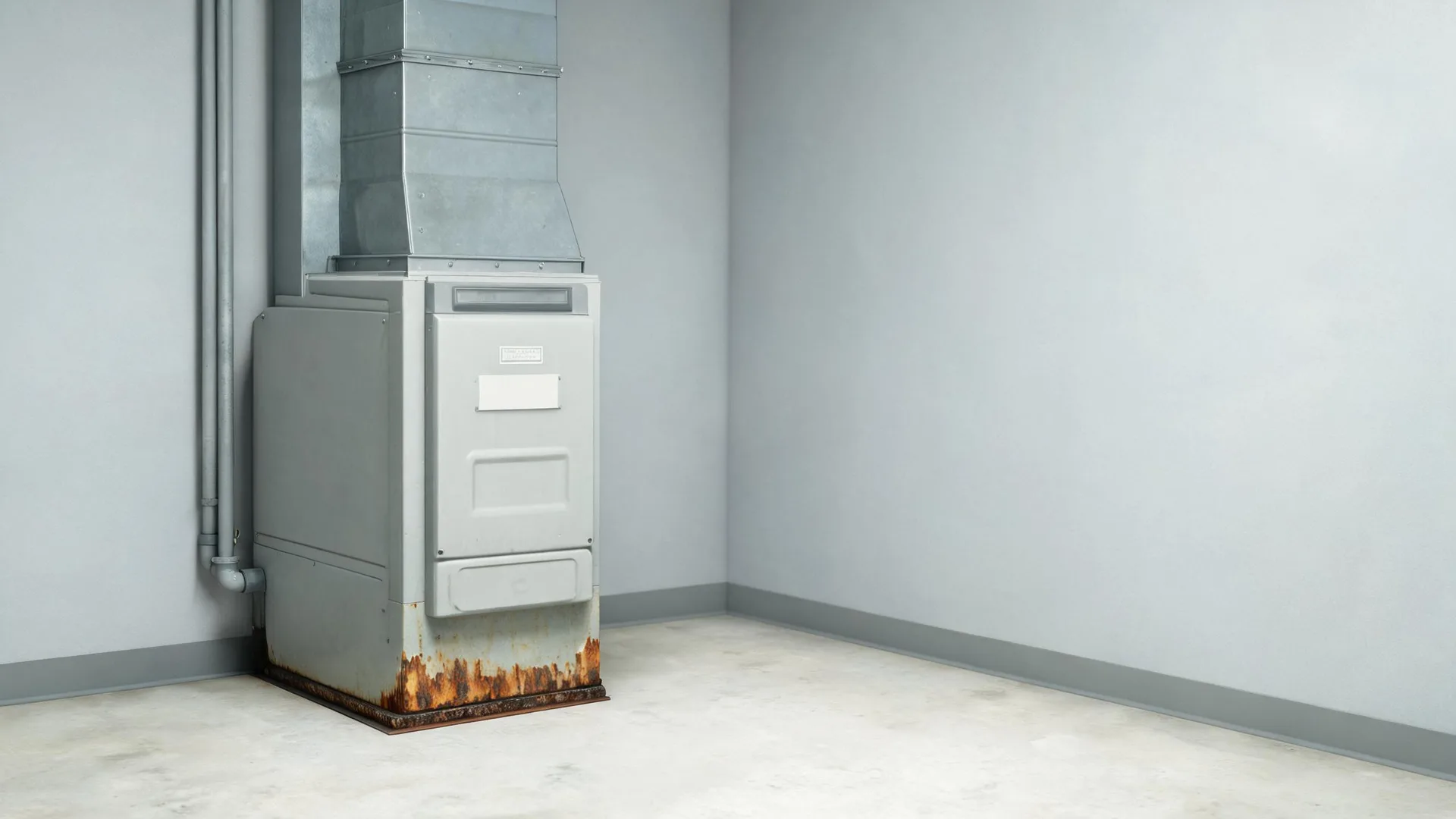
A gray residential gas furnace installed in an unfinished basement, connected to sheet-metal ductwork and PVC pipes.

What to check before you call

Before you pick up the phone, check the thermostat is set to heat and the temperature is set above room temperature, not just on. Look at the filter. If it's gray and clogged, swap it, since a blocked filter starves the burner of air and can shut the whole system down on its own. Go to the furnace itself and check for a light. Most have a small window showing the igniter glow or flash a code. Make sure the power switch next to the unit, the one that looks like a light switch, is flipped on, and that the breaker hasn't tripped. If you have a gas furnace, check the gas valve is open. None of this fixes a cracked heat exchanger or a failing blower motor, but it rules out the simple stuff first.

A limit switch starts tripping the furnace off

When a furnace can't move enough warm air past the heat exchanger, the limit switch shuts the burner down to keep it from overheating. Run it anyway and that switch trips over and over, each time stressing the same metal. What started as a dirty filter or a weak blower motor ends up as a cracked heat exchanger.

A cracked heat exchanger only gets bigger

A heat exchanger cracks from metal flexing as it heats and cools, and every cycle after that crack forms makes it a little wider. A furnace that keeps running on a cracked exchanger is also pushing combustion gas somewhere it shouldn't go. That one doesn't wait for a convenient time to get looked at.

A gray forced-air furnace with sheet-metal ductwork stands in an unfinished basement with exposed wooden joists, concrete walls, and a hanging incandescent bulb.

A new furnace would cut about $130 a year off heating for a typical Montgomery County home.

  • A new high-efficiency furnace$570 a year
  • An older furnace$700 a year

Estimates for a typical Montgomery County home, compared with an older unit built to the previous federal minimum, from EIA household energy data, Maryland fuel prices and NOAA climate normals. Your home will differ.

Repair makes sense when one part has failed and the heat exchanger is sound.

Replacement makes sense when the heat exchanger is cracked or the furnace keeps needing parts.

A tech starts by asking what the furnace is doing, or not doing, before touching anything. Short cycling, no heat at all, a smell, a sound, a code blinking in that little window. Then it's a flame sensor pulled and checked, igniter tested for resistance, blower wheel looked at for dust buildup, and the heat exchanger inspected for cracks or rust-through. Pressure switches and limit switches get checked too, since those will shut a furnace down long before anything looks obviously wrong. Most of this is done with the panels off and a multimeter in hand, not guesswork. By the time the diagnosis is done, you should know exactly which part failed and why, not just that something did.