


A two-story red brick house with black shutters and a dark roof sits on a mown lawn behind a long dry-stacked stone wall, framed by large deciduous trees under an overcast sky.

Heat Pump Maintenance in Gaithersburg, MD

Tell us about the job

Takes about a minute. No obligation.

Tune-up, service, or cleaningHeat PumpMontgomery County, MD
Step 1 of 2

What ZIP code is the job in?

A heat pump that's low on charge or working against a dirty coil has to run longer to reach the same temperature. That extra runtime is what shows up on the bill. Maryland homes paid 17.86 cents per kilowatthour in 2024, well above what a lot of the country pays, so a system working harder than it needs to costs more here than it would somewhere with cheaper power. A heat pump that's maintained keeps its coils clear and its charge correct, which means it's not fighting itself to move heat in and out of the house. Over a full year of running, that difference adds up.

Your heat pump runs both sides of the year here, pushing heat out all summer and pulling it in all winter.

One visit a year keeps the coil and the charge right for both jobs, so there's no need for a spring and a fall appointment.

One storm can cut the power, not the planMontgomery County saw 443 damaging wind events between 2015 and 2024.

Between visits, keep the area around the outdoor unit clear. Leaves, grass clippings and mulch pull into the coil and block airflow, and a fence or shrub too close does the same thing. Check the outdoor coil now and then for dirt or matted debris and hose it off gently if you see buildup, with the power off. Inside, look at the air filter and change or clean it when it's dirty rather than on a set schedule, since a clogged filter makes the whole system work harder on both the heating and cooling side. If you ever see ice building up on the outdoor unit that doesn't clear on its own, or the system is running constantly without getting the house to temperature, those are signs to get a technician out rather than wait for the next scheduled visit.

A tune-up costs less than the power a struggling heat pump wastes

A heat pump low on charge or caked with dirt runs longer to do the same job, and in Maryland that extra runtime is billed at 17.86 cents per kilowatthour. A yearly check keeps the coil clear and the charge right, so the system isn't working against itself all year.

Find a contractor
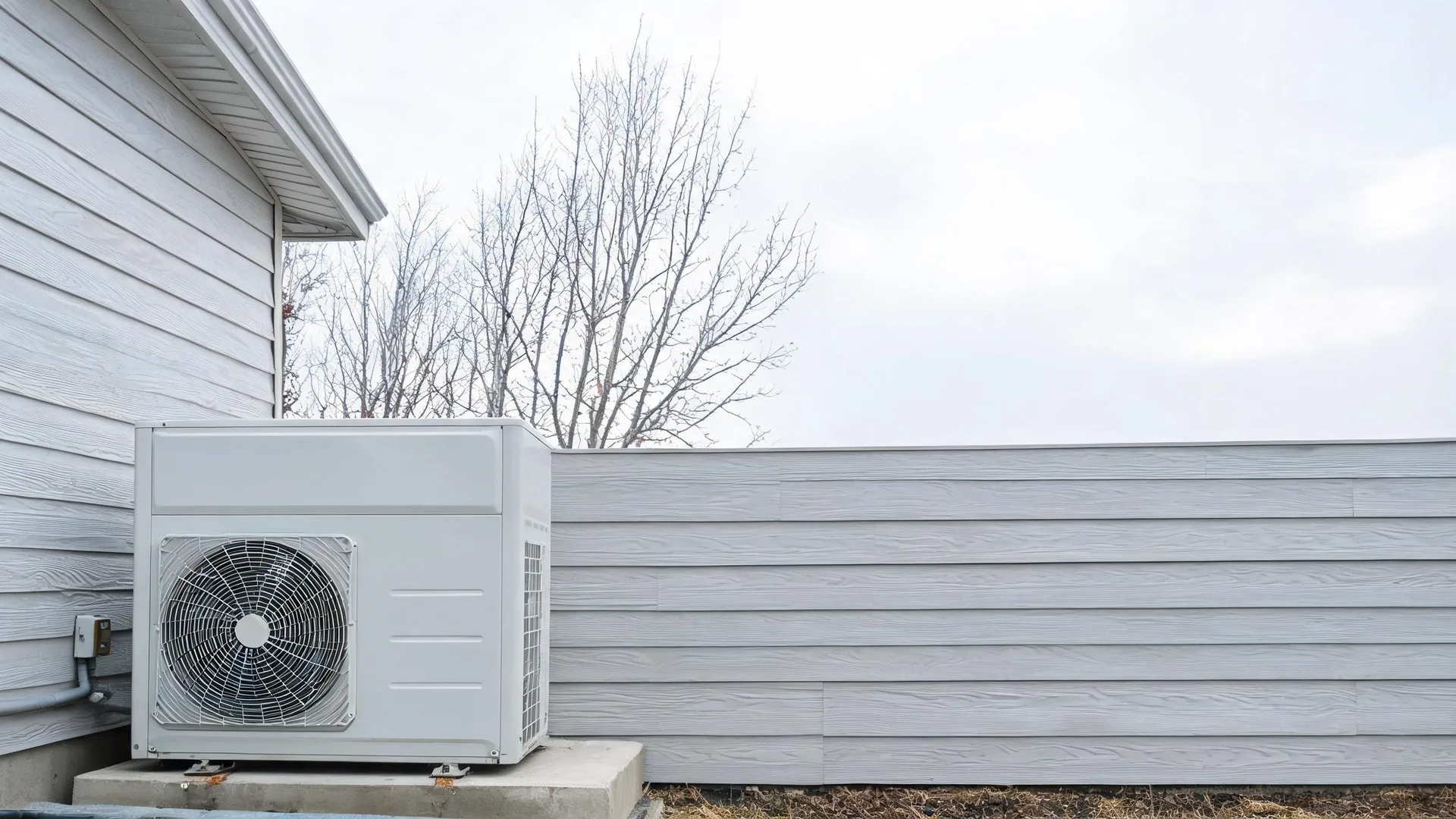
A residential heat pump outdoor unit mounted on a concrete pad next to a house with gray vinyl siding.

A newer system still needs the yearly check

Half the homes in Montgomery County were built in 1980 or later. If yours is one of them, the heat pump itself may not be original, but whatever is running now still has a working life ahead of it. A yearly check is what gets it there. Catching a low charge or a dirty coil early means the system spends its years running the way it was built to, instead of losing efficiency a little at a time until something fails outright.

The reversing valve sticks when it never gets exercised

A heat pump that's never serviced tends to fail at the switch between heating and cooling. The reversing valve can stick in one position, and the first sign is often a system blowing cold air in heating mode or warm air in cooling mode. A technician checking it yearly catches a sluggish valve before it strands the system on one side of the year.
A refrigerant leak gets worse, never better

Refrigerant doesn't get used up. If a heat pump is low on charge, it's leaking somewhere, and that leak is the same size or bigger next year. Left alone, the compressor ends up working against a system that can't hold pressure, and a compressor that fails from that strain takes the whole system down with it.

The indoor coil sits right behind the filter, so whatever the filter misses lands on the coil instead. Once dust builds up on those fins, air can't move across them the way the system needs, and the coil can't pull heat out of the air or give it up the way it should. The condensate drain matters just as much and gets ignored more. As the system pulls moisture out of the air, that water has to go somewhere, and the drain line carries it out. Algae and dust settle in that line over time and narrow it until it backs up. A clogged drain doesn't just drip, it can shut the system down entirely if it's got a float switch watching for standing water, or it can overflow into the house if it doesn't. A technician checking the coil and clearing the drain during a yearly visit catches this before it turns into either one.

A real tune-up starts outside with the panels off, not a quick look at the thermostat. The technician checks refrigerant pressure against what the system calls for, because a heat pump running low has to be found and added to, never just topped off and left. Electrical connections get checked for looseness and corrosion, since a bad connection heats up under load and eventually fails right there. The contactor and capacitor get tested, not eyeballed, because a capacitor can look fine and still be weak enough to make the compressor struggle on startup. The reversing valve gets cycled both ways to make sure it actually switches cleanly instead of sticking. Airflow gets measured too, not guessed at, because a system moving less air than it's built for loses capacity on both the heating and cooling side no matter how clean the coil is.