




A row of gray vinyl-sided two-story houses set back behind a mowed grass lawn, with a weathered wooden stockade fence on the left and large deciduous trees behind.

Heat Pump Installation in Gaithersburg, MD

Tell us about the job

Takes about a minute. No obligation.

New system or replacementHeat PumpMontgomery County, MD
Step 1 of 2

What ZIP code is the job in?

Maryland electricity ran 17.86 cents per kilowatthour in 2024. A heat pump here earns back that efficiency on every bill, because it's moving heat rather than making it, unlike the baseboard or furnace it might replace. The higher the rate, the more that difference shows up month to month. HSPF2 and SEER2 ratings tell you how a given model performs against that math, so it's worth comparing them side by side rather than going on price alone.

7 months
October through April, your system heats
4 months
June through September, it cools
27°F
the average winter night it heats against
85°F
the average summer afternoon it cools against
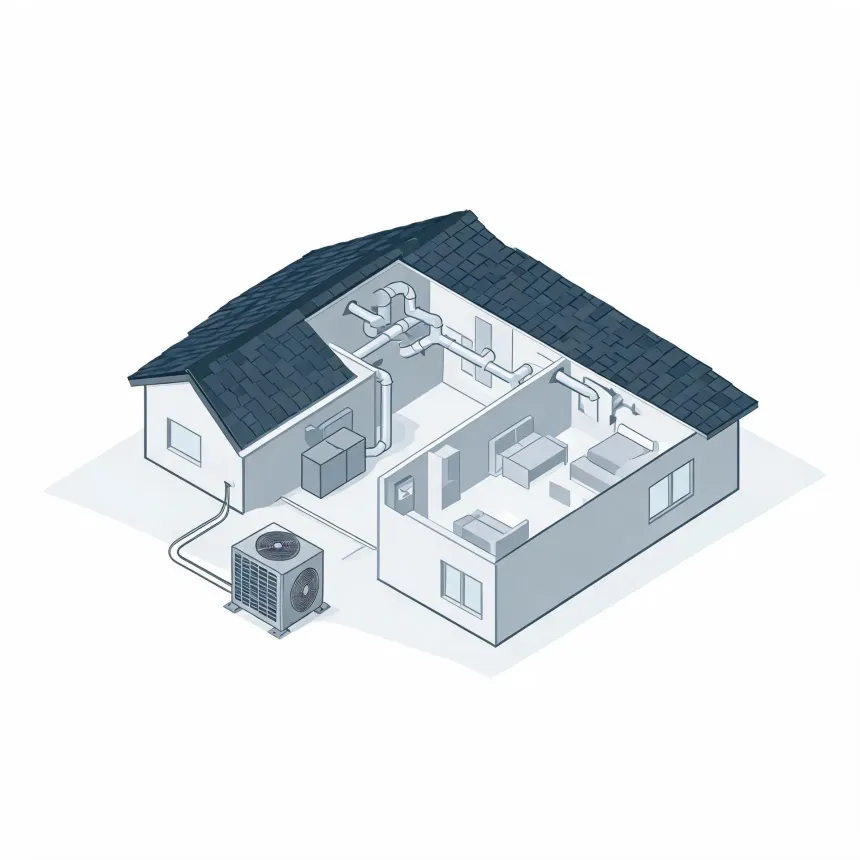
Isometric cutaway illustration of a single-story house showing interior rooms, ceiling ductwork, an indoor air handler, and an outdoor condenser unit connected by lines on the ground.
Your system heats October through April and cools June through September.

NOAA nClimDiv, 1991–2020 normals

Montgomery County asks real work of a heat pump in both winter and summer, with overnight lows averaging 27°F in December, January and February.

A standard size and efficiency rating handles that swing fine, no need to size up.

September is when to replace it, before heat season asks anything of it

Cooling runs June through September
Heat runs October through April
443 damaging wind events from 2015 to 2024

Gas heats 53.1 percent of homes in Montgomery County, more than any other fuel, with electricity second at 41.2 percent. A heat pump replacing a gas furnace can usually use the ductwork already in place, which is most of the installation work done before it starts. One replacing electric heat often drops right into the spot the old system left. Either way, a contractor working this county is used to one of these two setups, not guessing at something rare.

Efficiency pays here

Power costs more here, so an efficient system pays you back on every bill.

Find a contractor
A residential heat pump outdoor unit mounted on a concrete pad next to a house with gray vinyl siding.

The old system doesn't just unplug

Whatever is coming out, gas furnace or electric heat, taking it out is part of the job, not an afterthought. A furnace gets disconnected from its gas line and flue, and that flue often served no other purpose, so capping it correctly matters. Electric resistance heat, whether it's baseboard or an air handler with strip heat, means dealing with the wiring and breakers that fed it, some of which the new heat pump can reuse and some of which it can't. If the old system had a refrigerant line of its own, that gets recovered properly, not vented. A contractor pulling permits on the new install usually handles the old equipment's removal and disposal as part of the same job, so it shouldn't be left for the homeowner to haul out separately.

The label carries a heating number and a cooling number

HSPF2 covers heating, SEER2 covers cooling, and a heat pump does both jobs all year. A model can be strong in one and average in the other, so check both ratings before deciding, not just whichever one the salesperson leads with.

The rating describes the equipment, not the job

A heat pump only performs to its rating if the installation backs it up. Ductwork that leaks, a refrigerant charge that's off, a coil that doesn't match the outdoor unit, any of these pull real performance below what's printed on the label. Getting the equipment to deliver what it's rated for is the installer's work, not something the label guarantees on its own.

Bids on paper can list the same equipment and still mean different jobs. Ask what happens below freezing, since every heat pump loses some capacity as the outdoor air gets colder, and the unit needs a way to cover that gap. Some do it with electric strip heat that kicks in automatically, some are built to keep pulling heat at very low temperatures without it. Ask which one is being quoted and what the backup costs to run. Ask about the defrost cycle too, since the outdoor coil will frost up in winter and needs to shed that ice without dumping cold air inside the house in the meantime. And ask who stands behind the installation itself, not just the equipment warranty, because a unit put in wrong will give you the same complaints no matter whose name is on the box.

What you pay for isn't just the outdoor unit and the coil. It's the labor to size the job correctly, run the wiring, set the refrigerant charge, and get the ductwork connected or modified so air actually moves the way it should. A contractor pulling new line sets or reworking supply runs is doing more work than one dropping a system into a layout that already fits, and that shows up in the bid. The thermostat and controls matter too, since a heat pump's backup heat and defrost cycle need to be set up correctly, not left on factory defaults. Higher HSPF2 and SEER2 ratings generally cost more up front, because the equipment inside is built to squeeze more out of every cycle. None of that is padding. It's the difference between a system that hits its rated performance and one that just runs.