


Heat pump vs furnace in Frederick County, Maryland

Price Both Options

Install quotes in Frederick County

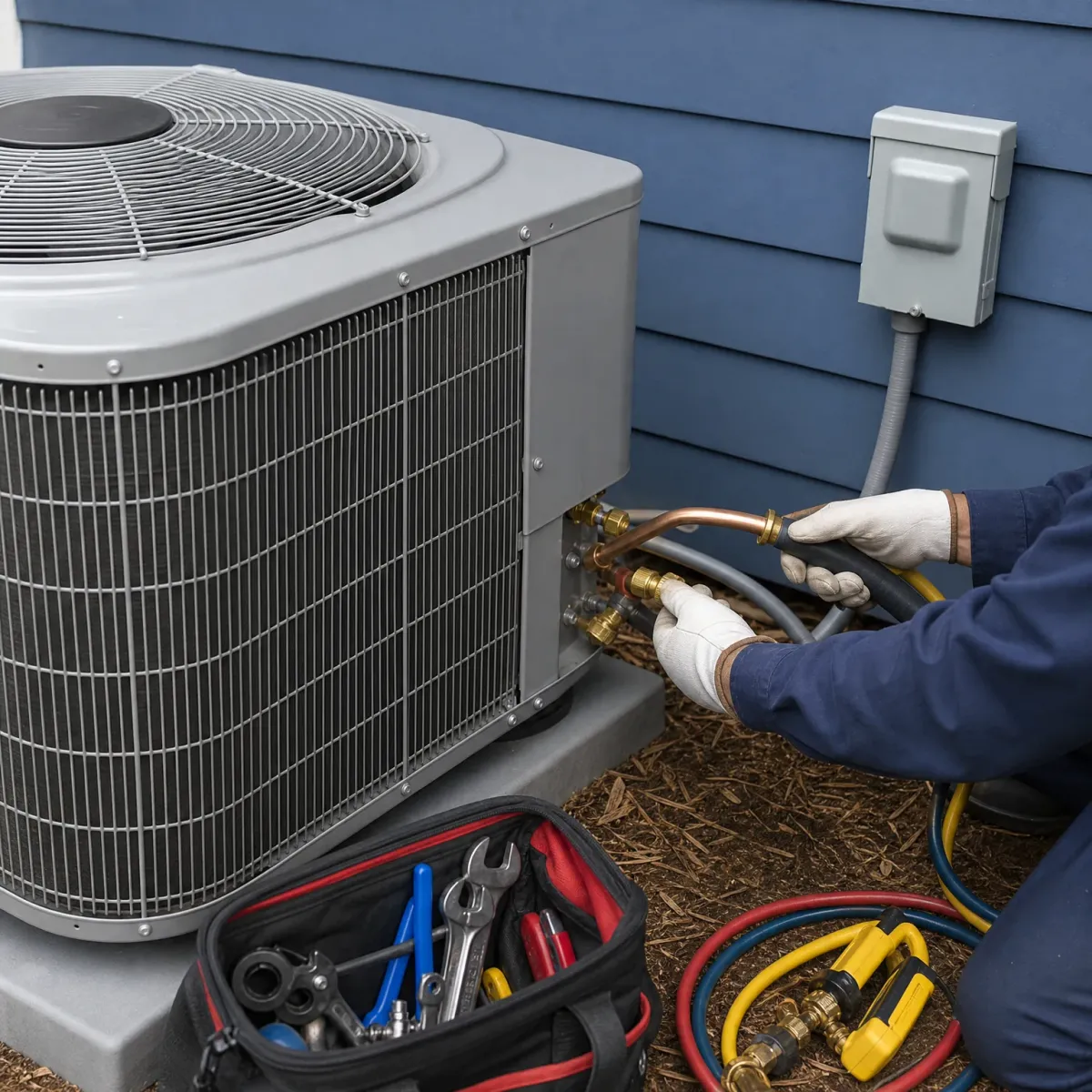
A gloved worker in a dark blue uniform connects colored gauge hoses to the service valves of an outdoor air conditioning condenser unit beside blue lap siding, with an open tool bag and coiled hoses on the mulch in the foreground.

Tell us about the job

Takes about a minute. No obligation.

New system or replacementFrederick County, MD
Step 1 of 3

What kind of equipment?

Which costs less to run in Frederick County?

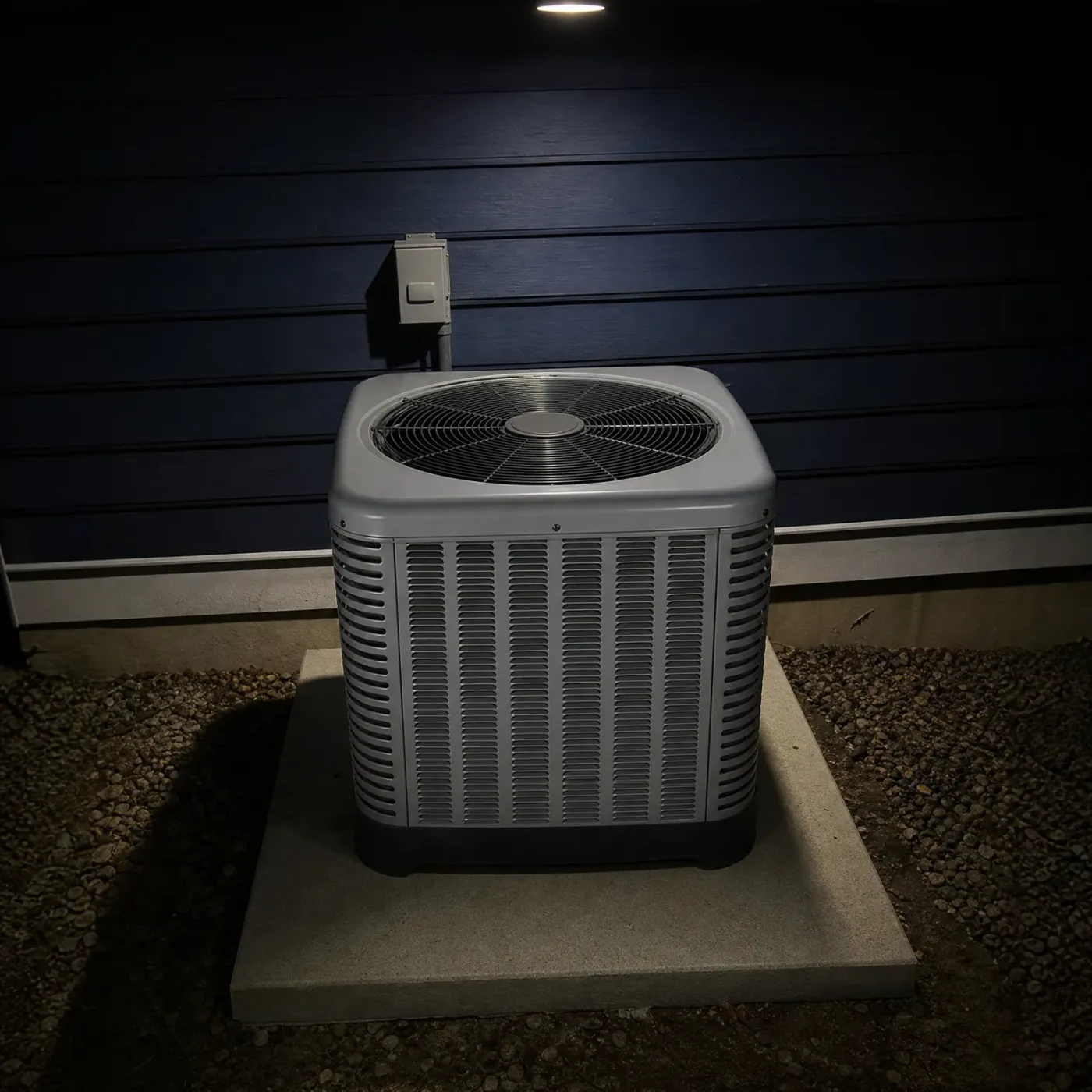
A gray outdoor condensing unit with a top-mounted fan grille sits on a concrete pad surrounded by gravel, against dark horizontal siding with a wall-mounted electrical disconnect box above it, lit at night.

Heat pump

To heat your home here$2.38per 100,000 Btu

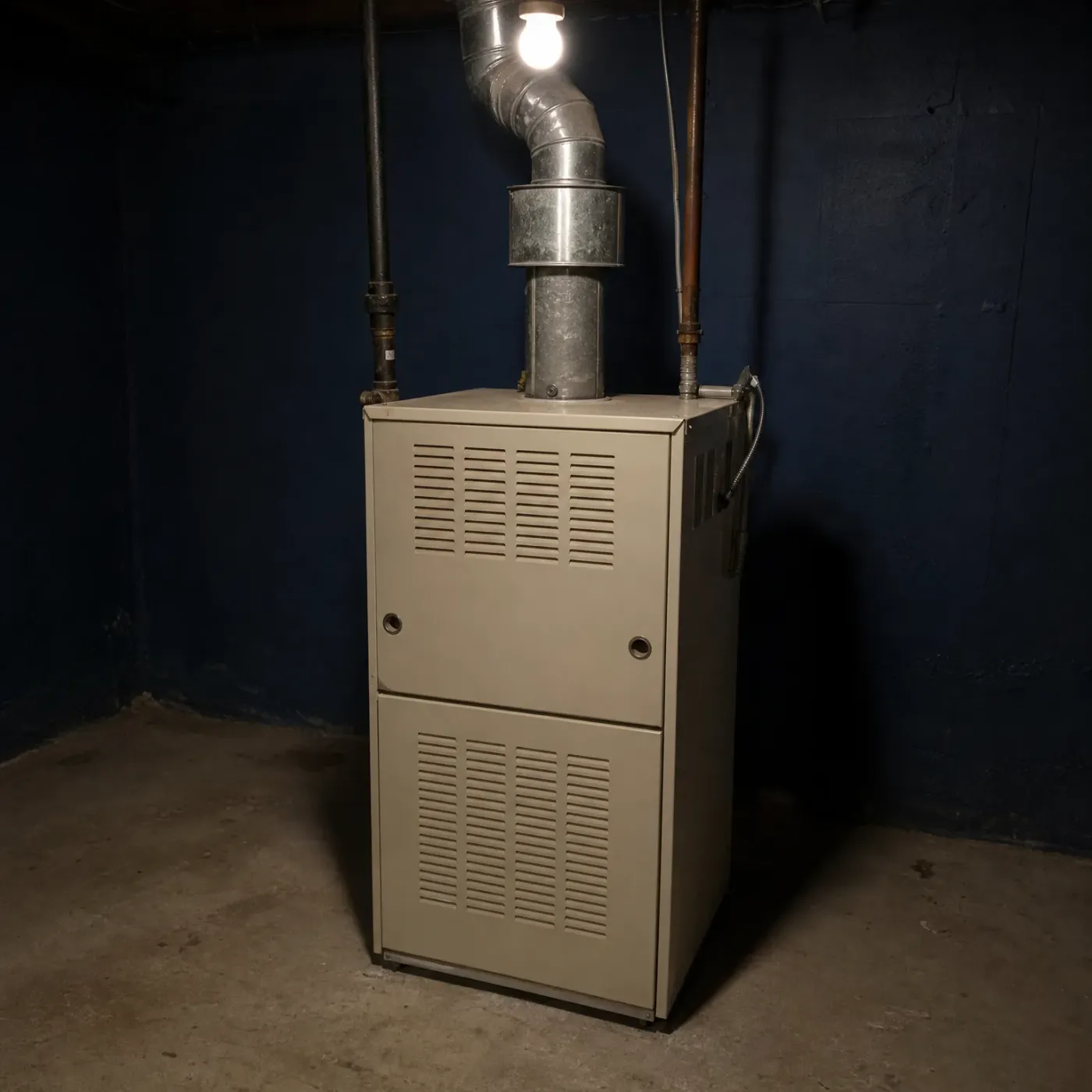
A beige residential furnace with louvered front panels stands in a basement corner with dark blue painted walls, connected to a galvanized metal flue pipe and flanked by vertical pipes, lit by a bare ceiling bulb.

Furnace

To heat your home here$1.94per 100,000 Btu

At Maryland's gas and electricity prices, a gas furnace makes the same heat as a heat pump for at least 18% less.

Btu stands for British thermal unit, the standard measure of heat energy.

Where does a heat pump shine?

  • Heats and cools in one system

    Winter and summer are covered by the same outdoor unit. That's one machine to service instead of two.

    A living room with a light gray sofa holding navy and pale blue pillows and a navy fringed throw, a rustic wood coffee table with a woven tray and hydrangeas in a white vase, a navy built-in bookshelf at left, and large windows showing green trees and flowering shrubs.
  • Steady, even comfort

    It eases up and down with the weather. There are fewer swings between too warm and too cool.

    A golden-coated dog sleeps on a woven rug beside a lit wood stove, in front of a dark blue armchair with a grey knit throw, open book and cushion, near a frosted window and a bookshelf.
  • No gas line, nothing burning in the house

    A heat pump runs on electricity alone. Nothing burns inside the house.

    A stainless steel kettle sits on a black glass cooktop set into a white speckled countertop above navy blue cabinets, with a wooden cutting board, round marble board, two pepper mills, a mug and a vase of white flowers nearby.

Where does a furnace shine?

  • Proven, simple, easy to get serviced

    Gas furnaces have heated homes for generations. Almost every HVAC tech knows them inside and out.

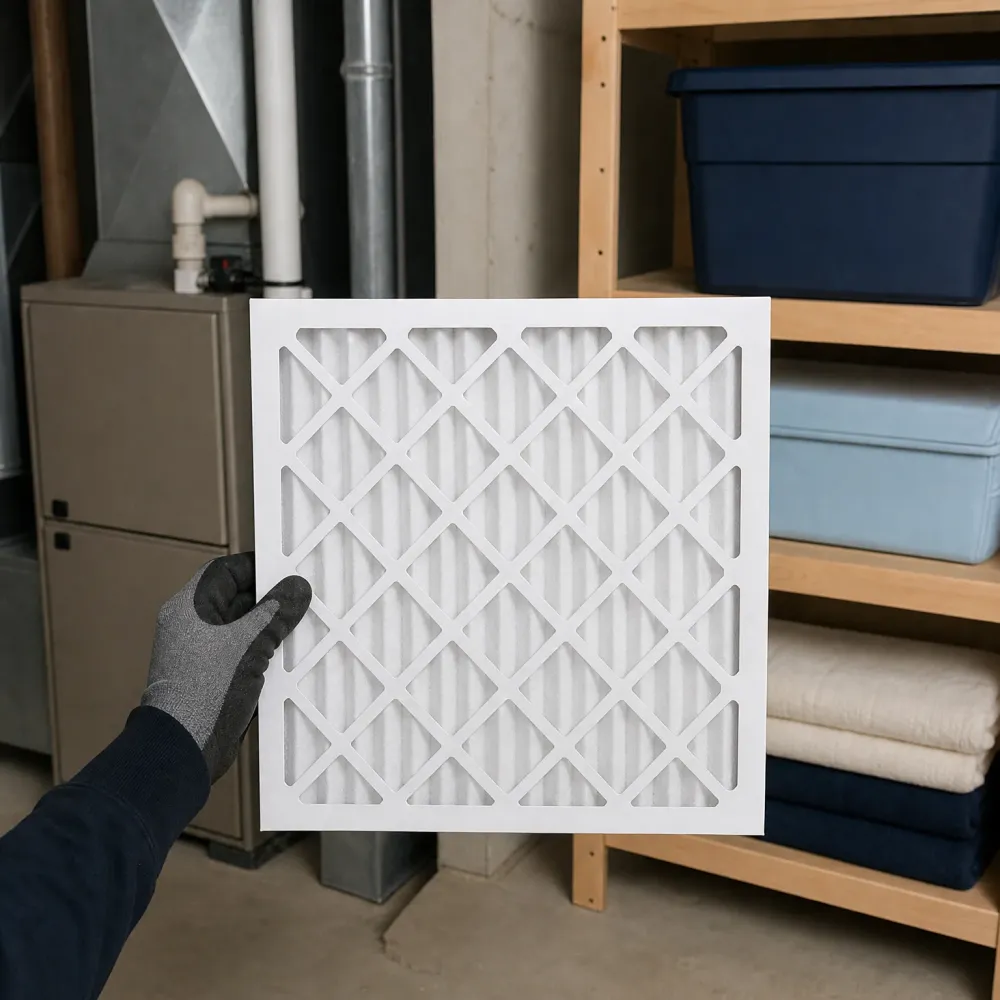
    A gloved hand holds a clean white pleated air filter in front of a basement furnace, ducting, and wooden shelves holding plastic bins and folded textiles.
  • Fast, strong heat on demand

    The air coming from the vents feels genuinely hot. That's welcome on a freezing morning.

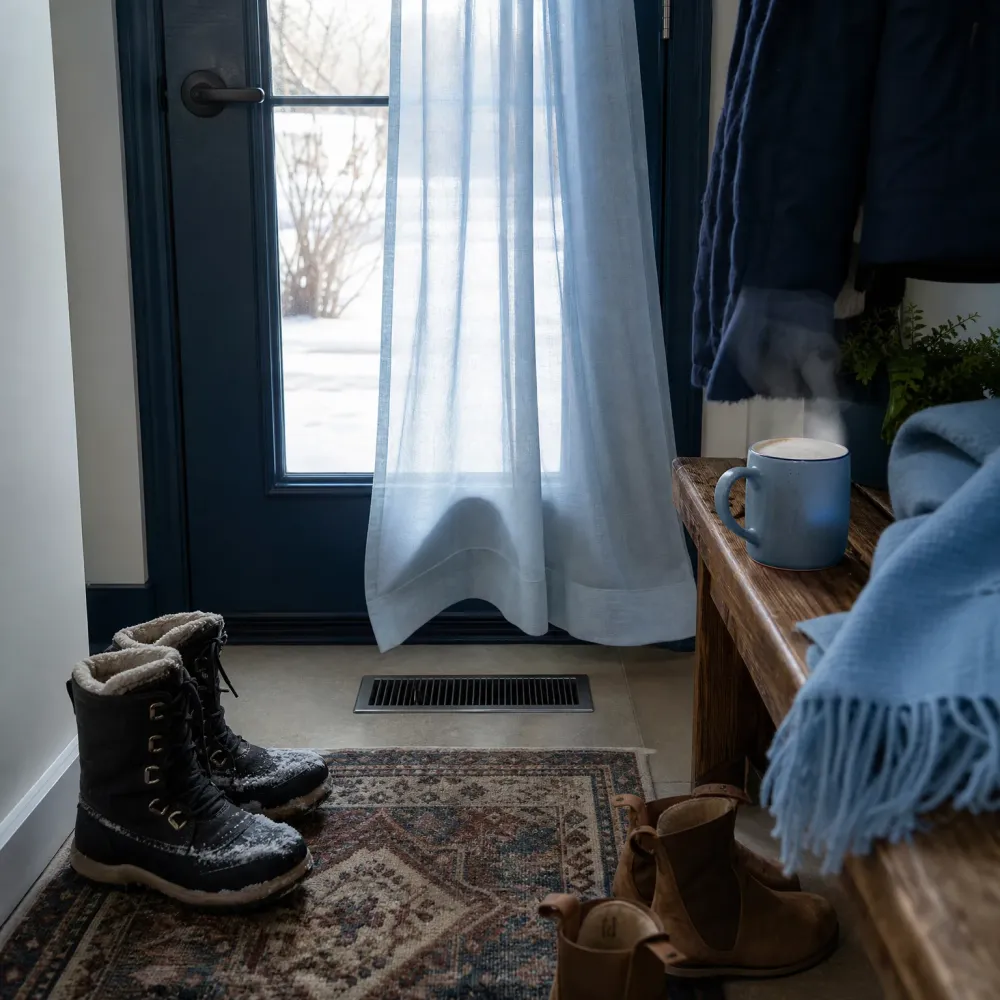
    An entryway with a navy door and sheer curtain showing snow outside, snow-dusted black winter boots and brown suede boots on a patterned rug, a floor air vent, and a wooden bench holding a steaming mug and a light blue fringed blanket.
  • Pairs with any central AC

    Most central air systems are built around a furnace. The two share the blower, the ducts and the thermostat.

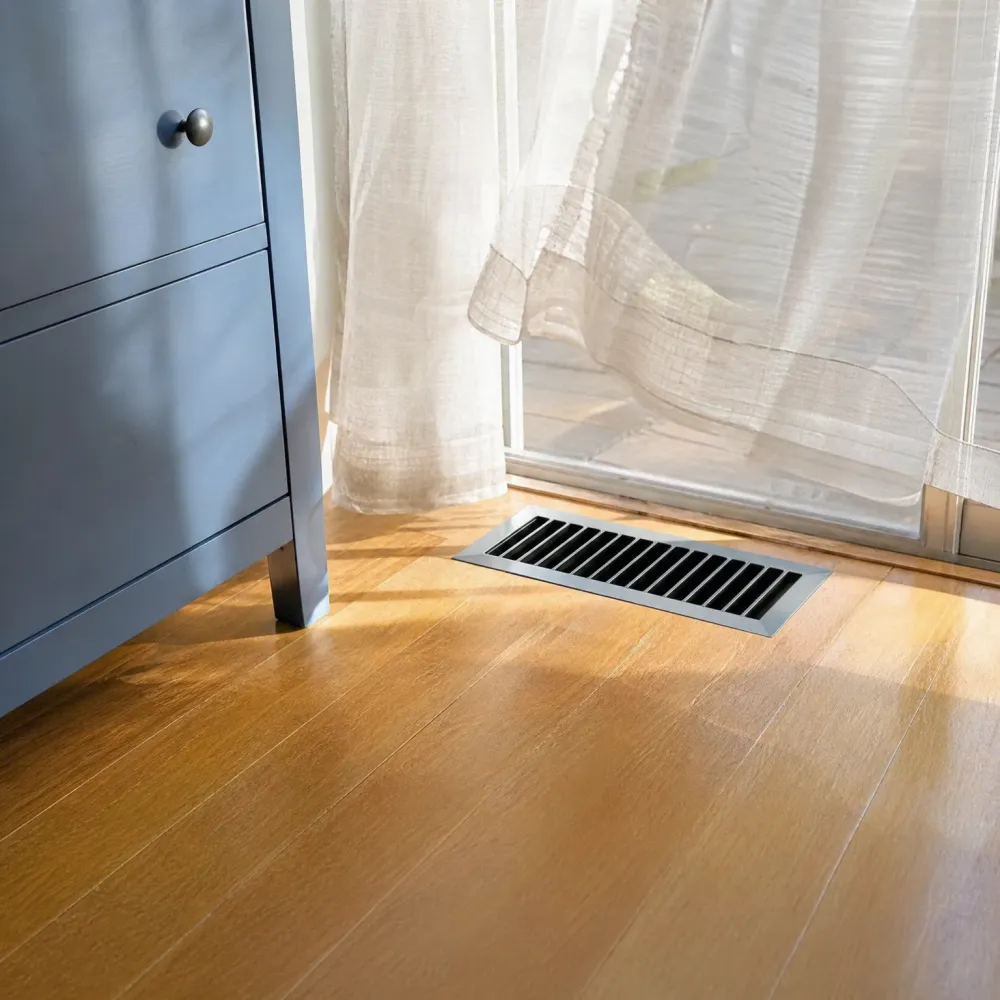
    A metal louvered floor register set into a light wood plank floor near a glass door with sheer curtains, beside a gray cabinet with a round knob.

What winter here does to a heat pump

Heat runs about seven months a year in Frederick County, October through April, so whichever machine you pick spends most of the year earning its keep. The overnight low averages 26°F across December, January and February. That number matters because a standard heat pump has two marks against it, and 26°F is past both. Below 40°F it puts out less heat than its rating says. Below about 35°F it often needs backup heat to make up the difference. Frederick County's average winter night is colder than either mark, not just close to it.

This is not a few bad nights a year. The low falls to freezing or below on about 95 nights every winter here, just under half the nights that heat runs at all, and every one of those 95 nights is already past both the 40°F and 35°F marks. A standard heat pump is working below its rating and often leaning on backup heat for a big share of the season, not just the coldest week in January.

The cold snaps that make the news are rarer. Only about one night a year here drops to 0°F or below. If you go with a cold-climate heat pump, one built and tested to keep most of its heating power down to 5°F, that one night is close to its worst case, not a routine Tuesday. Field tests of these units in occupied homes found backup heat carried only a small share of the load between 0°F and 35°F, and running on backup alone was rare even at 0°F. A standard heat pump does not carry that rating, and backup heat on a standard system usually means electric resistance heat, which costs more to run than the heat pump itself.
Snow-covered stone steps lead to a blue clapboard house with a white-framed door, a wall-mounted lantern capped with snow, and a stacked woodpile under an adjoining roof.

What it costs to run, and what's already in your house

At Maryland's average prices, a gas furnace makes the same heat for less: $1.94 against $2.38 per 100,000 Btu, both machines figured at the federal minimum efficiency. That gap is before you add anything for backup heat on the 95 nights a year a standard heat pump needs it, so the real difference in a cold winter here runs wider than $1.94 against $2.38.

What you already have narrows this further. About one in three homes here heat with utility gas and about half heat with electricity, so there is a decent chance the fuel line for one of these machines is already run to your house and the other is not. A furnace needs a gas line. A heat pump needs nothing burning in the house and handles your air conditioning too, which a furnace never does.

So the honest version of this choice is not heat pump against furnace in the abstract. It is: do you already have gas, and do you want one system that heats and cools instead of a furnace paired with a separate air conditioner. If you have gas and want the cheaper fuel to run through a long heating season, a furnace does that here. If you want one machine for the whole year and are prepared to pay more on the coldest nights, or to put in a cold-climate model built for them, a heat pump does that instead. Half the homes in this county were built before 1991, so what is already run to your house is worth checking before you decide either way.

Sources: NOAA nClimDiv · NOAA 1991–2020 seasonal normals · PNNL Building America guide · PNNL-37127 field study · ENERGY STAR product criteria · EIA SEDS 2024 · 10 CFR 430.32 · Census ACS 2020–2024

A two-and-a-half-story navy blue clapboard house with white trim, a covered front porch and light blue front door, surrounded by deep snow and bare trees under a clear sky.

Common questions about heat pumps and furnaces

  • Can a heat pump heat a house through a Maryland winter?

    Yes, but a standard heat pump loses capacity doing it. Its heat output falls short of its rating below 40°F and it often needs backup heat below about 35°F, and the average overnight low here in December through February is 26°F. A cold-climate heat pump holds onto more of its capacity in that range, since it has to keep at least 70 percent of its 47°F output at 5°F to earn that rating.

  • Can I keep my furnace and add a heat pump?

    Yes, that pairing is called a dual fuel system. The heat pump carries the house most of the winter, and the furnace switches on for the coldest nights when the heat pump needs backup heat anyway.

  • What if my house doesn't have a gas line?

    A heat pump is usually the cheaper choice. Propane and oil furnaces burn fuel that costs more than natural gas, and electric resistance heat costs more to run than a heat pump because a heat pump moves heat instead of generating it directly from electricity.

  • Is a heat pump cheaper to run than a furnace in Frederick County?

    No. A furnace runs $1.94 per 100,000 Btu here against $2.38 for a heat pump, so the furnace is cheaper to run at Maryland's gas and electricity prices.