




An outdoor air conditioning condenser unit mounted on a concrete pad next to a residential house at sunset.

Heat Pump Maintenance in Frederick, MD

Tell us about the job

Takes about a minute. No obligation.

Tune-up, service, or cleaningHeat PumpFrederick County, MD
Step 1 of 2

What ZIP code is the job in?

Electricity in Maryland ran 17.86 cents per kilowatthour in 2024. A heat pump that's low on charge or working against a dirty coil pulls more power to do the same job, and in Frederick that difference lands on a real bill, not a small one. Maintenance is when a contractor finds the weak capacitor or the low charge before it turns into a breakdown. Catching it early is what keeps the system running the way it's supposed to, instead of running harder for the same heat.

Half the homes in Frederick County were built in 1991 or later.

A heat pump that age still has years ahead of it, and a yearly check is what keeps it on track to use them.

One visit a year covers what this county throws at a heat pump

276 damaging wind events from 2015 to 2024
20 hail events from 2015 to 2024
23 winter storms from 2015 to 2024

Frederick County saw 276 damaging wind events between 2015 and 2024, plus hail and a handful of tornadoes in that same stretch. A heat pump sits outside and takes that weather directly, along with whatever the wind carries into the cabinet or against the coil. That's less about the machine wearing out on its own and more about what gets thrown at it. A yearly visit is when a contractor checks the cabinet, the fan and the coil for anything a storm bent or loosened before it turns into a bigger repair. Once a year is enough to catch that, as long as it happens.

Book the heat pump check before October

Your heat pump switches over to heating in October and works hardest from the start. Have it checked in September, before that switch happens, so a contractor can catch problems while the system is still sitting idle.

Find a contractor
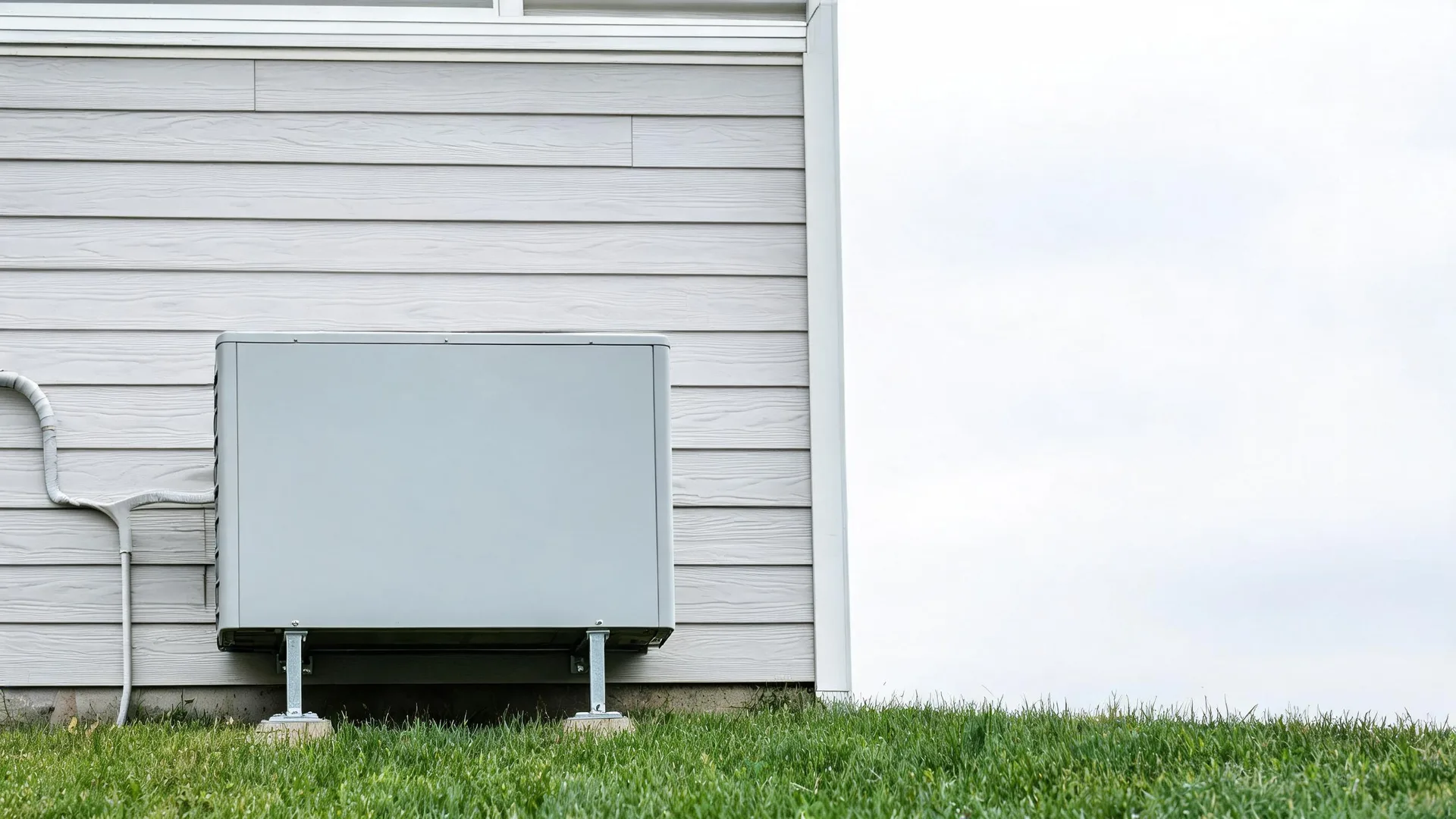
A dark gray heat pump unit mounted on a concrete pad next to a house with gray siding and a stone veneer wall.

Built in 1991 or later, with years still ahead of it

If your heat pump was installed with the house, a yearly check is a small thing to keep up with against years of use ahead. The contractor can tell you where it stands on its working life and what, if anything, it needs now. That's easier to act on early than after something has gone wrong with it.

Keep the airflow clear

The outdoor unit needs space on all sides to pull air through the coil. Keep leaves, mulch and overgrown shrubs away from the cabinet, and brush off anything piled against the fins after a storm. Inside, check the air filter on a regular schedule and swap it when it looks gray or clogged. A blocked filter forces the system to work against itself, and that strain is what maintenance visits are meant to catch before it becomes a repair.
Know what to leave alone

Don't open the cabinet or touch the wiring, the refrigerant lines or the board inside. If the outdoor unit ices over, that can be normal during a defrost cycle, so give it time before assuming something is wrong. If ice stays once the system has run a while, or you hear grinding or clicking that wasn't there before, that's a call for a contractor rather than something to chase down yourself.

A tune-up starts with readings a homeowner has no way to take. A contractor checks refrigerant pressure against what the system is supposed to run at, and checks the temperature split across the coil to see if it's moving the heat it should. Low charge doesn't always show up as warm air that should be cold. Sometimes it just shows up as the system running longer than it used to, which is easy to miss if you're not watching for it. The contractor also checks the capacitor and the contactor, the parts that get the compressor and fans started and keep them running, since a weak one can still limp along for months before it fails outright. None of that is visible from the yard, and none of it waits for a symptom you'd notice first.

A heat pump tune-up also covers the reversing valve, the part that switches the system between heating and cooling. If that valve is sticking, the system can struggle to switch over cleanly, and that's hard to catch from inside the house until it's already stuck in the wrong mode. The contractor checks the defrost cycle too, making sure the system senses ice on the outdoor coil and clears it on its own rather than running iced over. They'll check the blower motor and the fan blades for wobble or wear, since either one can throw the airflow off even when the motor still runs. Electrical connections get checked for corrosion, especially where the outdoor unit has been exposed to weather all year. None of this is about waiting for something to break. It's about catching the part that's already working harder than it should before it quits.