Electricity here runs 17.86 cents per kilowatt-hour
Maryland's electricity rate sits above the national average, and a heat pump runs on electricity year round, for heat and for cooling both. That rate applies to every kilowatt the system draws.
Takes about a minute. No obligation.
Maryland's electricity rate sits above the national average, and a heat pump runs on electricity year round, for heat and for cooling both. That rate applies to every kilowatt the system draws.
Two heat pumps can heat and cool the same house and pull very different amounts of power doing it. At this rate per kilowatt-hour, the difference between an efficient unit and a weak one shows up on every bill, not just the first one.
NOAA nClimDiv, 1991–2020 normals
The same size label can mean different things from one manufacturer to the next.
Ask for the heating output at low outdoor temperatures, not just the rated capacity.




Heat pump installation this far ahead gives a contractor room to size the system right, instead of matching whatever is already there. May is the month to get this done. Cooling starts in June and runs through September, so a unit installed in May is already tested and running before the first hot stretch. Heat pumps also carry the heating load here, October through April, so a spring installation gets checked under cooling first and has months before it has to carry heat. Waiting until June means the first real test of the system is also the first hot day you need it.
Frederick County falls in climate zone 4A, which asks real work of both heating and cooling. Any split-system heat pump installed here has to meet 14.3 SEER2 and 7.5 HSPF2 at minimum. A federal tax credit is available for qualifying equipment, so it's worth asking which systems meet it before you decide.
Find a contractorA heat pump runs every day of the year, not just in the hardest months of summer or winter. That changes where the installation money goes. The equipment itself is only part of the job. Sizing the system to the house, setting the refrigerant charge correctly, and getting enough airflow across the coil all decide how hard the unit works every time it cycles on. A system that's oversized will short cycle, turning on and off more than it should, and that wears the compressor faster than steady running does. A system that's undersized runs constantly and still struggles to keep up on the coldest or hottest days. Either mistake costs more over time than it saves going in. Ductwork matters just as much as the outdoor unit. If the ducts are too small, too leaky, or poorly laid out, the heat pump can't move enough air no matter how good the equipment is, and some of what you paid for never reaches the rooms it's meant to heat or cool. A contractor who checks the ductwork and the heat loss and heat gain of the house before quoting a price is pricing the job correctly. One who just matches the size of the old system is guessing.
A contractor works out the heat loss and heat gain of the house room by room, counting windows, insulation, and ceiling height, then sizes the heat pump to match. Swapping in a unit the same size as what's already there skips that step and just repeats whatever mistake was made the first time around.
A heat pump sized too big satisfies the thermostat fast and shuts off before it finishes pulling moisture out of the air, so the house cools but feels damp. One sized too small runs nearly nonstop and still can't hold the temperature on the hardest days. Either way the compressor wears down faster than it would running in long, steady cycles.
The efficiency rating on the label, SEER2 for cooling and HSPF2 for heating, tells you how much heat the system moves for the power it draws. A higher rating means it gets more work out of the same electricity. That number comes from a lab test under set conditions, so it won't match what you see on the coldest or hottest day of the year, but it still gives you a fair way to compare one system against another. Units carrying the same rating can still perform differently once installed, because the label describes the equipment itself, not the ductwork, the refrigerant charge, or whether it was sized to the house it sits in. Treat it as a starting point for comparing systems, not a promise of what your home will actually see.
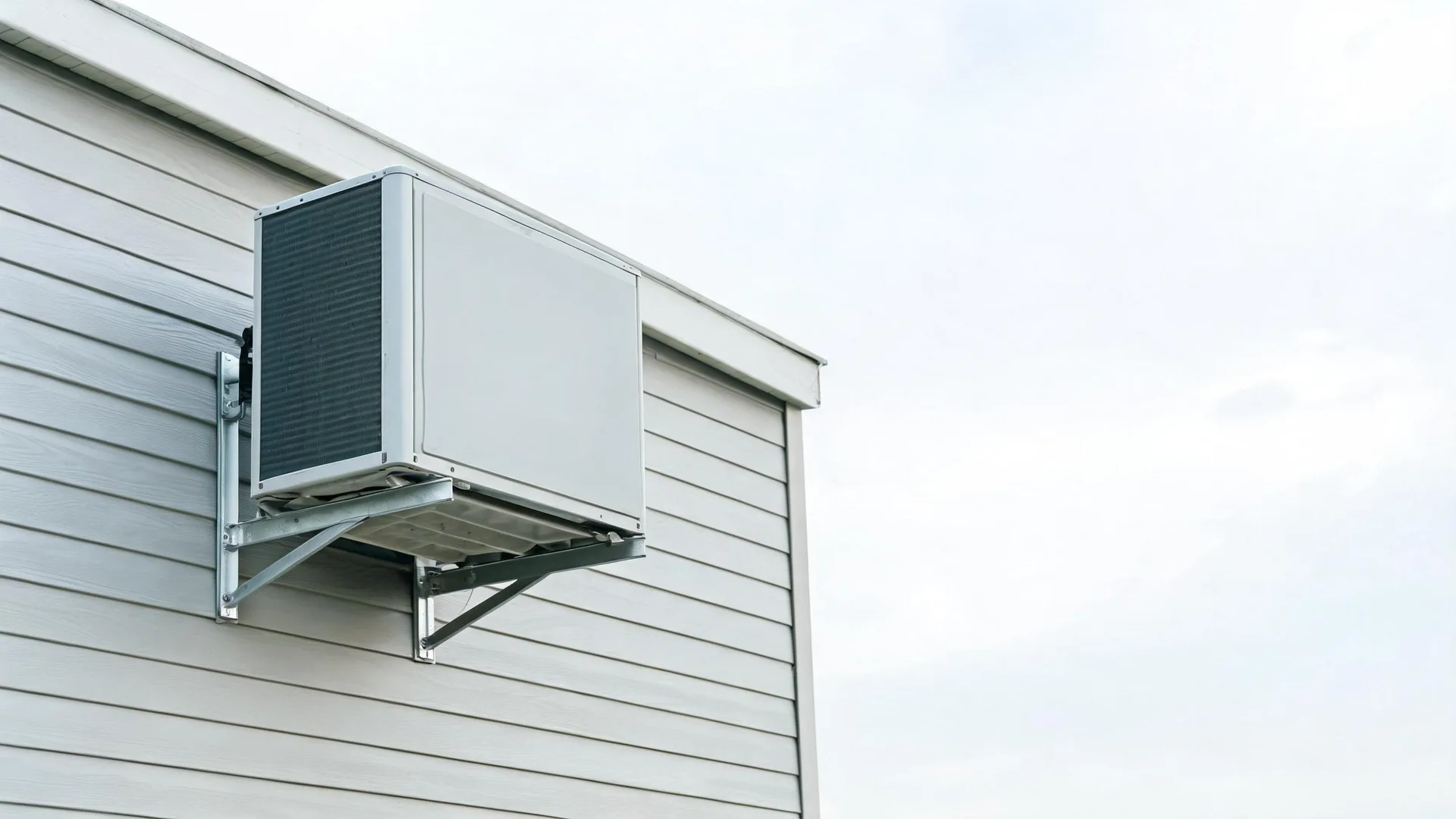
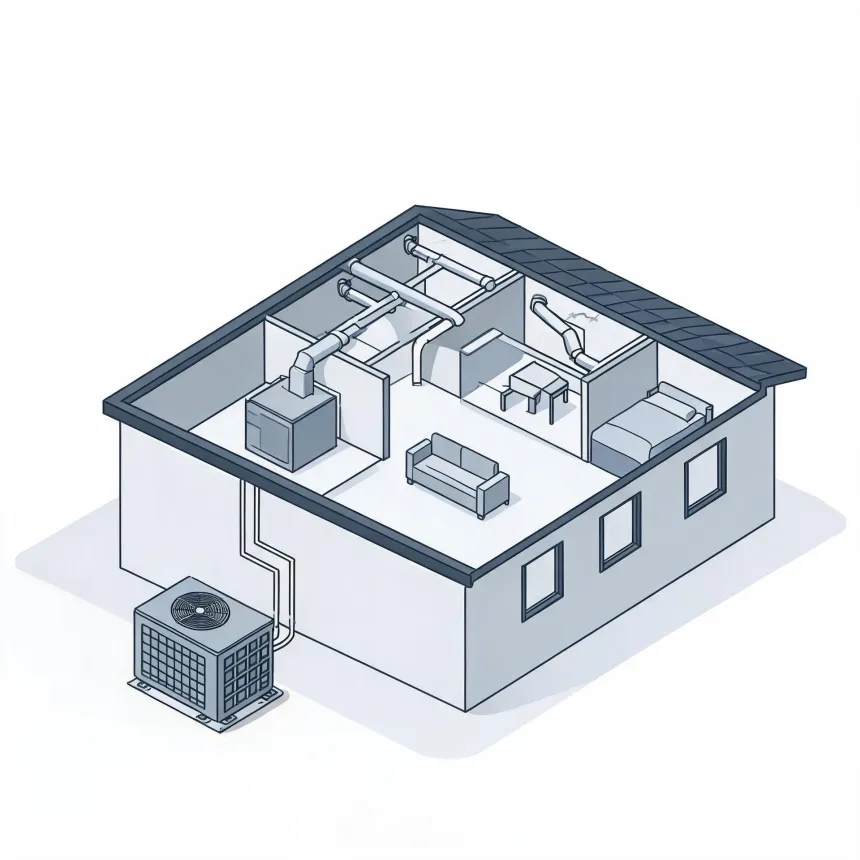
Installation starts with the outdoor unit and indoor coil going in. Then the line set connecting them gets brazed, pressure tested, and pulled into a vacuum to clear out air and moisture before any refrigerant goes in. A system charged over air that wasn't fully removed won't run at the efficiency it was built for, no matter how good the equipment is. Electrical work usually comes next. That means a dedicated circuit, a disconnect at the outdoor unit, and a thermostat wired in if it's being replaced too. Once the system is charged, a tech checks refrigerant pressures against the manufacturer's numbers for the outdoor temperature that day, not just a gauge reading that looks close enough. Airflow gets checked at the registers before anyone calls it finished, because a heat pump charged right but starved for airflow across the coil still won't heat or cool the way it should.