






An unfinished basement containing a metal furnace with ductwork, exposed wooden joists on the ceiling, cardboard boxes, a coiled cable, and a single hanging incandescent bulb.

Furnace Repair in Frederick, MD

Tell us about the job

Takes about a minute. No obligation.

RepairFurnace or heatingFrederick County, MD
Step 1 of 2

What ZIP code is the job in?

September is worth paying attention to here. Furnaces in Frederick County sit idle most of the year and start up again in October, which is exactly when a weak igniter or a failing flame sensor finally gives out. The part was already going bad. It just took the first real call for heat to show it. A furnace that struggles or won't start in those first weeks usually isn't dealing with anything new. Getting it looked at early beats waiting it out through October to April on a problem that won't fix itself.

7 months
October through April, your furnace is on duty
26°F
the average winter night it heats against
23 winter storms
in ten years, the nights a failure hurts most
Isometric line illustration of a cutaway house showing interior rooms with furniture and a furnace with ducting and a flue pipe extending through the roof.
Your furnace works hardest from November through March.

NOAA nClimDiv, 1991–2020 normals

Check the filter before you check anything else.

A filter clogged from months of sitting can choke airflow enough to look like a dead furnace.

Frederick County's storms and outages aren't what's wearing out your furnace

325 severe weather events from 2015 to 2024
11% of homes statewide lost power a day or more in 2024
276 damaging wind events from 2015 to 2024

Half the homes in Frederick County were built in 1991 or later. If yours is one of them, the furnace probably isn't old enough to be the problem on its own. A newer furnace that won't light or keeps shutting off is usually dealing with one bad part, not a unit that's worn out. That's worth knowing before anyone tells you it's time to replace it.

A furnace problem costs more here every month it goes unfixed

Electricity here runs $52.34 per million Btu. A furnace that short cycles or runs longer than it should because of one bad part is spending more of that every time it kicks on. Fixing the actual cause now costs less than letting it run that way through the winter.

Find a contractor
A man in a cap, dark jacket and tan pants carries a worn duffel bag as he climbs porch steps toward a dark blue front door beside a potted shrub.
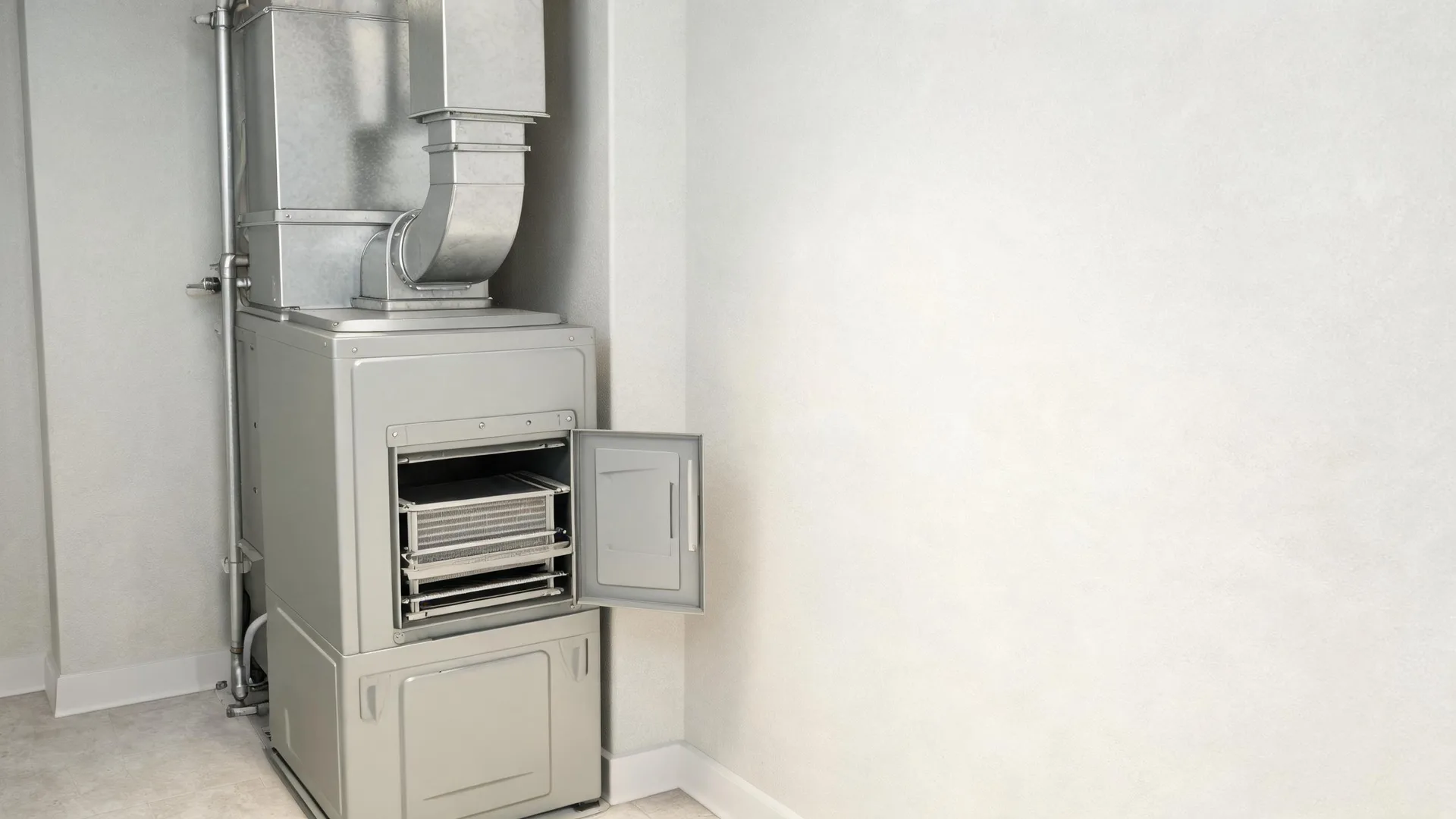
A gas furnace with attached ductwork, gas piping, and condensate lines installed in a concrete-block basement.

This furnace has years left to run

A furnace built in 1991 or later still has a lot of running years ahead of it. Age isn't what's shutting it down. When a part fails this early into its life, the fix is that part, not the furnace. Have it diagnosed before anyone brings up replacement.

It's usually one part, not the whole system

An igniter cracks, a flame sensor builds up a coating it can't burn off, a draft inducer motor wears out its bearings. These parts fail on their own schedule, one at a time. A furnace that won't light or shuts off early is almost always down to a single part like this, not the unit as a whole giving out.
What burns out fastest is what cycles the most

Every part that turns on and off with each heat cycle wears faster than the parts that just sit there running. The igniter, the flame sensor, the pressure switch all fall in that category. That's why diagnosis starts with those parts first, before anything bigger gets blamed.

Most furnace trouble shows up the same way. The burners don't light, or they light and shut off a few seconds later. That second one is usually the flame sensor telling the control board it doesn't see a flame, even when it does, because it's coated with a film it can't read through. A furnace that short cycles, running a few minutes and stopping over and over, is doing the same thing for a different reason, often a clogged filter or a failing pressure switch. Banging or popping when it first kicks on points to delayed ignition. The burners are lighting late and catching gas that built up first. A blower that keeps running after the house is warm usually means the limit switch or the fan relay isn't shutting it off on schedule. None of these need you to know which part it is. They just tell you it's time to get it looked at before a part that's struggling now quits for good.

The question isn't whether a furnace is old or new, it's whether the repair gets at the actual cause or just the symptom. A cracked heat exchanger means replacement, no way around it, because that's the one failure that isn't worth chasing with parts. Almost everything else, a bad igniter, a failed inducer motor, a stuck valve, gets fixed and the furnace runs like it did before. The real test is whether the same problem keeps coming back after it's supposedly fixed. One repair that holds is normal wear. The same symptom showing up again a few months later usually means the first diagnosis missed something, not that the furnace is done. Ask what actually failed and why, not just what was replaced.