





A two-story red brick house with black shutters and a covered porch sits behind a wide green lawn, framed by large leafy trees, with a dry-stacked stone retaining wall in the foreground.

Heat Pump Repair in Frederick, MD

Tell us about the job

Takes about a minute. No obligation.

RepairHeat PumpFrederick County, MD
Step 1 of 2

What ZIP code is the job in?

Frederick County asks a heat pump to work both sides of the year. Warm months, and cold ones down to a 26 degree average overnight in December, January and February. That's normal duty for this equipment, not a strain nobody planned for. When one stops keeping up, the cause is usually something a tech sees all the time. A low refrigerant charge, a failing defrost control, a dirty coil, a capacitor going weak. A heat pump that's short cycling or blowing lukewarm air can trace back to several different parts. The fix only holds if it addresses the right one.

7 months
October through April, your system heats
4 months
June through September, it cools
26°F
the average winter night it heats against
84°F
the average summer afternoon it cools against
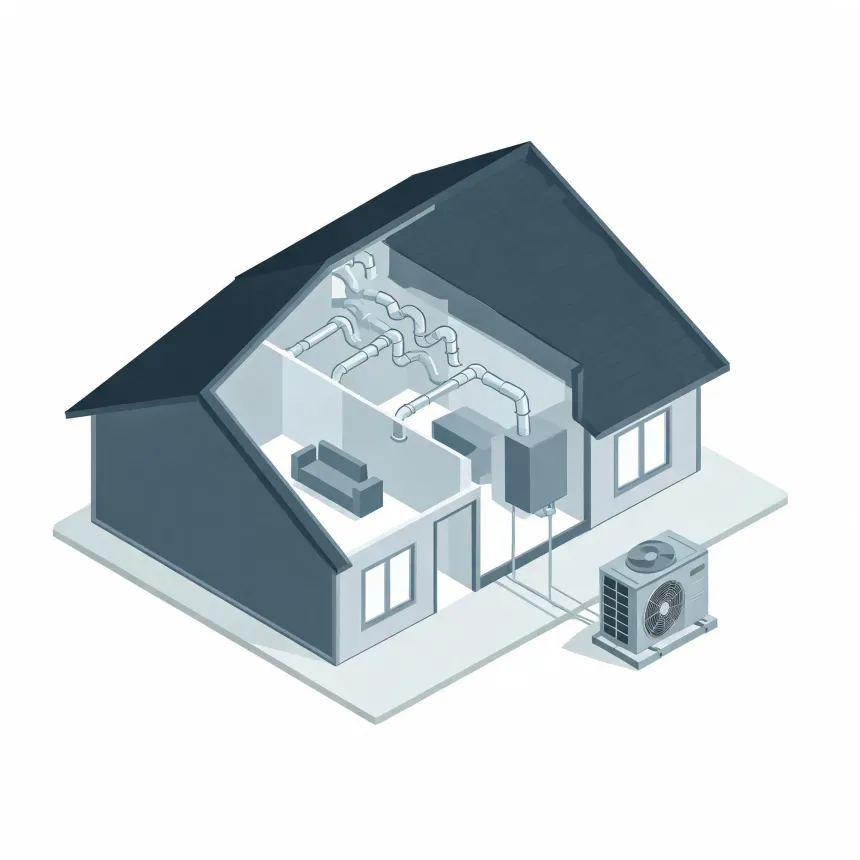
Isometric cutaway illustration of a house showing interior ductwork, an indoor air handler unit, and an outdoor condenser unit beside the building.
Your system heats October through April and cools June through September.

NOAA nClimDiv, 1991–2020 normals

Heat in Frederick County runs October through April, about seven months straight.

A heat pump that struggled through summer on a weak part often can't keep up once it has to carry the house through October.

Half the homes here were built in 1991 or later, and the heat pump likely was too

Half the homes here were built by 1991
276 damaging wind events from 2015 to 2024
20 hail events from 2015 to 2024
Nothing unusual about the weather here276 damaging wind events in Frederick County between 2015 and 2024, about normal for this part of Maryland

Maryland homes paid 17.86 cents per kilowatthour in 2024, among the higher rates around. A heat pump low on charge or running on a weak capacitor pulls more power to put out less heat. At that rate, the difference shows up on the bill every month it runs that way. Waiting it out through a stretch of mild weather doesn't fix anything underneath. A system working harder than it should all winter costs more every single month it stays broken.

A broken heat pump gets more expensive the longer it runs this way

Get the actual cause diagnosed now, not guessed at. A tech can check the charge, the capacitor, the defrost control, and fix the one that's actually driving your bill up.

Find a contractor
A gray heat pump outdoor unit mounted on a concrete pad next to a residential house with lap siding and stone accents.

Worth repairing, not replacing

If your house is one of the newer ones, the heat pump has years left in it. That points to fixing what's wrong, not replacing the unit. Age isn't the thing working against you here.

A tech checks the system, not just the symptom

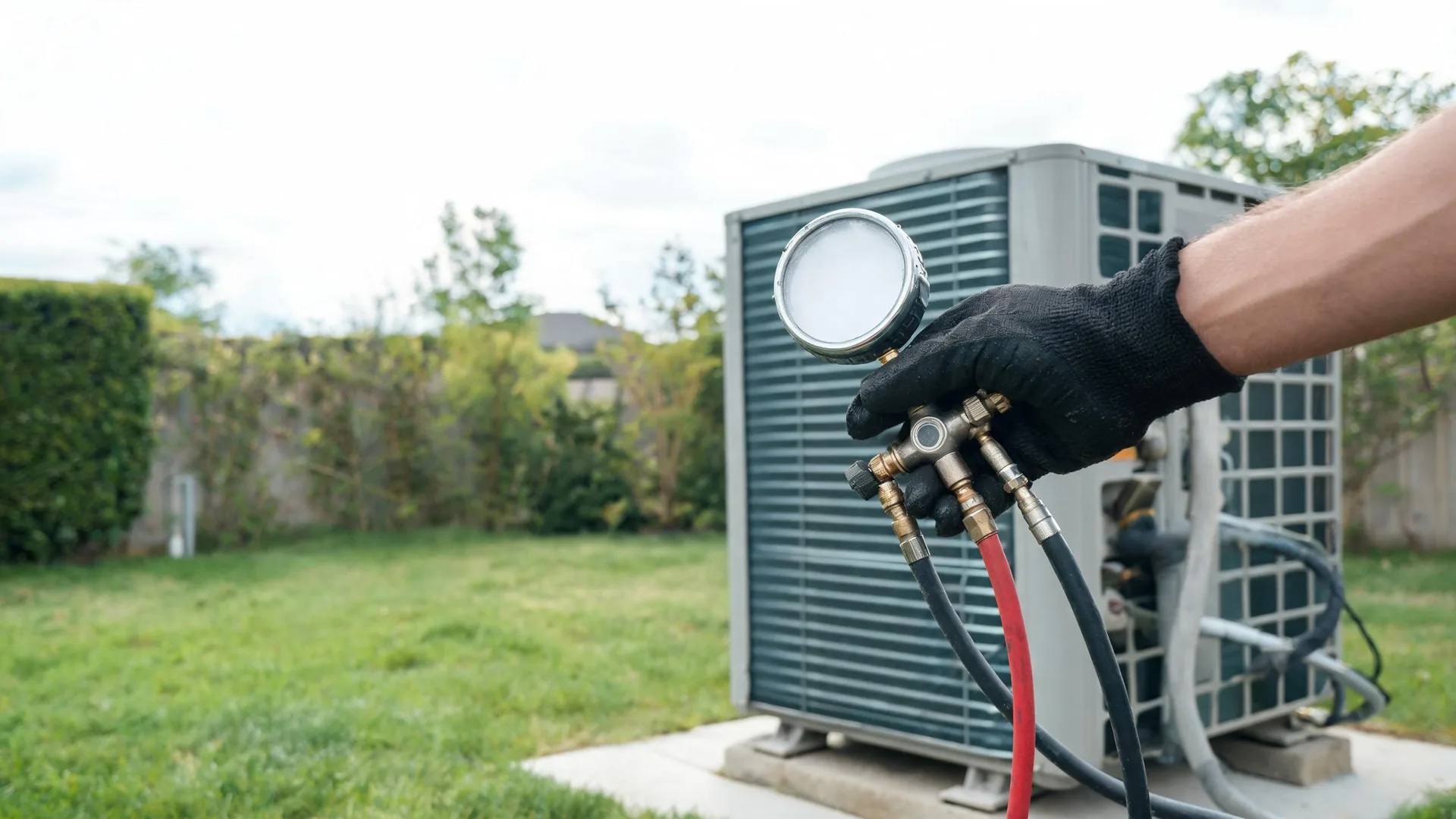
A heat pump blowing cold air or short cycling can come from the refrigerant charge, the defrost board, a contactor, or the reversing valve. A diagnostic visit means gauges on the lines, readings at the air handler and the outdoor unit, and a look at the electrical components before anything gets replaced. Guessing at the part skips the step that tells a tech whether the fix will hold.
The visit ends with a cause, not a guess

A proper diagnosis points to the one part actually failing, with readings to back it up. That matters because a heat pump has several parts that can all produce the same symptom. Replacing a capacitor when the real problem is a low charge means the system fails again, and the next repair starts from scratch.

A heat pump rarely quits without warning you first. It runs longer than it used to, cycling on and on without ever quite catching up to the thermostat setting. Air comes out of the vents barely warm, or barely cool, like the system's lost some of its strength. Ice builds up on the outdoor unit and doesn't clear on its own between defrost cycles. You hear it clicking on and off every few minutes instead of settling into a steady run. Sometimes it's a noise that wasn't there before, a hum from the outdoor unit, a buzz at the contactor, a clatter when the compressor kicks on. Any one of those is the system telling you a part is already failing, not about to.

A heat pump is worth fixing when the failure is one part in an otherwise sound system, and most failures are exactly that. A capacitor, a contactor, a defrost board, a reversing valve. Replacing one of those brings the unit back to doing what it was doing before, which is usually fine. Replacement makes sense when the compressor itself is failing, since that's the part that actually moves the refrigerant and does the work of heating or cooling the house. A compressor job costs enough that it starts to compete with a new system, and a tech will usually tell you that straight when it's the one that's gone. Everything else on a heat pump gets replaced on its own without taking the rest of the unit down with it.