



Heat pump vs furnace in Baltimore city, Maryland

Find a Pro in Baltimore

Get a price before you decide

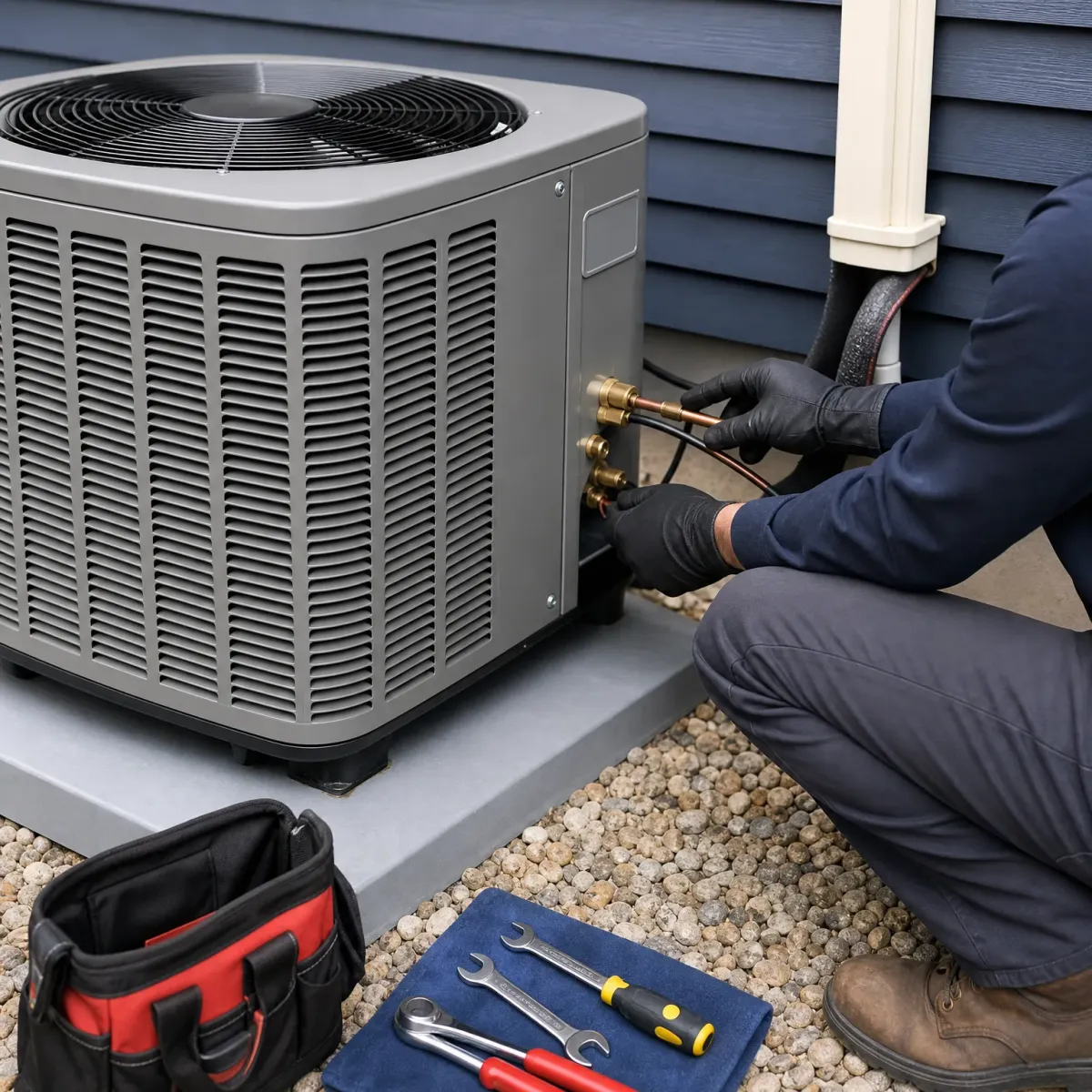
A person in gloves kneels on gravel beside a gray outdoor air conditioning condenser on a concrete pad, working on its copper line connections, with wrenches and a screwdriver on a blue cloth and a tool bag nearby.

Tell us about the job

Takes about a minute. No obligation.

New system or replacementBaltimore city, MD
Step 1 of 3

What kind of equipment?

Which costs less to run in Baltimore city?

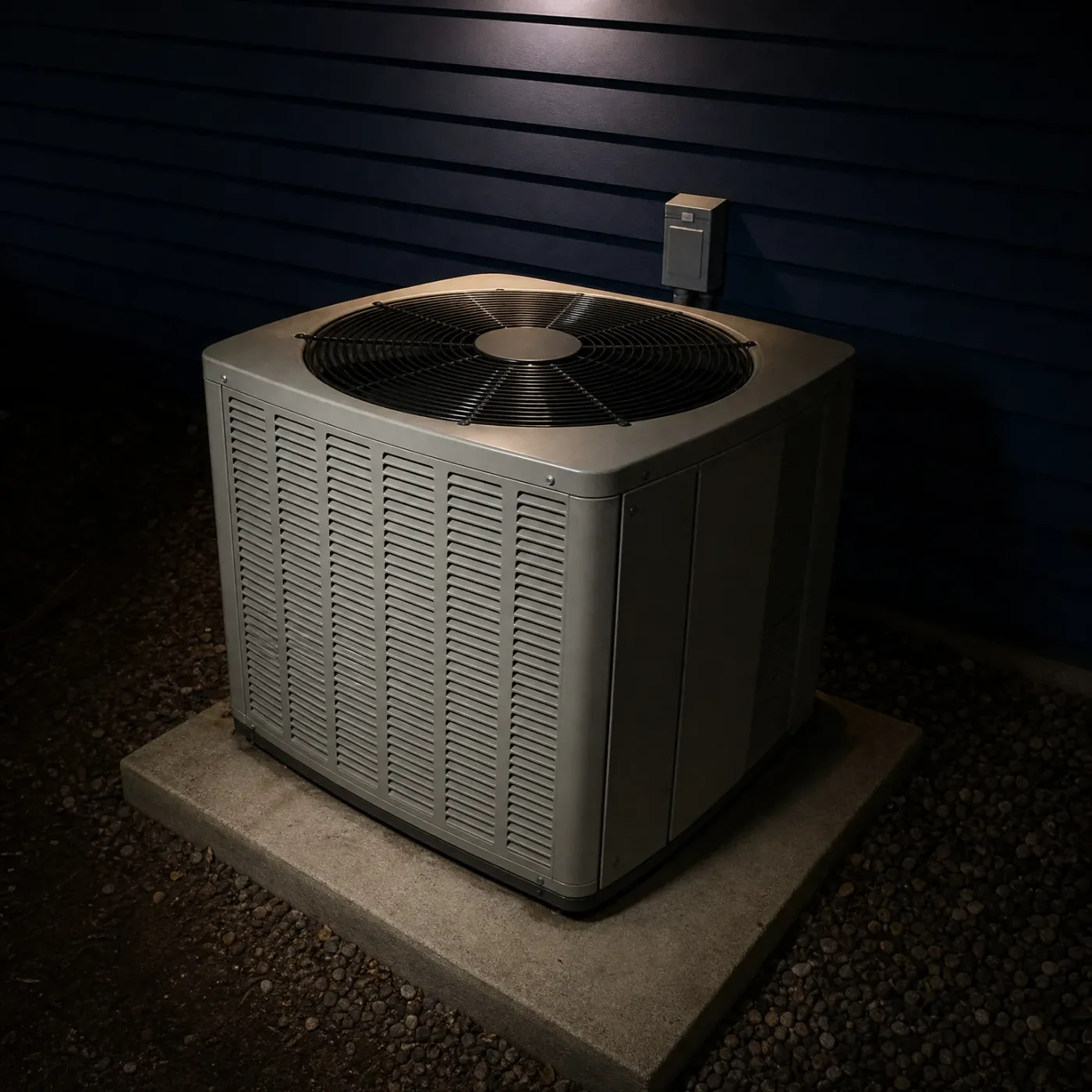
An outdoor air conditioning condenser unit with a top-mounted fan grille sits on a concrete pad surrounded by gravel, beside a dark horizontal-lap sided wall with a small electrical disconnect box.

Heat pump

To heat your home here$2.38per 100,000 Btu

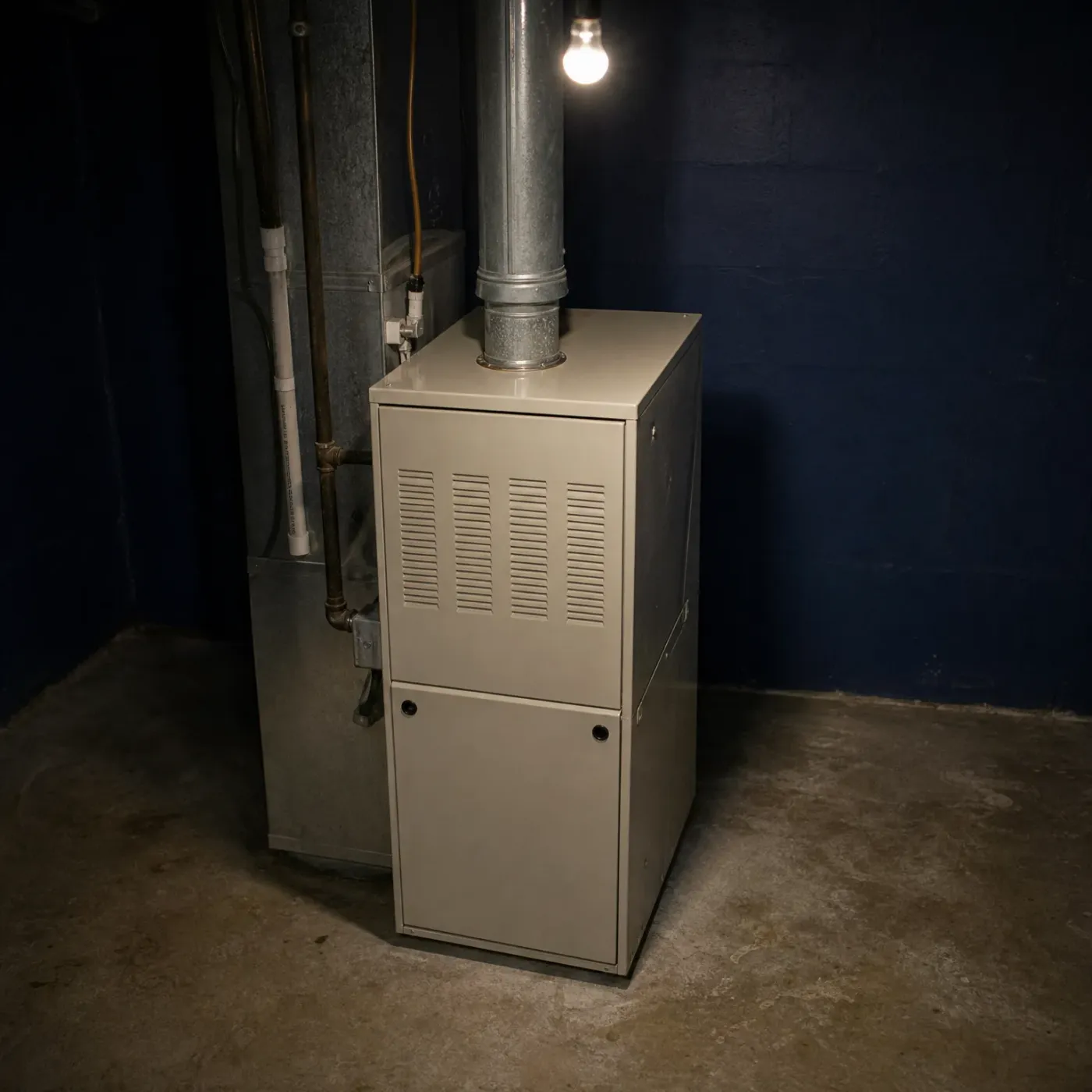
A beige furnace with a louvered upper panel and metal flue pipe stands on a concrete basement floor beside pipes and ductwork, lit by a bare hanging bulb against a dark blue wall.

Furnace

To heat your home here$1.94per 100,000 Btu

At Maryland's gas and electricity prices, a gas furnace makes the same heat as a heat pump for at least 18% less.

Btu stands for British thermal unit, the standard measure of heat energy.

Where does a heat pump shine?

  • Steady, even comfort

    A heat pump runs long and low instead of blasting on and off. Rooms hold an even temperature all day.

    A dimly lit living room at night with a dark blue armchair holding an open book and knit throw, a lit table lamp, a stone fireplace with a log basket, and a yellow Labrador sleeping on a patterned rug.
  • No gas line, nothing burning in the house

    It moves heat instead of making it from fire. That means no combustion, no flue and no gas bill for heat.

    A kitchen with a navy blue island topped by a white stone counter holding a black induction cooktop, a white kettle, green apples on a wooden tray and a blue striped towel, with pale grey cabinets, a window, a potted plant and a wooden stool nearby.
  • Heats and cools in one system

    One machine handles the heat in winter and the cooling in summer. There's no second system to buy or keep up.

    A living room with a beige sofa holding navy and light blue cushions and a fringed knit throw, beside a window overlooking a green garden, with a dark blue built-in bookshelf on the left and a wooden coffee table holding a mug, wooden tray and a vase of white flowers.

Where does a furnace shine?

  • Runs on the gas most homes here already use

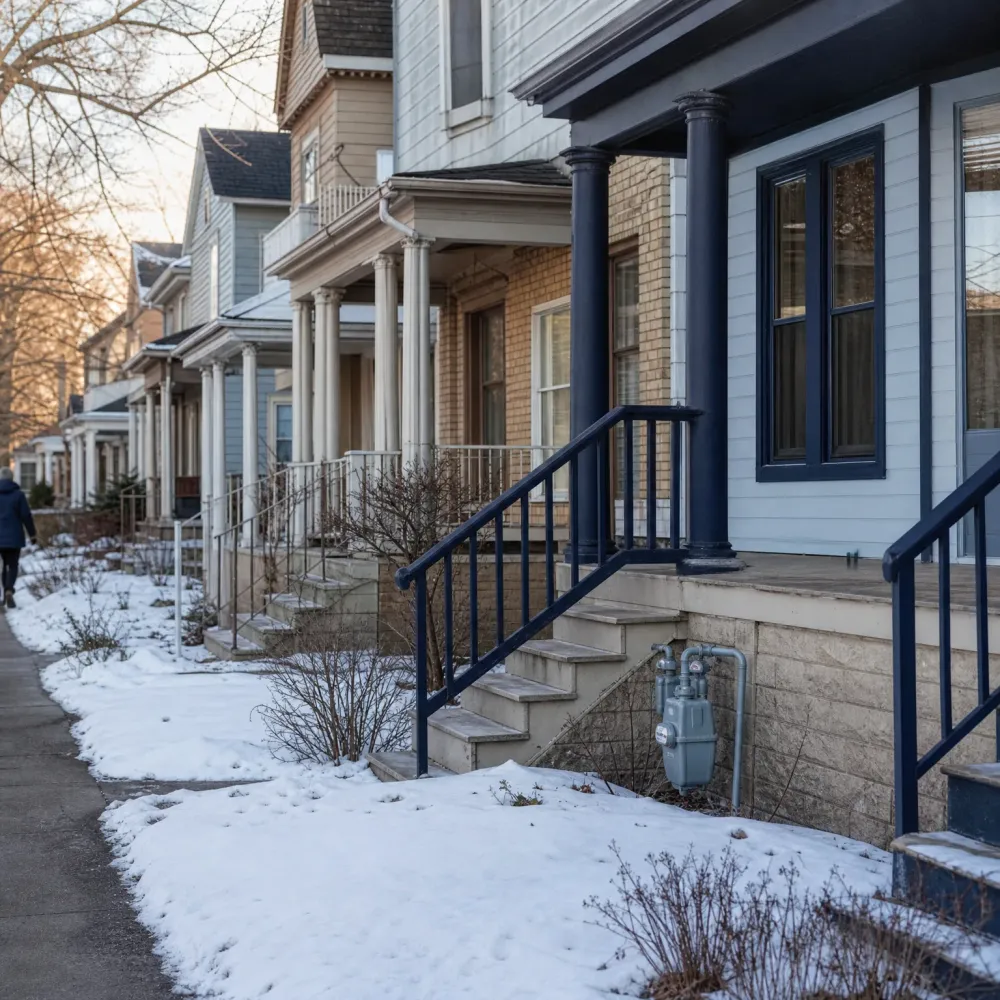
    Most homes in Baltimore city already have gas line, 62.1% of them use it for heat. If yours is one of them, a furnace just hooks into what's already there.

    A row of houses with covered porches, columns and railings along a snow-covered front yard and sidewalk, with a gas meter on a stone foundation and a person walking in the distance.
  • Proven, simple, easy to get serviced

    Gas furnaces have heated homes for generations. Almost every HVAC tech knows them inside and out.

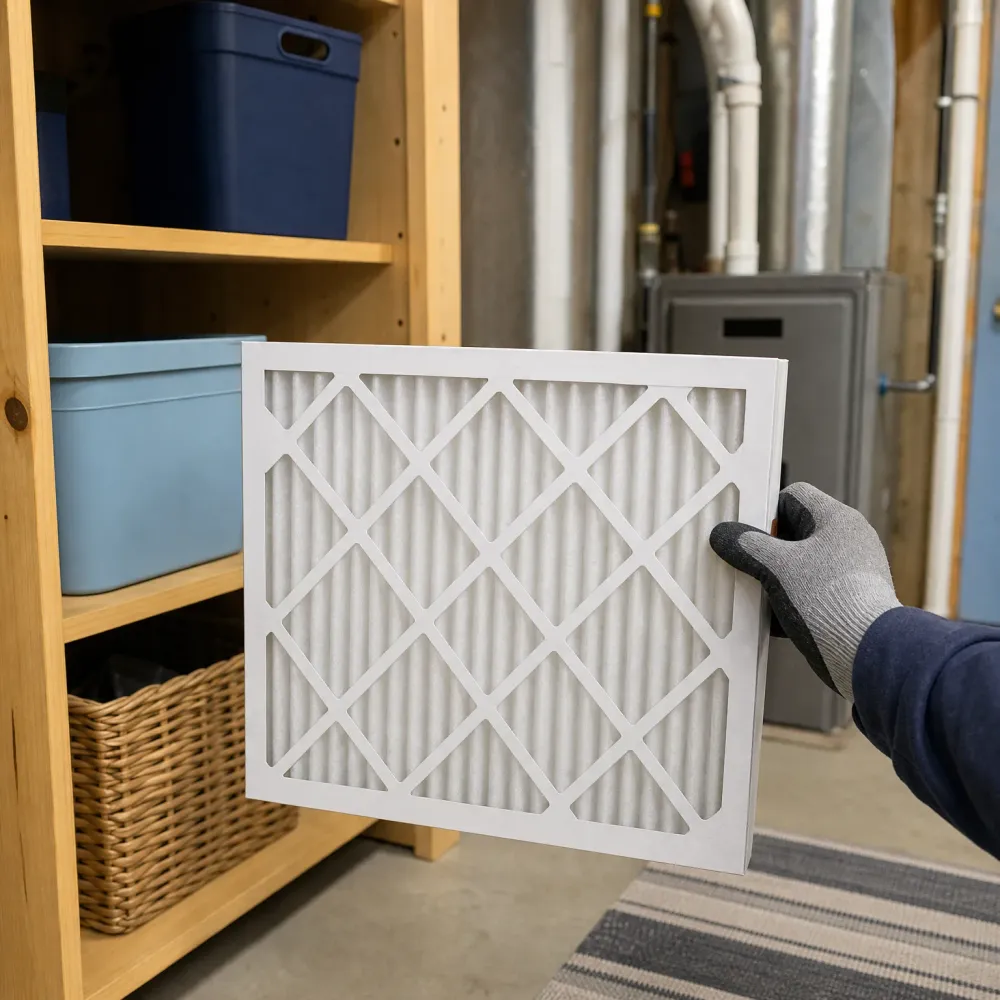
    A gloved hand holds a pleated cardboard-framed air filter in a basement utility area with wooden shelving, storage bins, a wicker basket, and ductwork in the background.
  • Pairs with any central AC

    Most central air systems are built around a furnace. The two share the blower, the ducts and the thermostat.

    A sunlit room with wood plank flooring, a floor vent grille near a sheer white curtain, a dark blue sofa with a pale blue fringed throw, and a wooden stool holding a blue mug.

Can a heat pump keep up on a 28 degree night

Your winter low here averages 28°F, and that matters because of where a standard heat pump starts to struggle. Below 40°F it puts out less heat than its rating. Below about 35°F it often needs backup heat to make up the difference. Baltimore's average overnight low sits below both marks, and so does every one of the roughly 75 nights a year that drop to freezing or colder.

That does not mean a heat pump leaves you cold. It means it is not working alone on those nights. Almost all of them stay above freezing rather than falling into deep cold. Nights at or below 0°F happen less than once a year here, and backup heat is mainly for that kind of extreme, not for a normal January night. A standard heat pump sized and installed for this climate, with backup heat wired in, covers a Baltimore winter. The honest distinction is between a standard heat pump and a cold climate one. The cold climate models, the ones carrying the ENERGY STAR Cold Climate mark, are tested to hold most of their capacity even at 5°F, which is colder than this area sees in a typical year.

So the question is not whether a heat pump can heat your house here. It can. The question is whether you want a system that leans on backup heat on the coldest nights of the year, or one built to keep most of its output down to temperatures Baltimore rarely reaches.
A two-story dark blue clapboard colonial house with white trim, a light blue front door, brick chimney and shingled roof, set behind a dry stone wall with red and orange autumn trees under a clear blue sky.

What it costs to run, and what else it does

At Maryland's current fuel prices, a furnace built to the federal minimum makes the same heat for less than a heat pump built to the same minimum: $1.94 against $2.38 per 100,000 Btu, about 18 percent less. That gap comes from comparing both machines at their federal minimum efficiency, with nothing added for the heat pump's backup heat on the coldest nights, so a heat pump leaning on backup more often would cost more than this figure, not less.

Heating is the long season here, about seven months, October through April. Cooling runs about four, June through September, with afternoons hitting 90°F or better on about 35 days a year. A furnace only answers to the first of those. It has nothing to do with your air conditioning, so you are running two systems and maintaining both. A heat pump heats in winter and cools in summer with one system, which is worth something on its own regardless of what either fuel costs per Btu.

Gas already heats a little over three in five homes in Baltimore, electricity a little under one in three, so neither choice here is unusual. If your house already has a gas line and a furnace, the furnace is the cheaper machine to run and the simpler one to replace like for like. If you are weighing a heat pump against replacing both a furnace and an aging air conditioner, the math changes, since one system is doing the work of two.

Sources: NOAA nClimDiv · PNNL Building America guide · PNNL-37127 field study · NOAA 1991–2020 seasonal normals · ENERGY STAR product criteria · EIA SEDS 2024 · 10 CFR 430.32 · Census ACS 2020–2024

A two-story dark blue clapboard house with white trim, a pale blue front door, and two chimneys, framed by orange and red autumn trees, with a dry stone wall and fallen leaves in the foreground.

Common questions about heat pumps and furnaces

  • Can a heat pump heat a house through a Maryland winter?

    Yes, but check what kind of heat pump it is. A standard heat pump puts out less than its rated capacity once it drops below 40°F, and nearly all of Baltimore city's roughly 75 freezing nights a year fall below that mark. A cold climate model is built to keep most of its output down to 5°F, and in field tests of those units backup heat covered only a small share of the heat needed between 0°F and 35°F.

  • Do I need backup heat with a heat pump here?

    Most homes with one do. A standard heat pump's heating efficiency drops once it's below about 35°F outside, and the overnight low here sits at 28°F on average across December, January and February. About 75 nights a year here fall to freezing or below, which is why most installations pair the heat pump with a backup heat source for those nights.

  • Can I keep my furnace and add a heat pump?

    Yes, that setup is called a dual fuel system, and plenty of homes run one. The heat pump handles the mild days, and the furnace takes over once it gets cold enough that the heat pump stops keeping up. In Baltimore city that split matters: the average winter night here is 28°F, below the point where a standard heat pump's output starts to fall short.

  • Is a heat pump cheaper to run than a furnace in Baltimore city?

    No, at Maryland's prices a gas furnace costs less to run. The numbers work out to $2.38 per 100,000 Btu for a heat pump against $1.94 for a furnace, so the furnace comes out at least 18% cheaper to make the same heat. That gap is for a furnace and heat pump built to the federal minimum, so a more efficient heat pump could close some of it.