







A low-angle view across a mowed lawn toward a single-story light-colored house with a dark shingled roof and dark shutters, framed by large deciduous trees and a blurred shrub in the foreground under an overcast sky.

Heat Pump Repair in Baltimore, MD

Tell us about the job

Takes about a minute. No obligation.

RepairHeat PumpBaltimore city, MD
Step 1 of 2

What ZIP code is the job in?

A heat pump that's struggling usually tells you before it quits outright. The air coming from the vents feels wrong first, barely warm when it should feel warm, or blowing but not really heating the room. Ice building up on the outdoor unit and not melting off during the defrost cycle is another sign something's off, whether that's the reversing valve stuck in one position or a sensor telling the system the wrong thing. Listen for changes too. A hum that wasn't there before, a clicking that repeats, or the outdoor fan running rough all point to a part wearing out rather than a one-time glitch. If the system is short cycling, turning on and off in quick bursts instead of running a full cycle, that's worth a call before it strains the compressor further. None of these mean the unit is done for, but they do mean it's past the point of waiting it out.

7 months
October through April, your system heats
4 months
June through September, it cools
28°F
the average winter night it heats against
87°F
the average summer afternoon it cools against
Isometric line illustration of a cutaway house showing interior rooms with furniture, a furnace or air handler with overhead ductwork, and an outdoor condenser unit connected by lines outside the wall.
Your system heats October through April and cools June through September.

NOAA nClimDiv, 1991–2020 normals

Baltimore asks real work of a heat pump, humid and mixed, zone 4A, but it's not extreme in either direction.

A heat pump here isn't fighting the load it would in a harsher climate, so when it breaks, the fix is usually worth it.

Half the homes in Baltimore were built by 1947, old enough that the heat pump itself is rarely original

Half the homes here were built by 1947
13 winter storms from 2015 to 2024
Power costs 17.86 cents a kWh statewide
Electricity here costs real moneyMaryland households paid 17.86 cents per kilowatthour in 2024, so a heat pump running wrong runs up the bill every month it's ignored.

Heat here runs October through April, so September is when a weak part usually gets found out. A system that's been sitting idle since spring gets asked to run a full cycle again, and anything marginal, a capacitor losing its charge, a contactor with some pitting, tends to fail right at that first real demand rather than partway through a mild afternoon. That's the week to get it looked at, before the cold settles in and every contractor in Baltimore has a full schedule. A heat pump that makes it through September clean usually runs fine the rest of the way through April.

A heat pump running wrong costs you every day it's not fixed

A heat pump that's running wrong doesn't pause the bill while you wait. Every day on the current rate adds up at 17.86 cents a kilowatt-hour. Get the part diagnosed and fixed, and the cost stops.

Find a contractor
A man in a dark jacket, cap and tan work pants carries a canvas tool bag up stone steps toward a navy front door, with a potted shrub beside the entry.
A gray heat pump condenser unit mounted on a concrete pad against the gray lap-siding exterior wall of a house.

Ask what you're repairing before you commit to it

If your heat pump came with the house, ask the contractor how old it is before agreeing to a big repair. A compressor or reversing valve job makes sense on a unit with years left in it. It makes less sense on one that's near the end anyway. That's worth asking before the work starts, not after.

Check the thermostat first

Make sure it's set to heat and the set point is actually above room temperature. Check the batteries if it uses them, and check that nothing nearby, a lamp or a sunny window, is throwing off the reading. It sounds obvious until it's the actual answer.
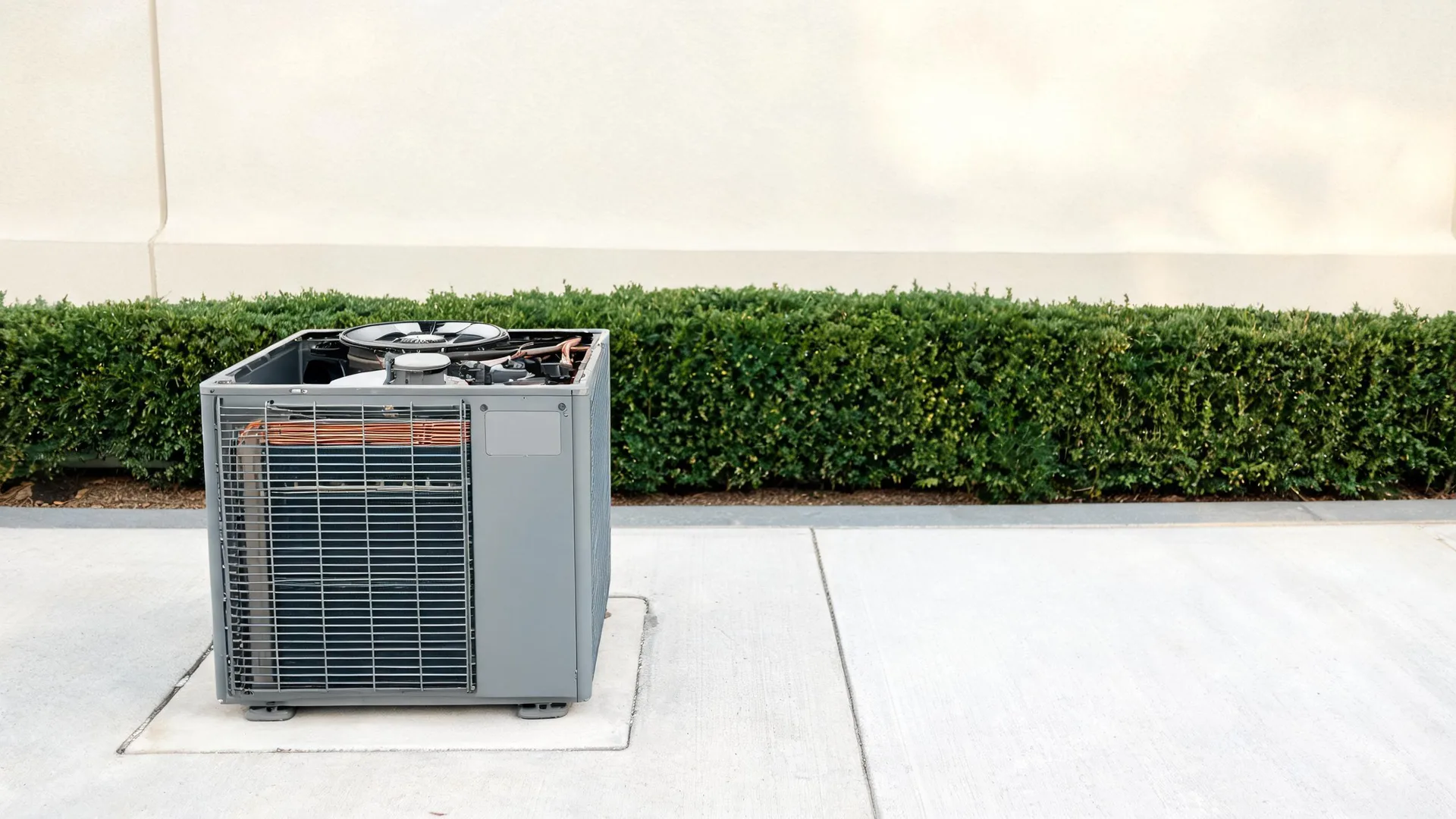
Check the filter and the vents

A clogged filter starves the system of airflow and can make it seem like the heat pump itself is failing. Swap it out or clean it if it's reusable. Walk the house and make sure no vents are closed or blocked by furniture or rugs, since that restricts airflow the same way a dirty filter does.

A refrigerant leak is a good example of something that only gets worse left alone. A system low on charge has to run longer to move the same heat, and the compressor ends up working against a problem it can't fix on its own. Run it long enough that way and you're not looking at a refrigerant top-off anymore, you're looking at a compressor. Electrical faults follow the same pattern. A capacitor that's starting to go will make the compressor or fan motor draw harder to start up, and that extra draw is what burns out the motor it's trying to run. Ice on the outdoor coil works against you too. A little frost melts off in the normal defrost cycle, but ice that keeps building blocks airflow across the coil, and the system has to run harder still to move any heat through it. The part that's failing is rarely the part that ends up getting replaced if you wait.

A diagnostic visit starts outside, at the unit itself. The tech checks refrigerant pressures and the temperature split between the air going in and the air coming out, since that split shows whether the system is actually moving heat the way it should. From there it's electrical readings, checking what the compressor and fan motor are drawing against what they're rated for. A motor pulling too hard is usually a motor on its way out. The reversing valve gets checked too, since a valve stuck in one position will heat and cool at the same time or not switch at all. Expect the contractor to also pull the covers and look at the wiring and contactors for scorching or pitting, because a connection that's arcing will take out a part long before that part would've failed on its own. By the end you should have an actual answer, which part is failing and why, not just that something's wrong.