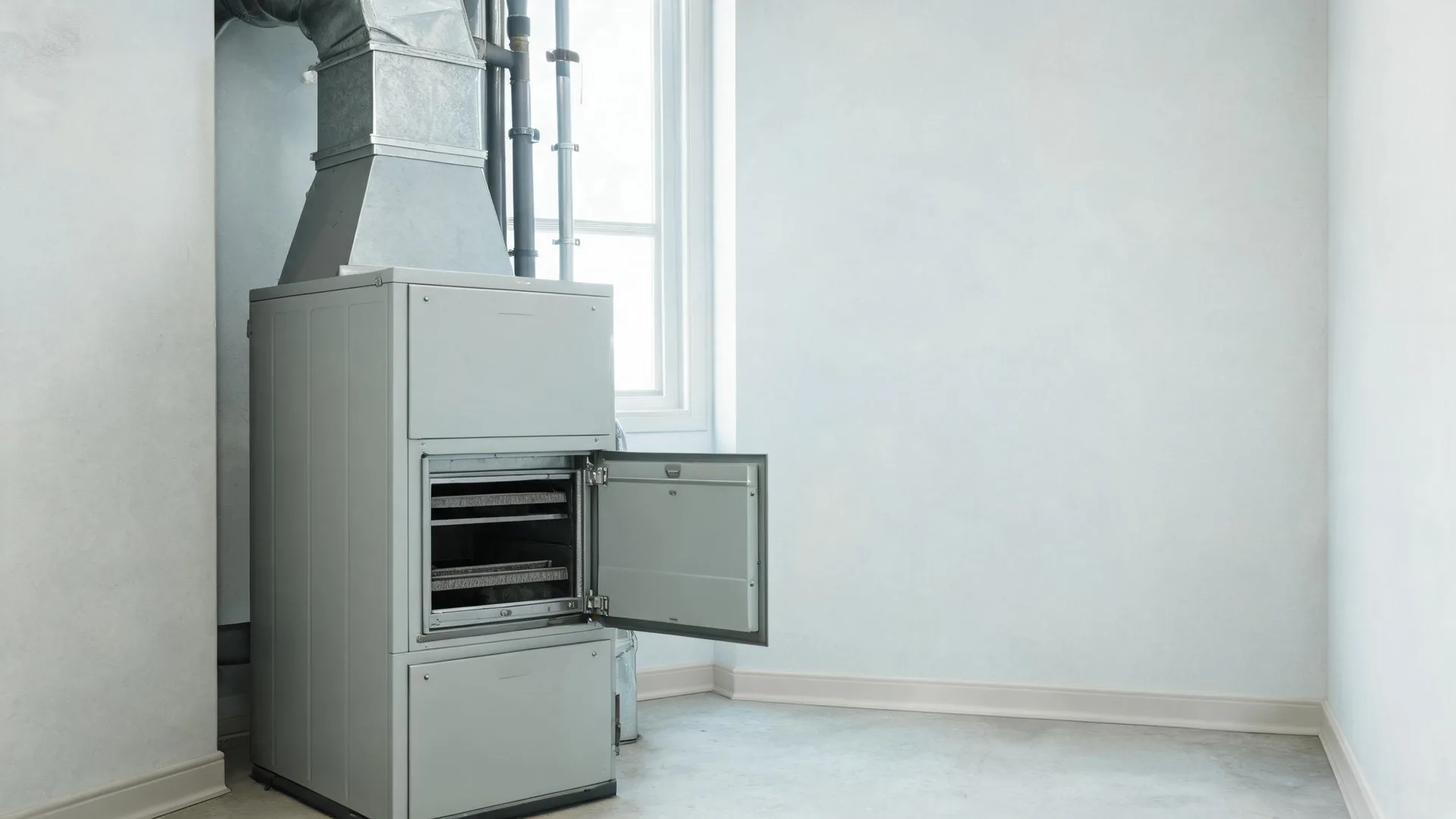
September is the month to catch it
Furnaces here sit idle since spring. September is when a weak igniter or a failing inducer motor gets tested again before the cold settles in.
Takes about a minute. No obligation.
Furnaces here sit idle since spring. September is when a weak igniter or a failing inducer motor gets tested again before the cold settles in.
Once heat runs October through April, a part that was already going bad shows itself fast. Getting it looked at early beats losing heat on the coldest night.
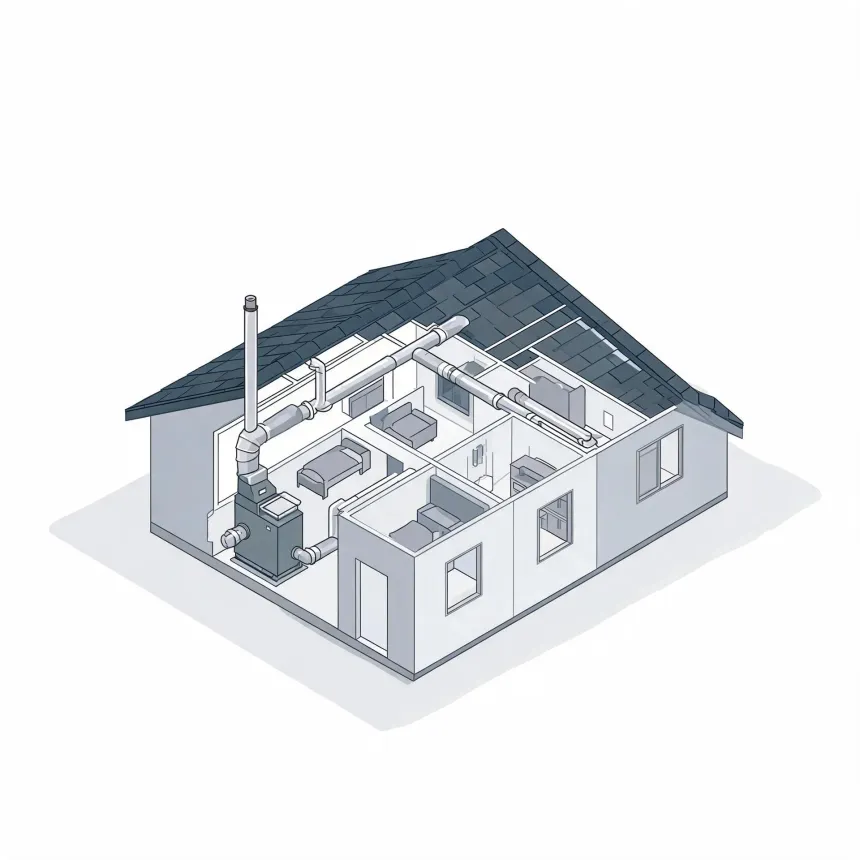
NOAA nClimDiv, 1991–2020 normals
A furnace that short cycles, running briefly then shutting off, is usually a flame sensor or limit switch telling the system something is wrong.
Ignore it and the part it's protecting is what fails next, usually without warning.




Before paying for a repair, ask the contractor how much life is left in the furnace. Half the homes in Baltimore were built in 1947 or earlier, so if yours is one of them, the furnace itself may not be original, but it's worth finding out when it was put in. A repair on a furnace near the end of its life might buy a year or two. It might also be money spent on a system that needs replacing soon anyway. Get the straight answer before any parts get ordered.
Problems tend to show up in the first weeks of the season, when the load hits a part that was already weak.
Find a contractorA cracked heat exchanger stays small for a while. Keep running the furnace and the metal keeps flexing with every heat cycle, and the crack grows. A blower motor losing a bearing runs loud for weeks before it seizes. Running it hot in the meantime wears the bearing faster, not slower. A draft inducer that's starting to fail struggles a little more each cycle until it can't start the burner at all. None of these get better by waiting. The part that's already stressed is the one carrying the extra load every time the furnace fires.
Make sure the thermostat is set to heat and the setpoint is actually above room temperature. Then pull the filter and hold it up to a light. If you can't see light through it, the furnace is starving for air, and that alone can cause short cycling or no heat at all.
Open the panel and watch the burner light. The flame should be steady and mostly blue. A flame that's yellow, flickering, or lifting off the burner means something's wrong with combustion and needs a tech, not a homeowner fix. Also check the switch on the wall near the furnace that looks like a light switch. It's a safety switch, and if it's off, the furnace won't run at all.
Estimates for a typical Baltimore home, compared with an older unit built to the previous federal minimum, from EIA household energy data, Maryland fuel prices and NOAA climate normals. Your home will differ.
Repair makes sense when one part has failed and the heat exchanger is sound.
Replacement makes sense when the heat exchanger is cracked or the furnace keeps needing parts.
A diagnostic call starts before any panel comes off. The tech asks what the furnace is doing, when it started, and what the thermostat shows. A furnace that won't fire points somewhere different than one that fires and quits a few minutes in. Then the panels come off and the burner gets watched through a full cycle, from ignition through flame through the blower kicking in. A meter checks the flame sensor's signal and the gas valve's response, since both can look fine sitting still and fail once they're under load. The inducer motor and the limit switches get tested too. A furnace will shut itself down on purpose to protect a part that's already failing. By the end the tech isn't guessing which part is bad. They've watched it happen.