Electricity here isn't cheap
Maryland homes paid 17.86 cents per kilowatthour in 2024. A heat pump losing efficiency doesn't just run more, it runs at that rate every time it kicks on.

Takes about a minute. No obligation.
Maryland homes paid 17.86 cents per kilowatthour in 2024. A heat pump losing efficiency doesn't just run more, it runs at that rate every time it kicks on.
A heat pump with a dirty coil or a low refrigerant charge has to work harder to heat or cool the same house, and that extra work pulls more power every hour it runs. A heat pump in Baltimore cycles on and off most of the year, so that difference shows up on the bill long before the system fails outright.
Heat here starts in October and runs seven months straight.
A heat pump due for its checkup in September has it done before that first cold morning asks anything of it.




A yearly checkup is what keeps that coil clean and that charge correct in the first place. A technician cleans the outdoor coil, checks refrigerant level against what the system calls for, and tightens electrical connections that work loose over a season of cycling. None of that is expensive compared to what a heat pump pulls at 17.86 cents a kilowatt-hour, run after run, for months. Skip the checkup and the system does not fail right away. It just keeps working harder than it needs to, and you keep paying for the difference.
Your heat pump isn't fighting the climate here the way it would elsewhere, but it still runs most of the year and still has a coil that gets dirty and a charge that drifts low. A checkup catches that before it turns into a bigger repair, or a system that quits during one of the winter storms that have hit Baltimore 13 times between 2015 and 2024.
Find a contractor
The filter is the cheapest part of this system and the one that does the most damage when it's ignored. Air has to pass through it on every cycle, heating or cooling, and a filter clogged with dust makes the blower pull harder to move the same air. That strain doesn't stay in one place. Starved airflow lets the indoor coil drop below freezing and ice over, and once it's iced, it stops transferring heat at all. The outdoor coil has its own problem. It sits outside collecting leaves, grass clippings and dust on every fin, and a dirty outdoor coil can't release heat in cooling mode or pull it in during heating mode the way a clean one does. The drain matters for a different reason. Cooling mode pulls moisture out of the air, and that water has to go somewhere. A condensate line clogged with algae backs up, and that backup can shut the system down on a safety switch or spill water somewhere it shouldn't. None of this looks dramatic at first. The system still runs. It just runs longer, works harder and wears faster to do the same job a clean filter, a clean coil and an open drain would do without strain.
A heat pump about to need a repair rarely just stops. It runs longer than it used to for the same temperature swing. It short cycles, kicking on and off every few minutes instead of running a steady stretch. It blows air that's warm but not hot, or cool but not cold, because the capacity is there but something is holding it back. Any of those is worth a look before the part that's struggling gives out.
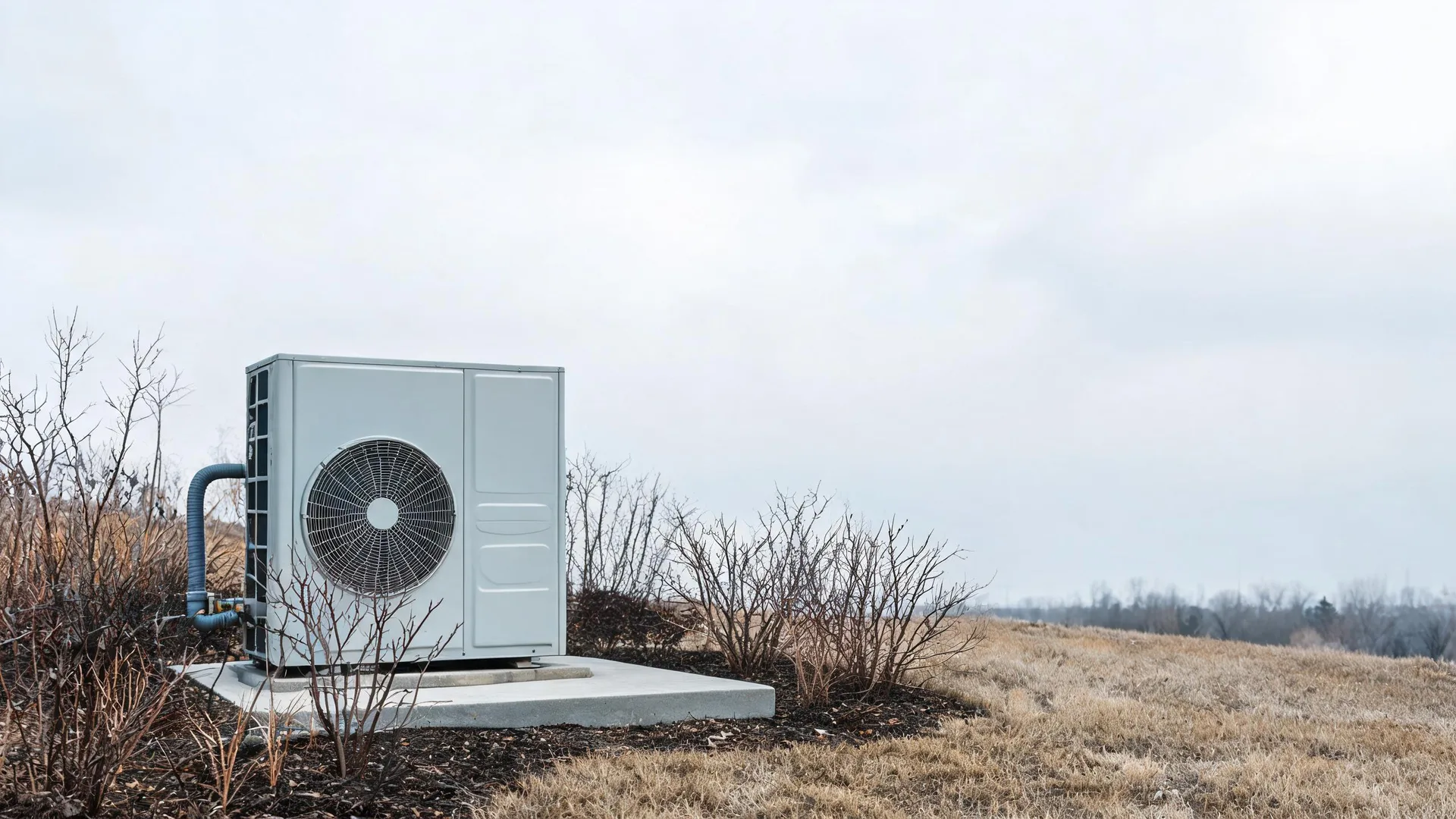
Stand near the outdoor unit and listen. A grinding, clicking or rattling that wasn't there before usually means a fan motor, a loose blade or a failing bearing. Look at the coil and the refrigerant lines too. Frost or ice forming on either one in the middle of a mild day means airflow or refrigerant charge is off, and that's not something that clears up on its own.
Skip a checkup and nothing happens that day. A heat pump doesn't fail from one missed service, it fails from what that missed service let keep going. A dirty coil stays dirty and gets worse the next cycle and the one after that. A refrigerant charge that's a little low doesn't correct itself, it just keeps the system running harder to hit the same temperature. Electrical connections that would have been caught and tightened stay loose, and a loose connection under load is how a contactor or a capacitor ends up failing instead of getting swapped out on schedule. The compressor carries all of that strain. It's the part that runs longest and hottest when the coil is dirty or the charge is off, and it's the one part that usually can't be repaired on its own. A compressor that fails means replacing the outdoor unit.
A tune-up starts with the data plate, not a checklist. A technician checks refrigerant charge against what the system is rated for, using gauges and the actual temperatures that day, not a guess. The outdoor coil gets washed clean so it can give up heat or pull it in the way it's supposed to. Electrical connections get tested under load, since a connection can look fine sitting still and still be the one that fails next time it's carrying current. The reversing valve gets checked too, because that's the part that switches a heat pump between heating and cooling, and a heat pump that gets stuck in one mode usually traces back to that valve. Blower wheel, indoor coil, condensate drain, all get looked at the same visit, because any one of them failing quietly undoes what the rest are doing right.