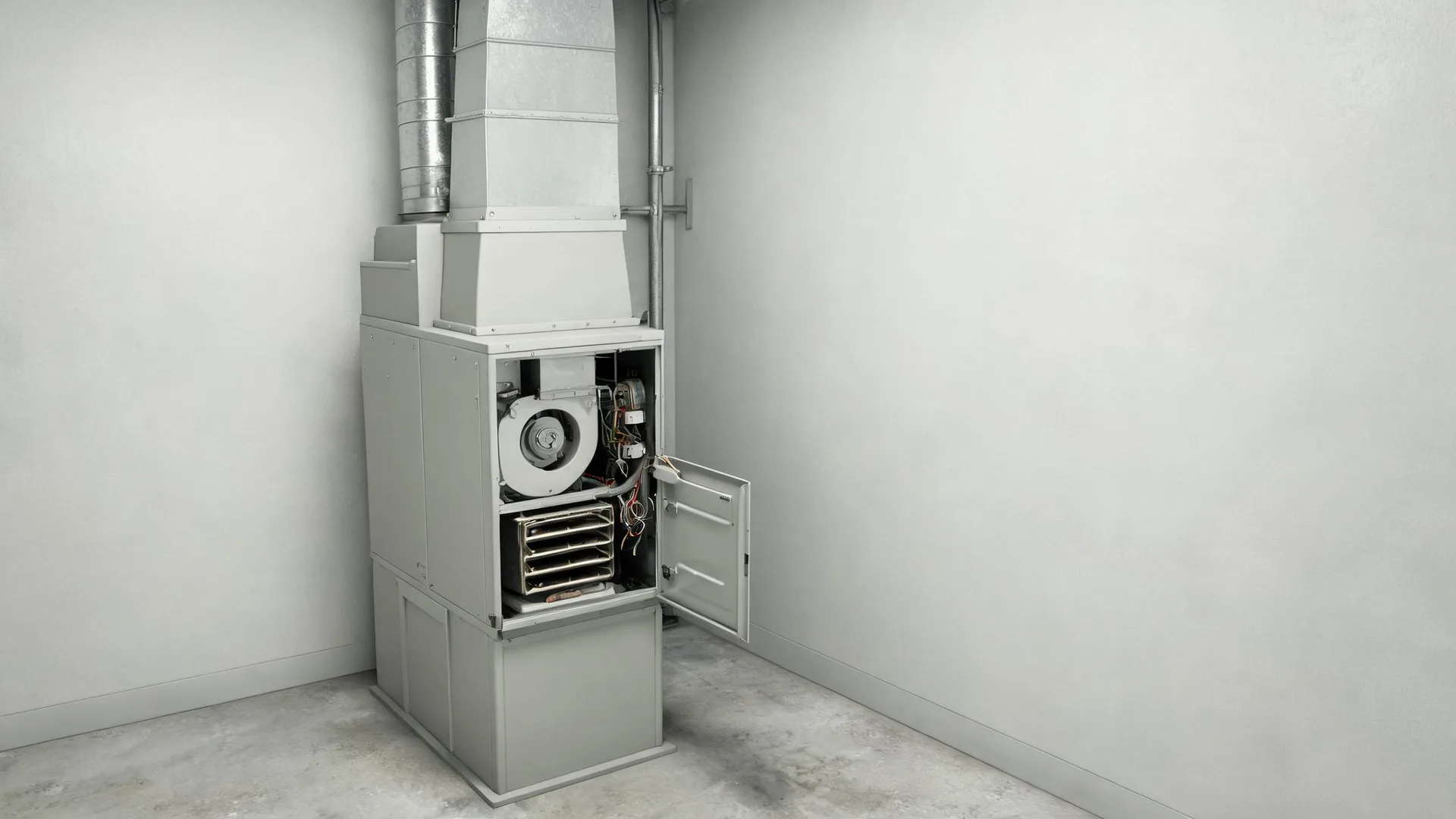
Gas is the default here
Gas heats 62.1% of homes in Baltimore city. If your old furnace ran on gas, the gas line, the vent, and the fuel supply to the house are already in place.
Takes about a minute. No obligation.
Gas heats 62.1% of homes in Baltimore city. If your old furnace ran on gas, the gas line, the vent, and the fuel supply to the house are already in place.
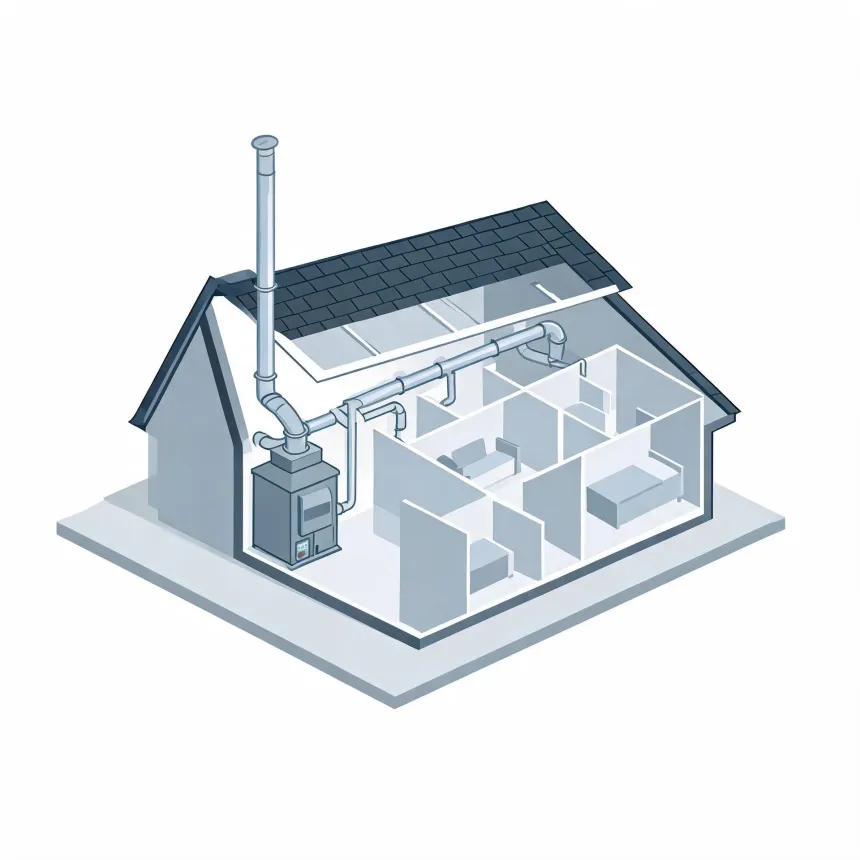
A gas furnace going in where one already ran means the contractor is matching existing venting and gas line sizing rather than adding them. That keeps the job closer to a swap than a build-out.
NOAA nClimDiv, 1991–2020 normals
Furnaces in Baltimore start running in October.
A September install means it's tested and ready before you need it, not after.




Half the homes in Baltimore city were built in 1947 or earlier. A furnace going into a house that old is going into a house that wasn't built with it in mind. The duct run may have been sized for a different system entirely, or added later to fit whatever was there before. None of that means the job is harder. It means the contractor sizing your furnace needs to size it to your house, not just to the model it's replacing. A furnace that's too big for the space will short cycle. One that's too small will run constantly and still leave rooms cold. Getting that right matters more in a house this age than in one built to a modern code.
Baltimore city falls under zone 4A, and any furnace going in now has to meet the federal minimum of 80 percent AFUE. That floor holds until December 2028, when new furnaces will have to hit 95 percent. A system installed today is yours to run for years past that date, so it's worth asking your contractor where the one you're considering lands. A federal tax credit is available for qualifying high-efficiency equipment, which can offset some of that difference.
Find a contractor
Ask the contractor for a load calculation before they quote a size, not after. That's the step that catches a duct run sized for an old system or a room that was added on later. Skip it and you're trusting the new furnace to match the old one's size, which is the assumption that gets homes like this one wrong.
The gas line gets capped off and the old unit gets cut loose from the ducts and the vent before it comes out. A contractor doing a swap removes it as part of the job rather than leaving it behind. Where it ends up after that, whether it's scrapped for the metal or just hauled to a landfill, isn't something you need to manage.
An old furnace that ran for years doesn't mean its venting is still sized right for a new one. Furnaces vary in how much exhaust they put out and how much gas they draw, so the contractor should check that the existing flue and gas line still fit the new unit instead of assuming last furnace's setup carries over.
Estimates for a typical Baltimore home, from EIA household energy data, Maryland fuel prices and NOAA climate normals. Your home will differ.
Once the new furnace is set and connected, the contractor runs it through a startup check before calling the job done. That means firing the burners, checking that the flame looks right, and confirming the inducer motor and blower both come on when they should. Gas pressure gets checked at the manifold and adjusted if it's off. The contractor also checks the temperature rise across the furnace, which tells them whether the airflow matches what that unit needs to run safely. Last step is usually walking the thermostat settings with you so it's actually heating on the first cold night, not just sitting there installed.