
Electricity here runs 17.86 cents a kilowatt-hour
Maryland households paid that rate in 2024, higher than a lot of the country. A heat pump runs on electricity for both heating and cooling, so that rate hits every month, not just summer.
Takes about a minute. No obligation.
Maryland households paid that rate in 2024, higher than a lot of the country. A heat pump runs on electricity for both heating and cooling, so that rate hits every month, not just summer.
Two heat pumps can heat and cool the same house and use different amounts of power doing it. At Baltimore's rate, that difference shows up on the bill long after the install is done.
NOAA nClimDiv, 1991–2020 normals
Baltimore's heat pump runs through real heat and real cold, but neither one pushes it to the edge.
A heat pump sized right for Baltimore winters and summers holds up fine without being the top efficiency model on the shelf.



A heat pump that's failing tends to go out mid season, and then you take whatever install date the contractor has open. Doing it in May or September means you're choosing the date instead. September matters more here, since heat runs October through April, seven months, longer than cooling ever does. An install done ahead of that stretch leaves time to size the system right for the house, rather than swapping in whatever is on hand. Picking the month before the season gets you the same equipment without the rush.
Half the homes in Baltimore city were built in 1947 or earlier. A heat pump that fits one of these houses isn't the same unit that fits new construction. Sizing it right means looking at the house you have, not a standard spec sheet.
Find a contractor
A heat pump that's too big cools the house fast, then shuts off before it's pulled the moisture out of the air. The room feels cold and damp at the same time. One that's too small runs flat out and never gets ahead of the load, so it leans on backup heat strips more than it should. Either mistake wears the equipment down faster than correct sizing would. Short cycling, where the unit starts and stops over and over instead of settling into a long steady run, strains the compressor every time it kicks on. A unit sized to the house runs in long, slow stretches instead, which is both easier on the parts and better at holding steady temperature. Getting the size right isn't about rounding up for safety. It's about matching output to what the house actually loses in winter and gains in summer, which is why a load calculation looks at the whole building, not just its square footage.
If the existing ducts are undersized or leaky, a new heat pump has to fight them to move air, and sealing or resizing ducts adds to the job. A system matched to the house but choked by old ductwork won't deliver what the spec sheet promises.
Replacing a heat pump with another heat pump reuses the pad, the line set path and often the ductwork. Switching from a furnace and separate AC to a heat pump means new refrigerant lines, possibly a new air handler, and electrical work the old system never needed.
When you're comparing quotes, ask how the contractor arrived at the size of the unit. A proper load calculation looks at the walls, the windows, the insulation and the layout of your house. A number pulled off a chart matched to square footage alone is a guess dressed up as math. Ask what happens on the coldest day of the year, whether the heat pump covers the heating load by itself or leans on backup heat strips, and how often that backup is expected to run. Ask about the sound rating too, since the outdoor unit often sits close to a window or a bedroom, and some units run quieter than others at the same capacity. If contractors give you different sizes for the same house, have each one walk through how they got there. That answer tells you whether they measured your house or skipped the step.
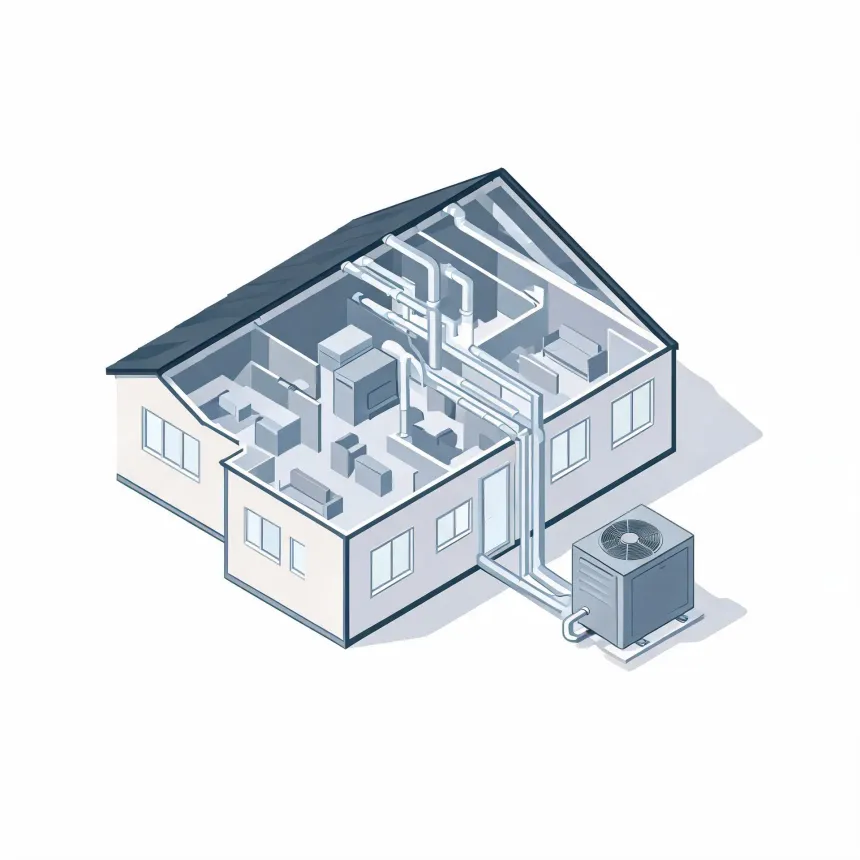
Installation starts with the outdoor unit and the indoor coil, and the crew sets the outdoor unit on a pad before running refrigerant lines to it. If the old lines aren't suited to the new system, those get replaced rather than reused. The electrical circuit gets checked too, since a heat pump can draw more power than whatever was wired in for the old system. Once the lines are connected, the crew pulls a vacuum on the system to clear out moisture and air, then weighs in refrigerant to the exact charge the manufacturer specifies. That charge matters more than almost anything else on the job. Too little or too much and the system loses capacity and wears parts faster, even if everything else was done right. Before the crew leaves, they should run the system in both heating and cooling, check the pressures against the manufacturer's numbers, and walk you through the thermostat.