A two-story red brick house with black shutters and a gray roof sits behind a mowed lawn, framed by large deciduous trees, with a dry-stacked stone wall in the foreground.

Furnace Installation in La Plata, MD

Tell us about the job

Takes about a minute. No obligation.

New system or replacementFurnace or heatingCharles County, MD
Step 1 of 2

What ZIP code is the job in?

Electricity here runs $52.34 per million Btu

Maryland electricity costs $52.34 per million Btu, more than most states pay. If your new furnace runs on electricity, or you're weighing an electric furnace against gas, that rate applies to every hour it runs this winter.

The AFUE rating is what decides your bill

A furnace with a higher AFUE rating turns more of the fuel you pay for into heat in the house instead of losing it. At Maryland's electric rate, a few points of AFUE matter more here than somewhere power costs less.

7 months
October through April, your furnace is on duty
29°F
the average winter night it heats against
80% AFUE
the federal minimum any new unit must meet
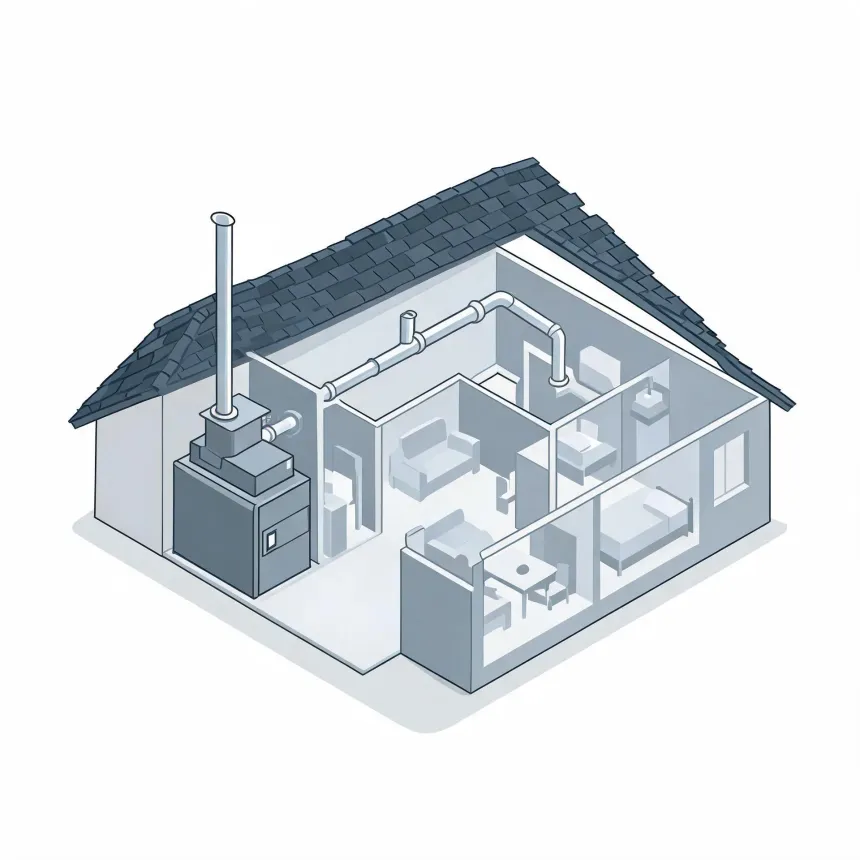
Isometric cutaway illustration of a single-story house showing interior rooms with furniture, ceiling ductwork, and a large furnace unit with a tall flue pipe in a corner room.
Your furnace works hardest from November through March.

NOAA nClimDiv, 1991–2020 normals

Furnaces in La Plata start running in October.

Get yours installed in September and it's done before you need it.

Seven months of winter here call for a standard furnace, sized right

Heat runs October through April
Winter nights average 29°F
11 winter storms from 2015 to 2024
Most homes here run on electric heatElectricity heats 55.4% of homes in Charles County

A standard furnace sized to your house is the right call here. Charles County gets winter storms, but only 11 between 2015 and 2024, not enough to push you toward extra capacity or backup heat built into the install. The weather that does hit this county most, damaging wind and the occasional hail, affects the outside of your house and the power lines, not what size furnace you need indoors. If you lose power during a storm, a standard furnace with a standing pilot will relight on its own once power is back. One with electronic ignition needs the power on to start, same as it would any other day. Neither case calls for paying more to size up.

Your new furnace has to meet Maryland's efficiency floor. Get the credit while it still applies.

Furnaces sold here have to hit at least 80 percent AFUE. That floor jumps to 95 percent for units built after December 2028, so a lot of what's on the market now will be phased out. Install now and you still get the federal tax credit for qualifying high-efficiency furnaces.

Find a contractor
A man in a cap, olive shirt and dark pants carries a canvas tool bag up concrete steps toward a dark blue front door, with a potted shrub beside the entry.
A gas furnace with attached ductwork, gas piping, and condensate lines installed in a concrete-block basement.

The questions that matter outlast the install

A furnace runs for years, not months, so the questions worth asking are about what happens over that stretch, not what the unit costs on install day. Ask what the warranty covers on the heat exchanger versus everything else, because those terms are usually different and the heat exchanger is the part that's expensive to replace. Ask how the contractor sized the unit for your house, and whether they ran a load calculation or just matched what was there before. A furnace sized too big for the space will short cycle, turning on and off more than it should, which wears the ignition system faster and never runs long enough to heat evenly. Ask what maintenance the manufacturer requires to keep the warranty valid, since some warranties are void if you can't show the furnace was serviced on schedule. Ask about the blower motor too. A variable speed motor runs quieter and holds steadier temperatures than a single speed one, and that's worth knowing before you compare prices side by side.

The ductwork decides more than the furnace does

A furnace only moves the air your ducts let it move. If the existing ductwork is undersized, leaky, or was built for a different furnace, the contractor has to account for that before the new unit goes in, and that work costs more than the furnace itself. A straightforward swap, same ducts, same spot, same vent path, is the cheapest kind of install there is.

Where the furnace sits and how it vents changes the labor

A furnace installed where the old one sat, using the same gas line and the same vent, takes less work than one that's moving to a new spot or switching fuel type. High-efficiency furnaces vent through PVC pipe rather than a metal flue, so if you're stepping up in efficiency, the install may include running new venting to the outside, not just setting the unit in place.

Sizing a furnace comes down to a load calculation, not the square footage of the house. A contractor worth hiring measures the walls, the windows, the insulation, the ceiling height, even which way the house faces, and runs those numbers to find out how much heat the place actually loses on the coldest day. Guessing by square footage alone skips all of that, and it's how you end up with the wrong unit. Too big, and the furnace blasts the house to temperature fast, shuts off, and starts again a few minutes later. That short cycling wears out the ignition system well before its time and leaves rooms farther from the furnace never quite warm. Too small, and it runs nearly nonstop on the coldest days and still falls behind. The right size is the one that runs long steady stretches, warms the house evenly, and shuts off only once it actually has.

Installation day starts with the old furnace coming out. That often takes longer than setting the new one in, especially if the gas line, the vent, or the electrical has to be disconnected first. Once the space is clear, the new furnace gets set, leveled, and connected to the ducts, the fuel supply, and the vent. Every joint and connection gets checked for leaks before the unit runs at all. Then the contractor fires it up and lets it run through a full cycle, checking the temperature rise to confirm it's heating the way it should. The last step takes the least time but matters just as much. The contractor confirms the thermostat is talking to the furnace correctly and that air is coming out even at every vent in the house. A straightforward swap can be done in a day. Anything that involves new ductwork, new venting, or moving the furnace to a different spot takes longer, because that work has to happen before the furnace itself goes in.