




A gray high-efficiency furnace with two white PVC vent pipes stands beside galvanized sheet-metal ductwork in a dim basement with exposed joists and a concrete floor.

One form, no calling around

Do you need a furnace humidifier in Maryland

Winter air inside a Maryland house gets dry, especially with electric heat running the furnace fan. A whole-home humidifier mounted on the furnace fixes that for the whole house at once, not just one room. This page gets into whether your setup needs one, and what's involved in finding a licensed local contractor to install it instead of calling around and sorting quotes yourself.

Skip the search

Most Maryland homes with a furnace benefit from a humidifier, because electric heat dries the air out fast. Electric furnaces don't burn fuel the way a gas furnace does, but running that fan all winter still pulls moisture out of the air inside your house, and Maryland winters are long enough that you feel it: cracked skin, static shocks, wood floors and furniture joints shrinking. A whole-home humidifier mounted on the furnace adds moisture back as the air moves through the ducts, so every room gets it, not just the one with a tabletop unit running. Whether you actually need one depends on how dry your house gets and whether anyone in it has allergies or asthma that dry air makes worse. If you're noticing the signs, it's worth having a furnace technician look at your setup and tell you straight whether it's worth adding.

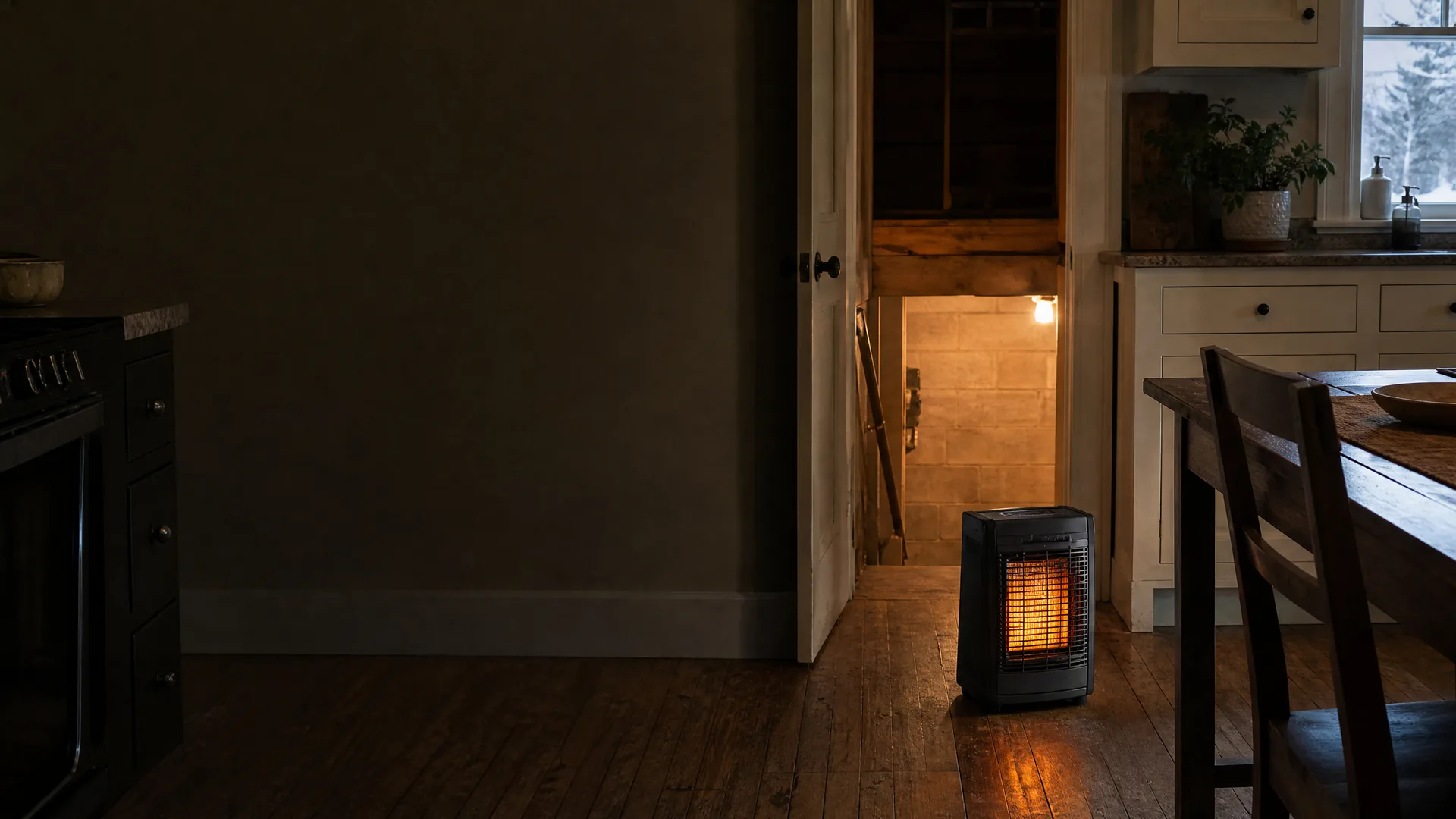
A dimly lit interior with wood plank flooring where a small portable heater with a glowing orange element sits near an open doorway, with a stove at left, kitchen cabinets and a potted plant at right, and a wooden table and chair in the foreground.

The space heater by the table has been running since you came downstairs, ticking away against a cold you can feel at your ankles. It's a weekday morning, the kind where the furnace is cycling on and off but the air never feels warm, just dry. Your throat caught on the first breath you took in the kitchen. The basement door is open behind you, you went down earlier to check the furnace filter and never shut it again. Static crackles when you pull your sleeve off the counter. Somewhere upstairs a kid is complaining about a bloody nose, and you already know it's the same thing as last week.

How does a furnace humidifier actually work

You've read that electric heat dries the air out and that a whole-home humidifier mounts on the furnace, but you're picturing something like the tabletop humidifier you fill at the sink, and that's not how the furnace version runs. You want to know what's actually attached to the ductwork and what makes it add moisture without you doing anything.

It taps into your water line and adds moisture to the air as it moves through the ducts

A furnace humidifier mounts on the supply duct or the return, wherever the installer finds the right spot, and connects to a nearby water line. There's no tank to fill. When the furnace fan runs, air passes over a water panel or through a small drum inside the unit, and that air picks up moisture before it's pushed through the ducts into every room. A humidistat, usually mounted near the thermostat or on the unit itself, reads the air and tells it when to run. In a Maryland winter, that means the system adds moisture on its own schedule, matched to how dry the air actually gets, not a guess.

A gray-haired man in a dark sweater sits on a light gray sofa in a living room, looking toward a sunlit window with trees outside.
A gray-haired man in a dark blue sweater sits on a light gray sofa in a sunlit living room, looking off to the side, with a potted plant, shelving unit, and large glass doors behind him.
A bearded man with graying hair in a dark green sweater sits on a sofa in a living room, looking off to the side, with a sliding glass door and a dim kitchen doorway behind him.
A gray-haired man in a dark knit sweater sits on a light gray sofa in a living room, looking toward a sunlit window, with houseplants, a lamp, and framed art in the background.

Skip the search

One installer gets your project, so there's no bidding war over it.

You only hire the pro if you want to.

Why electric heat dries air faster

A gas furnace produces some moisture as a byproduct of burning fuel, which puts a little humidity back into the air even as it heats. An electric furnace doesn't burn anything. It just pushes heated air through the ducts, so there's nothing to offset the moisture that dry winter air already lacks. The blower fan runs the same number of hours either way, moving the same dry air past your skin and furniture. Over a full winter, that difference adds up, which is part of why electric-heat homes in Maryland tend to feel drier than gas-heated ones at the same thermostat setting.


What a whole-home unit actually treats

A furnace humidifier ties into the ductwork and the water line, so it adds moisture to the air as it moves past, before that air gets distributed to every room on the system. A portable humidifier treats one room and needs its tank refilled by hand, often daily. The furnace-mounted version draws from a water line directly, so it keeps working as long as the furnace runs, without anyone topping it off. That's the practical difference: one covers the room it sits in, the other covers the house, for as long as the heat is on.

A gray furnace cabinet in a basement, connected to galvanized sheet-metal ductwork and white PVC pipes, against a concrete wall with exposed metal piping and insulation overhead.
Before you get your furnace installation
A gray high-efficiency furnace with two PVC vent pipes stands in an unfinished basement beside sheet-metal ductwork, a framed and plastic-covered wall, and a bare concrete wall with vertical pipes.
After you get your furnace installation
  1. Furnace calls for heat and the fan starts moving air.

  2. Water line feeds a small valve mounted on the humidifier.

  3. The valve opens and wets the pad or drum inside.

  4. Warm air from the furnace passes through the wet pad.

A gray furnace cabinet in a basement with sheet-metal ductwork, white PVC vent pipes, and black gas piping against a concrete wall and wood-framed partition on a bare concrete floor.
A furnace like this moves plenty of heat, but nothing about it adds moisture back to the air it pushes through the ducts.
A gray metal furnace with two white PVC vent pipes stands on a concrete floor beside galvanized sheet-metal ductwork in a basement or utility space with wood framing.
Rust on the cabinet after years of winters without humidity control, running dry heat straight into the house.

Winter nights average 27°F statewide

Overnight lows in Maryland average 27°F through December, January and February. That's cold enough that your furnace runs long stretches most nights, and every hour it runs, it's pulling more moisture out of the air in your house.

NOAA nClimDiv 1991-2020 county normals weighted by homes

A middle-aged woman with shoulder-length dark hair, wearing a gray cardigan over a cream top, sits in an upholstered armchair and looks toward a sunlit window, with a shelf holding framed pictures and a plant behind her.
A woman and a child wrapped together in a thick knitted blanket on a sofa, both with eyes closed, with a lit table lamp and houseplant in the dim background.

Where this leaves you

  • Electric heat with no humidifier leaves Maryland air dry for the whole winter, from the first cold night through the last.
  • A furnace-mounted humidifier treats every room the furnace reaches, so the fix doesn't depend on which door is open.
  • A local contractor who installs these every winter knows which model fits your furnace and your water line without guesswork.
  • Working with one contractor on your installation means one visit and one assessment, not several companies competing for the job.
  • The dry air, the cracked skin, the static shocks on the stairs all trace back to the same cause and the same fix.

If you've read this far, you already know the answer for most Maryland homes with a furnace and electric heat. The dry air isn't in your head, and it isn't something you have to live with until April. A humidifier mounted on the furnace puts moisture back into the air the same way your furnace fan moves it, through the ducts, into every room, without you doing anything once it's set up. What's left is the install itself, and that's where it matters who does the work. A furnace humidifier has to be sized to your furnace and tied into your water line correctly, and a contractor who does this every winter in Maryland has already seen what usually goes wrong when it's rushed or sized wrong. That's not something you can check for yourself from the specs on a box. Going with one contractor instead of calling around means one person looks at your actual furnace and your actual water line and tells you what fits, rather than you trying to referee a few different opinions over the phone. You won't need to explain your setup three different times or sort through quotes that don't quite match what you asked for. The static shocks, the cracked skin on your hands, the dry throat in the morning, all of it traces back to the same dry air moving through the same ducts. The fix is specific, and so is getting it installed right.

A single-story stucco house at dusk with a lit paver walkway lined by low path lights, desert plants and boulders in front, and distant mountains under an orange and blue sky.

Furnace Installation

Explain it one time

New system or replacementFurnace or heatingMaryland
Step 1 of 2

What ZIP code is the job in?

  • A beige upholstered armchair with an olive cushion sits in a sunlit corner beside a wooden side table holding a ceramic vase with leafy branches, under a framed abstract artwork, on a woven rug over a wood floor.
    • A local installer who puts in furnaces gets your project.
    • Get in touch with a local installer about a new furnace.
  • A gray outdoor condenser unit on a concrete pad surrounded by dark gravel, beside a dark wood-sided wall with an electrical disconnect box and a stone veneer wall with a small evergreen shrub.
    • Send the form and the search for an installer is over.
    • Send the request and finding a pro stops being your problem.
  • A beige upholstered oversized armchair with a matching cushion and a knit throw draped over one arm, beside a round wooden side table holding a vase of greenery near a curtained window, with a framed landscape print on the wall and a woven rug on a wood floor.
    • Skip collecting and comparing quotes for the new furnace.
    • Answer a few questions instead of calling shop after shop.
  • Sunlit living room corner with a beige upholstered sofa, cushion and knitted throw, a round wooden side table holding a white ceramic vase of leafy branches and a small wooden bowl, a framed landscape painting on the wall, and a window at right.
    • Your request goes to one pro, not a list of companies.
    • The pro who reaches out is licensed in Maryland.