






An unfinished basement featuring a grey forced-air furnace with metal ductwork, concrete block walls, exposed wooden joists, and a single hanging bare bulb.

Furnace Installation in Cumberland, MD

Tell us about the job

Takes about a minute. No obligation.

New system or replacementFurnace or heatingAllegany County, MD
Step 1 of 2

What ZIP code is the job in?

Ask what size furnace they're proposing and how they got that number. It should come from a load calculation on this house, not just a match to the old unit or a guess based on square footage. Ask about the heat exchanger warranty and what voids it, since that part is the expensive one to replace later. Ask whether the ductwork was inspected as part of the quote, because a furnace can only perform as well as the ducts moving air through the house. Ask what happens if the installed unit doesn't heat evenly room to room, and who comes back to fix that. A contractor who answers these without hesitation has done this before.

8 months
October through May, your furnace is on duty
24°F
the average winter night it heats against
50%
of homes here heat with gas, so most furnaces here burn gas
80% AFUE
the federal minimum any new unit must meet
Isometric line illustration of a cutaway single-story house showing interior rooms with furniture, ceiling ductwork, a chimney flue, and a furnace unit outside the exterior wall.
Your furnace works hardest from November through March.

NOAA nClimDiv, 1991–2020 normals

Half the homes in Cumberland were built in 1959 or earlier.

If yours is one of them, the new furnace needs to be sized and vented for the house as it actually is, not matched to whatever was pulled out.

A standard furnace, sized right, handles Cumberland winters fine

Heat runs October through May
Winter nights average 24°F
56 winter storms from 2015 to 2024
Eight months of heat in CumberlandFurnaces here run October through May. September is the month to get it replaced, before the heat has to come on.

Allegany County is in climate zone 5A, a cool zone where the furnace carries more of the load than the air conditioner does. Any gas furnace installed here now has to reach at least 80 percent AFUE, the federal minimum for units built since late 2015. That floor is set to rise to 95 percent AFUE in a few years. A furnace installed now will still be running when that change takes effect, so it's worth asking where the unit being proposed falls against both numbers.

Most Cumberland homes run on gas. Yours likely does too.

Gas already heats half the homes in Allegany County. If that's what you have, replacing it with another gas furnace is the straightforward route, no new line to run, no new fuel to account for.

Find a contractor
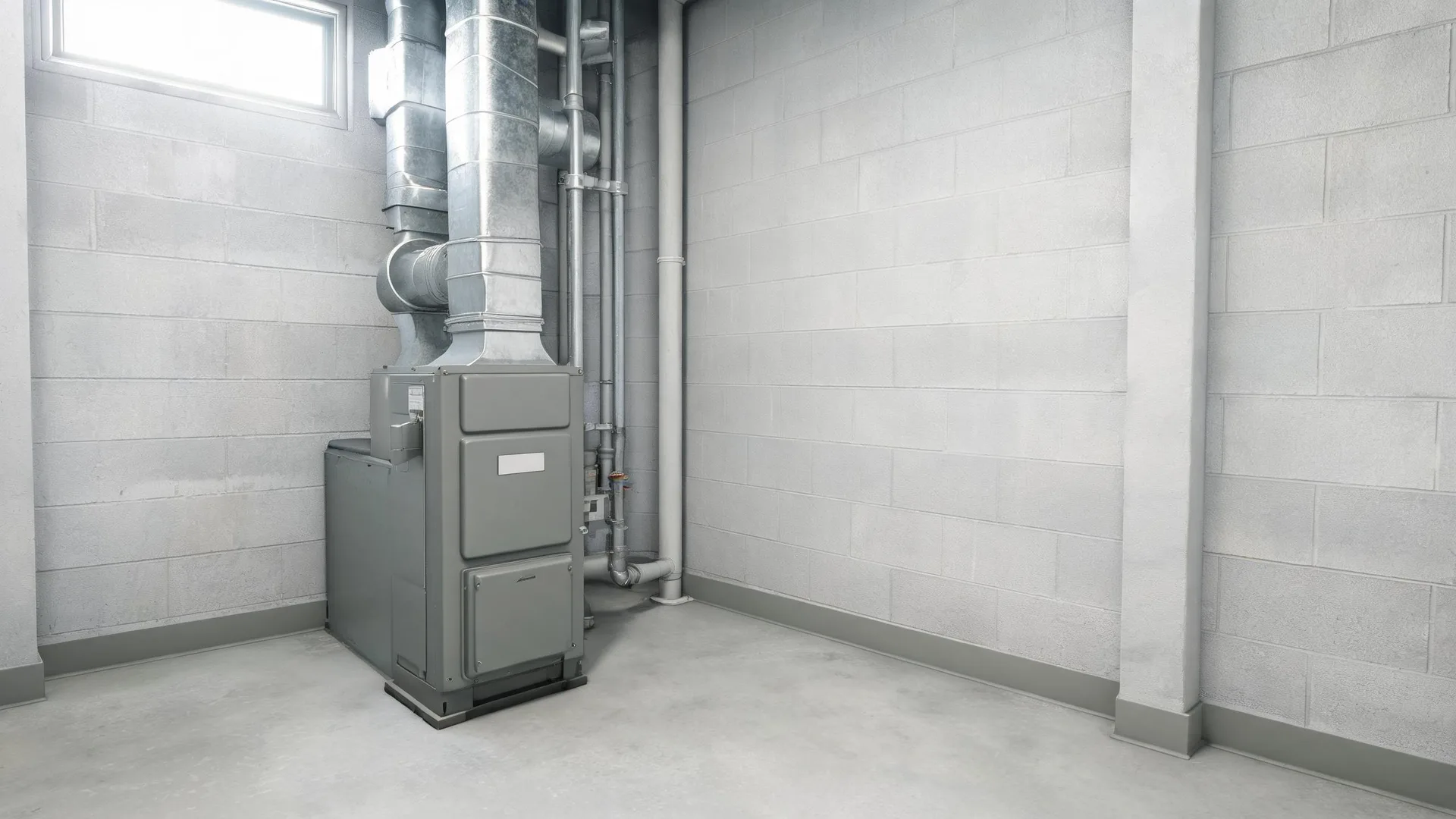
A gray residential gas furnace installed in an unfinished basement, connected to sheet-metal ductwork and PVC pipes.

The rating measures fuel burned, not how well the house gets heated

That rating on the label is measuring fuel, not comfort. It says how much of the gas burned turns into heat in the house versus how much goes out the flue. A furnace with a higher rating wastes less fuel doing the same job, nothing more than that. It doesn't mean the unit lasts longer, needs less service, or heats the house faster. The number also comes from a lab test, run under set conditions. A furnace choked by undersized ductwork or a blower set wrong won't deliver what the label promises, no matter how high the rating. The filter still needs changing, the burner still needs a look each year, the igniter still wears and eventually gets replaced. None of that changes because the rating is higher. What changes is how much fuel gets burned to keep the house warm over the life of the furnace.

The old furnace has to come out whole

A furnace isn't just unbolted and carried off. The gas line gets capped or reconnected to the new unit, the vent connector comes down, and the old heat exchanger and burner assembly are disconnected before anything new goes in. If the old unit ran on a flue shared with a water heater, that connection has to be rechecked, because removing one appliance can change how the other vents.

What's left behind matters too

Old ductwork, the gas shutoff valve, and the electrical disconnect usually stay and get reused, so a contractor should check that each one still matches what the new furnace needs. A new furnace can call for a different size gas orifice or a different blower speed tap than the old one used, and that gets set during install, not after.

An unfinished basement containing a metal furnace with ductwork, exposed wooden joists on the ceiling, cardboard boxes, a coiled cable, and a single hanging incandescent bulb.

A high-efficiency gas furnace would save about $120 a year to run in Allegany County compared with a gas furnace.

  • A high-efficiency gas furnace$660 a year
  • A gas furnace$780 a year

Estimates for a typical Allegany County home, from EIA household energy data, Maryland fuel prices and NOAA climate normals. Your home will differ.

Installation day starts with the old furnace coming out and the new one going through a startup sequence before the crew leaves. Gas pressure gets checked and set at the manifold, because the wrong pressure shows up later as a furnace that short cycles or burns louder than it should. The vent gets tested for draft, pulling exhaust up and out rather than letting it spill back into the room. Static pressure gets measured in the ductwork too, since a blower pushing against too much resistance wears out early no matter how good the furnace itself is. The thermostat gets wired and set to match the new equipment, which isn't always a straight swap if the old system used different wiring. Before anyone leaves, the furnace should run through a full cycle, heating up, holding steady, and shutting off on its own, with someone watching to see that it does.