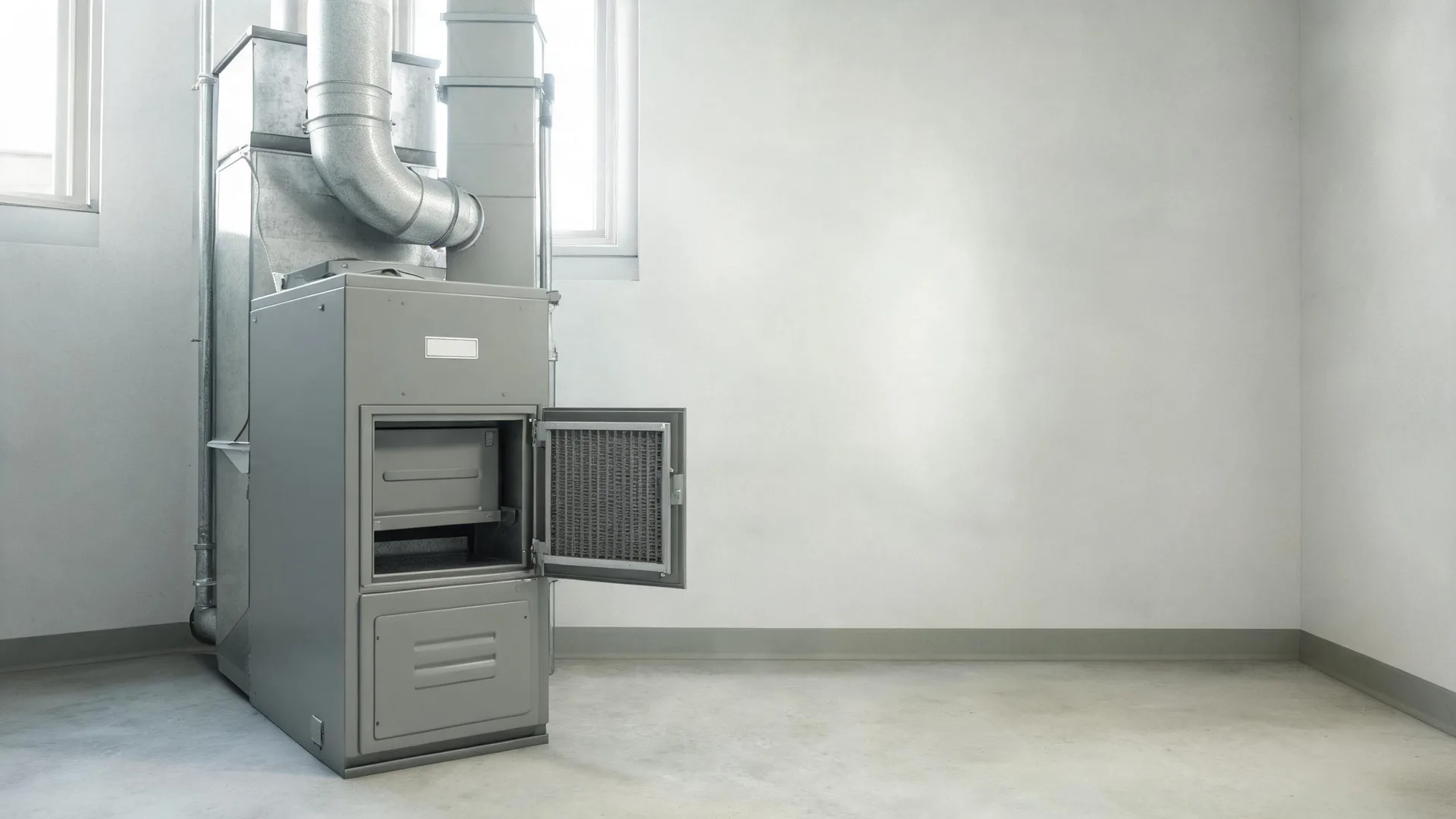
An unfinished concrete basement containing a gas furnace with sheet-metal ductwork, utility shelving, and exposed overhead joists.

Furnace Installation in Centreville, MD

Tell us about the job

Takes about a minute. No obligation.

New system or replacementFurnace or heatingQueen Anne's County, MD
Step 1 of 2

What ZIP code is the job in?

Electricity here runs $52.34 per million Btu

Maryland's electricity cost homes $52.34 per million Btu in 2024, among the higher rates in the country. A furnace that runs on electric heat, or an electric furnace paired with a heat pump, draws on that rate every time it fires.


Efficiency shows up on every bill

At $52.34 per million Btu, a furnace that wastes heat costs more to run than one that doesn't, and that gap shows up on every bill it sends out, not just a few of them. Comparing furnaces here means comparing how much of that rate turns into warm air in the house.

7 months
October through April, your furnace is on duty
28°F
the average winter night it heats against
80% AFUE
the federal minimum any new unit must meet
Isometric cutaway illustration of a small gabled house showing a furnace with flue pipe and ductwork connecting to interior rooms containing a sofa, bed, and cabinets.
Your furnace works hardest from November through March.

NOAA nClimDiv, 1991–2020 normals

A furnace can carry a high efficiency rating and still be sized wrong for the house.

Ask any contractor bidding the job to run a load calculation instead of just matching the old unit.

September is the month to replace a furnace that runs October through April

Heat runs October through April
Winter nights average 28°F
Climate zone 4A
Most homes here run on electric heatElectricity heats 63.8% of homes in Queen Anne's County, far ahead of gas or oil

Centreville doesn't need a special case made for it. Winters here run about seven months, October through April, with overnight lows averaging 28°F through December, January and February. That's a normal cold-climate load, not an extreme one. A furnace sized to the house with a proper load calculation will heat it through those seven months without strain. There's no reason to size up for a harder winter than the one this county actually gets, and no reason to pay for capacity or efficiency beyond what a standard system already delivers.

Ask what the furnace will cost to run, not just what it costs to install

Get the efficiency rating in writing on every bid, not just the price. At $52.34 per million Btu, that rating decides what the furnace costs to run on the bills that follow.

Find a contractor
A man in a cap, dark shirt and tan work pants walks up porch steps toward a navy blue front door, carrying a canvas tool bag beside a potted shrub.
A gray high-efficiency gas furnace installed in an unfinished basement, surrounded by gas lines, a condensate drain, and sheet-metal ductwork.

The rating holds the same whether it's the first cold night or the last

The rating on the label tells you how much of the fuel it burns turns into heat in the house, and how much goes out the flue without ever warming anything. A furnace with a higher rating pulls more heat out of the same unit of fuel than one with a lower rating does. That difference doesn't change year to year. It's built into the heat exchanger and the burner, and it holds steady whether the furnace is running on the coldest night of the year or the mildest one. Over a full season of firing on and off, that steady difference is what shows up as less fuel burned for the same warmth in the house. A furnace with a lower rating has to burn more to make up for what it loses, every time it runs, not just on the hard nights.

The old furnace gets disconnected before anything new goes in

A contractor shuts off the gas or power to the old furnace, disconnects the ductwork and venting, and removes it from the house. If it's a gas furnace, the gas line gets capped until the new unit is set and connected. The old venting usually can't be reused as is, since a new furnace may need a different vent size or material depending on its efficiency rating.

What happens to the unit itself depends on what it's made of

A furnace is mostly steel and aluminum, both of which scrap yards take. Most installers haul the old unit away as part of the job rather than leaving it for the homeowner to deal with. Older furnaces may also have components that need separate handling, so ask the contractor how the old unit gets disposed of before the install day, not after.

A load calculation looks at the house itself. How much wall and window area it has, how much insulation, how many rooms and how they connect. The furnace gets matched to that number, not to the unit it's replacing. Too big and the furnace short cycles. It fires up, hits the thermostat setting fast, and shuts off before it's finished pulling moisture and evening out the air. That on-off pattern wears the ignition system and the blower harder than a steady run does. Too small and it runs constantly in the coldest stretches, struggling to hold the temperature and still falling short. The right size runs in long, even cycles that heat the house and shut off. That's easier on every part in it, and it's the only way the efficiency rating on the label actually shows up in how the house feels.

Install day starts with the house without heat for a few hours while the old furnace comes out and the new one goes in. A contractor sets the new unit, connects the ductwork and venting, and runs gas or electrical to it depending on what it burns. Once it's set, a gas furnace gets a combustion test to check it's burning clean. The contractor checks airflow across the blower and measures the temperature rise through the heat exchanger against what the manufacturer specifies for that model. The thermostat gets wired and set up last, after the furnace is confirmed to be firing right and moving the air it's supposed to. None of that shows up on the label or the bid. It shows up in whether the furnace actually performs the way it was sold once it's running in the house.