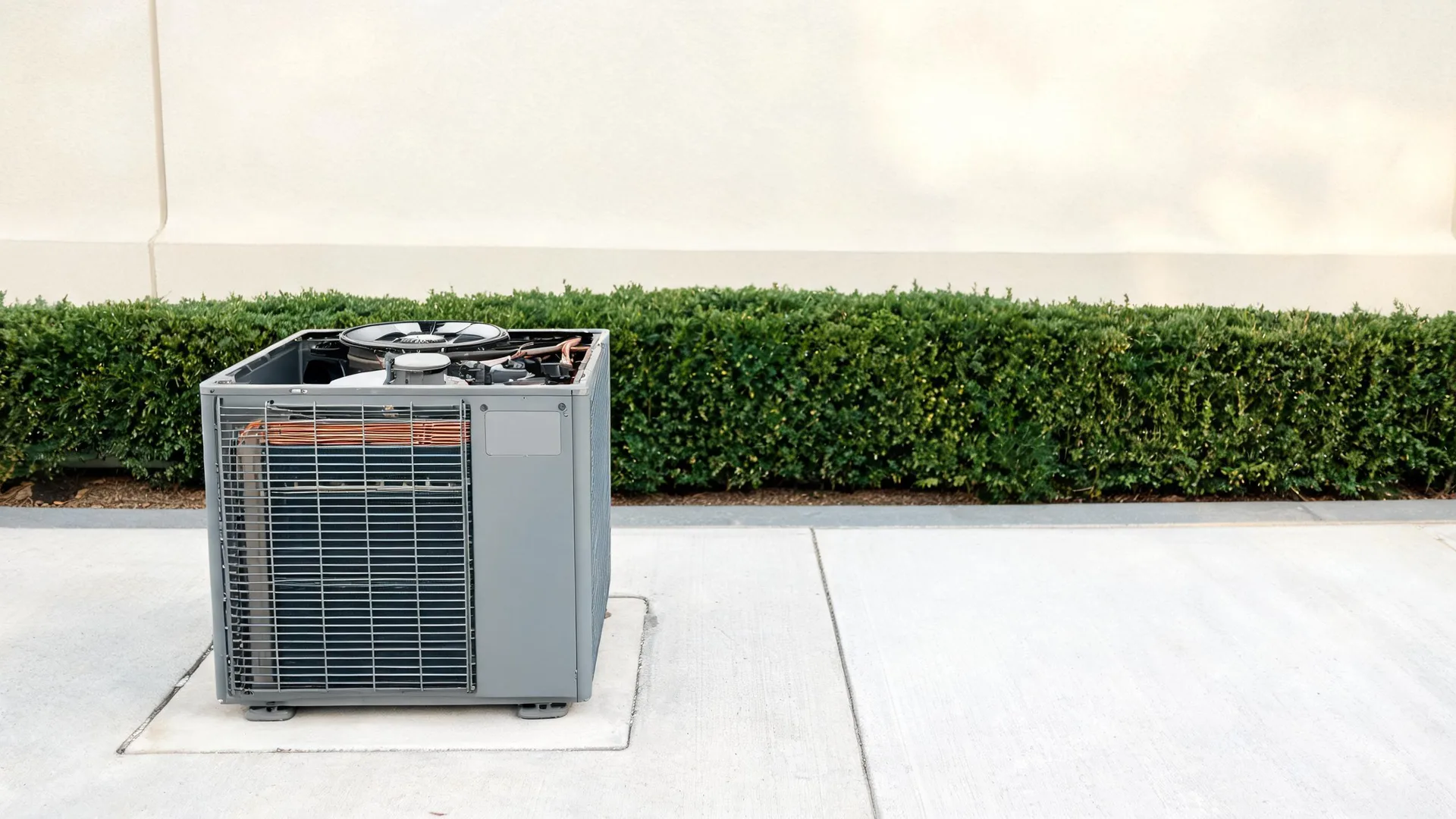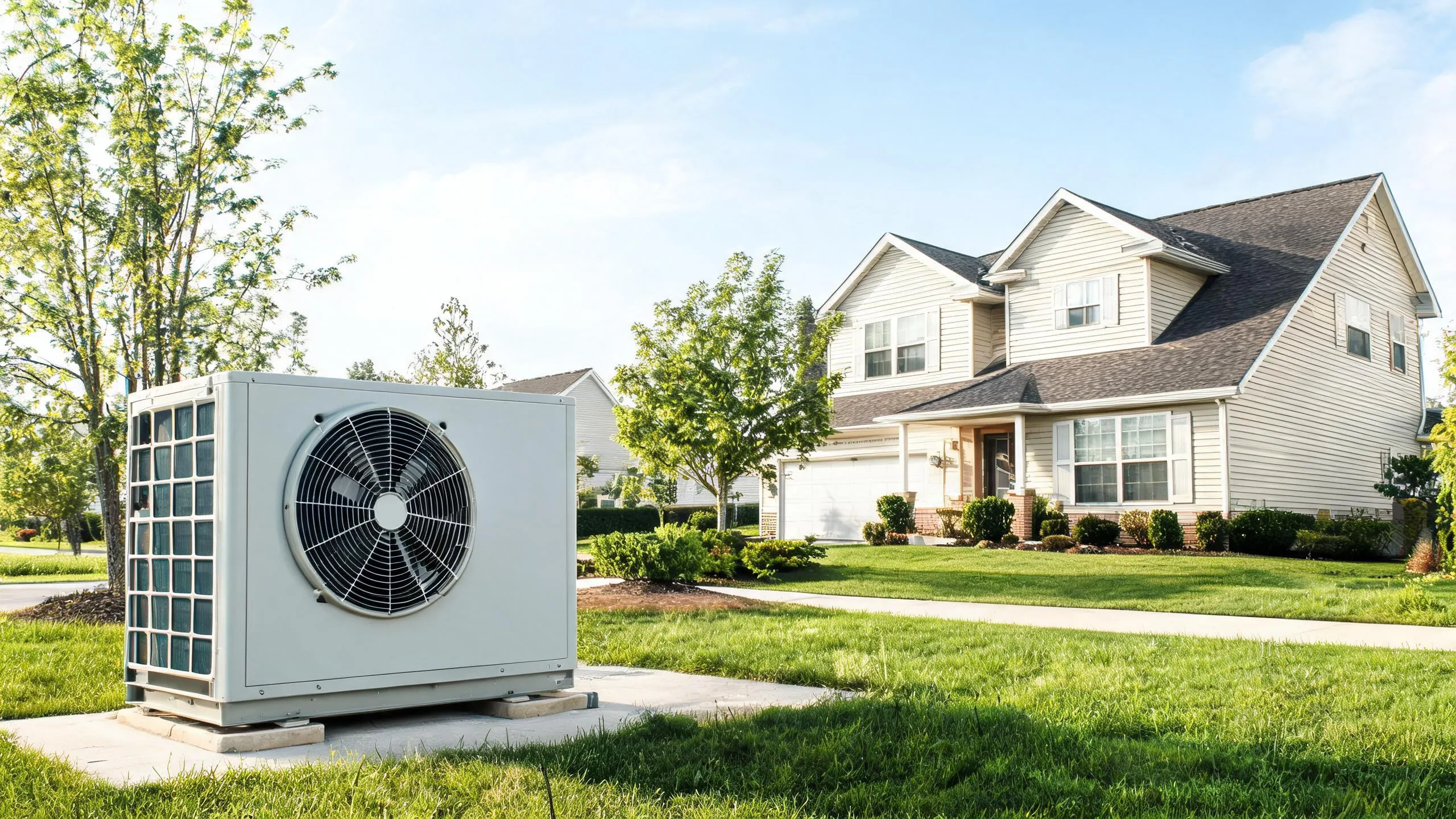
An outdoor heat pump unit mounted on a concrete pad in front of a two-story suburban house with a landscaped lawn.

Heat Pump Repair in La Plata, MD

Tell us about the job

Takes about a minute. No obligation.

RepairHeat PumpCharles County, MD
Step 1 of 2

What ZIP code is the job in?

Zone 4A cuts both ways, not just one

La Plata sits in a mixed climate, zone 4A, which means your heat pump works through real cold and real humidity instead of leaning on one season. Winters average 29°F overnight in December, January and February, not the single-digit extremes that wear out a compressor fast.

A moderate load is easier to diagnose

When a heat pump hasn't been pushed to its limits for years at a time, trouble is more likely a failed part than a system worn past saving. A bad capacitor, a stuck reversing valve, or a low charge shows up clearly instead of hiding behind years of strain.

7 months
October through April, your system heats
4 months
June through September, it cools
29°F
the average winter night it heats against
86°F
the average summer afternoon it cools against
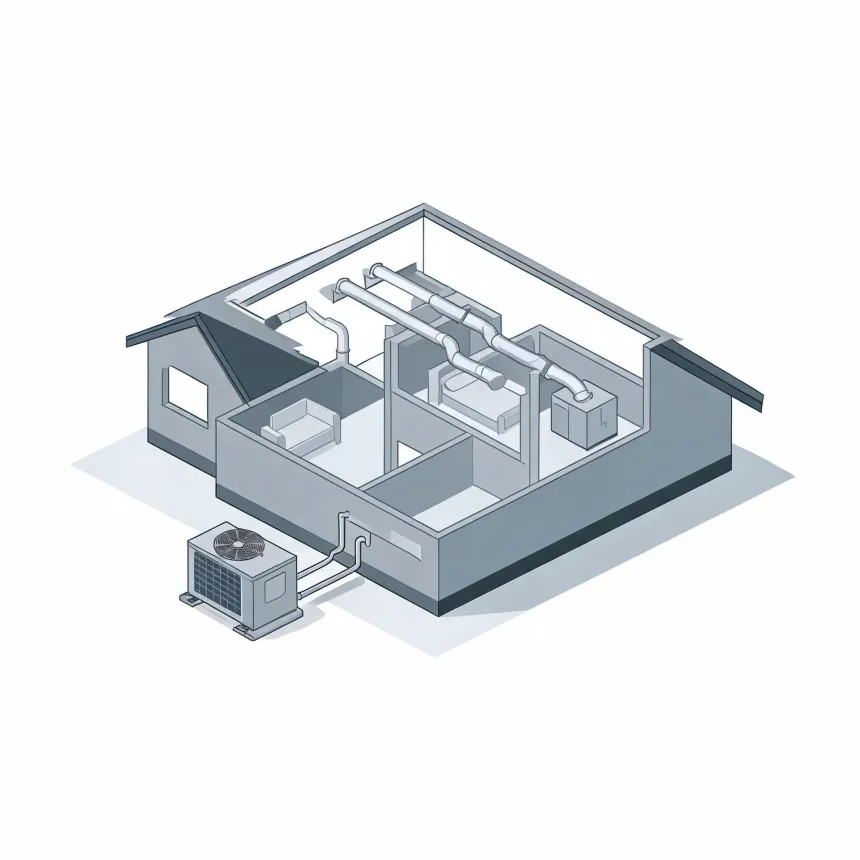
Isometric grayscale illustration of a cutaway house showing interior rooms, ceiling ductwork and an air handler, connected by lines to an outdoor condenser unit on a pad outside.
Your system heats October through April and cools June through September.

NOAA nClimDiv, 1991–2020 normals

Half the homes in Charles County were built in 1991 or later.

A heat pump installed with a newer house still has years of working life in it, which is why repair is usually the right call here.

Charles County sees its share of storms. That's a power problem, not a heat pump problem.

230 severe weather events from 2015 to 2024
11% of homes statewide lost power a day or more in 2024
188 damaging wind events from 2015 to 2024
October starts the real testHomes here run heat from October through April, about seven months a year.

Maryland households paid 17.86 cents per kilowatthour in 2024, among the higher rates in the country. A heat pump that's low on charge or struggling with a bad capacitor still runs, just worse, pulling more power to do less work. That shows up on the bill before it shows up as a breakdown. Since the system here is usually worth repairing rather than replacing, there's no reason to let a small problem run up costs while it waits.

A newer system is worth fixing

If your heat pump came with a house built in 1991 or later, it hasn't had years to wear past the point of repair. A technician can check the part that's failing and get it back to work.

Find a contractor
A gray heat pump condenser unit mounted on a concrete pad against the gray lap-siding exterior wall of a house.

No offseason means no downtime to hide wear

Run time adds up differently for a heat pump than for a furnace or an AC alone. It doesn't get an offseason. The compressor cycles through hot stretches and cold stretches both, and every part tied to it logs hours no matter what month it is. Oil inside the compressor circulates with every run, and over enough cycles the bearings and valves start to wear the way any motor does with steady use. Contacts in the control board see more switching too, since the system calls for heating mode or cooling mode far more often than a single-purpose unit would. None of this means a heat pump fails faster. It means there's no quiet stretch where the system just sits, so whatever maintenance it needs matters on a steady schedule, not a seasonal one.

Check the thermostat before anything else

Make sure it's set to heat and the set point is above room temperature. If the screen is blank, check the breaker and any switch near the indoor unit. A dead thermostat can look exactly like a dead heat pump.

Look at the outdoor unit

Walk outside and check that the outdoor unit isn't buried in leaves, iced over, or blocked by something stacked against it. Airflow in and out of that unit is how it moves heat. If it's running but caked in ice with no defrost cycle kicking in, that's worth telling the technician when they arrive.

A heat pump that's struggling still tries to do its job, and that's the problem. If the charge is low, the compressor works harder to move the same heat, and it runs longer to get there. If a capacitor is weak, the motor it feeds strains every time it starts, and that strain wears the motor down faster than normal cycling would. A reversing valve that's starting to stick will get worse with every switch between heating and cooling, not better. None of these fail cleanly. They degrade, and the degrading accelerates once the part is already under stress. Shutting the system off and getting it looked at stops that slide. Letting it run doesn't give it a chance to recover, it just spends down whatever life the part has left.

A technician starts by asking what the system is doing and when it started. Then comes the thermostat, checking that the call for heat or cooling is actually reaching the outdoor unit, because a bad connection there can look exactly like a dead compressor. With the panels off, gauges go on the lines to read the refrigerant charge. A meter on the capacitor shows whether it's still holding the charge it's rated for. The reversing valve gets checked too, to see if it actually shifts when the thermostat tells it to switch between heating and cooling. Amp draw on the compressor and fan motor matters as well, since a motor pulling more current than normal is a motor straining to start. All of it points to the same thing, finding the one part that's actually failing instead of chasing the symptom it's causing.