Profile view of a bearded man wearing a dark green baseball cap and a dark gray T-shirt against a plain light background.

Do you need backup heat with a heat pump in Maryland

New system or replacementHeat PumpMaryland
Step 1 of 2

What ZIP code is the job in?

Do I need backup heat with a heat pump in Maryland?

Maryland winters bring real cold, and a heat pump works harder to keep up once temperatures drop into the 30s and below. If you're about to install one, or already have one, it makes sense to ask whether it can carry the house on its own or whether something else needs to kick in when it gets cold outside.

Most homes in Maryland need backup heat for the coldest days

A heat pump pulls heat from outside air, and the colder that air gets, the less heat it has to give. Somewhere in the 30s, most heat pumps start losing ground against the house's heat loss, and below that they can't keep up on their own. Backup heat, usually electric resistance coils built into the air handler, steps in to cover the gap on those days. Since most homes in Maryland already heat with electricity, that backup runs on the same power as everything else in the house. It only turns on when the heat pump alone can't hold the temperature, so it adds to the electric bill on the coldest stretches of winter, not all season.

A gray outdoor heat pump unit on a concrete pad beside a house with horizontal lap siding, with a conduit running to a wall-mounted disconnect box and a green shrub to the left.

With backup heat

The outdoor unit keeps running through a cold snap without strain. When the temperature drops into the 30s and below, the backup kicks in to cover the gap, and the heat pump itself isn't working beyond what it's built for. The electrical disconnect and conduit carry that extra load without any changes to the system.


An outdoor air conditioning condenser unit with dusty coils sits on a concrete pad against light horizontal siding, with an electrical disconnect box and refrigerant lines on the wall and a shrub and mulch at left.

Without backup heat

The unit works harder on the coldest Maryland nights, and the strain shows over time, soiled coils, worn housing, a system that ages faster than it should. It may still keep the house warm, but it's doing it alone, with nothing to lean on when the temperature really drops.

Is your heat pump keeping up this winter

Walk through the house on a cold morning and check the vents. If the air coming out feels barely warm, not the hot blast you'd get from a furnace, that's normal for a heat pump, but it shouldn't leave rooms cold. Notice if the system runs long stretches without shutting off, or if the thermostat shows a few degrees of lag behind what you set it to. Listen for the outdoor unit working harder than usual on the coldest nights. Without backup heat to cover those nights, the heat pump keeps pulling to make up the difference, and that shows up on your electric bill before it shows up anywhere else.

An outdoor air conditioning condenser unit on a concrete pad beside a dark horizontal-siding wall and a brick wall, with flowering shrubs and grass nearby.

You're out in the side yard on one of the first warm days in March, coiling the garden hose, and you stop at the outdoor unit. Rust has crept along the base panel, worse than you remembered from fall. It ran hard all winter, every cold snap from January into February, and it shows. You crouch down and look closer, wondering if that's just surface rust or something underneath starting to go. You think about calling someone before next winter instead of after the first freeze, when a problem like this is easier to put off than to fix. You straighten up, make a mental note, and go back to the hose.

Stop chasing a heat pump pro

A heat pump sized or installed wrong is what turns a cold snap into a cold house, and Maryland winters will find that mistake fast. With electricity running the heat in most homes here, a system that leans on backup heat more than it should shows up on the power bill within a month. Getting the sizing, the backup setup, and the controls right at install is what keeps that from happening, and that's a job for someone who installs these year-round in this area and knows which setups hold up through a Maryland January and which ones leave homeowners calling back in February. Sending the request means a local, licensed contractor who does this work looks at your house and your situation specifically, not a general quote. If your heat pump isn't keeping up, or you're planning a new install and want it done right the first time, this is the moment to hand it off.

How the backup heat kicks in

  • A heat pump moves heat from outside air; below freezing, there's still heat in that air, just less of it to pull.
  • As outdoor temperature drops, the compressor runs longer cycles and moves less heat per minute than it does in milder weather.
  • Backup heat is usually electric resistance strips inside the air handler, not a second outdoor unit.
  • A thermostat or control board switches on the strips when the heat pump alone can't close the gap between indoor and outdoor temperature.
  • Some systems run the heat pump and the strips together for a short stretch rather than switching entirely from one to the other.
  • A defrost cycle periodically reverses the system to melt frost off the outdoor coil, and backup heat often covers the house during that stretch.

A heat pump works by pulling heat out of outside air and moving it indoors. There's still warmth in that air even when it's cold out, just less of it, so the system has to work harder to get the same result. The compressor stretches into longer cycles, moving less heat per minute than it would on a mild day in October. Once the gap between indoor and outdoor temperature gets too wide for the heat pump to close on its own, a thermostat or control board calls for backup. That backup is usually a set of electric resistance strips sitting inside the air handler, not a separate outdoor unit. Depending on how the system is set up, it might shut off the heat pump entirely and run the strips alone, or it might run both together for a stretch while the house catches up. There's also the defrost cycle to account for. Cold, humid air leaves frost on the outdoor coil, and every so often the system reverses itself briefly to melt it off. During that short window the heat pump isn't delivering warm air to the house, so backup heat often covers the house until the coil clears and the system switches back. None of this means the heat pump is failing. It's how the system is built to handle the limits of pulling heat from cold air.

A man in a gray sweater reclines in a brown leather armchair with his eyes closed, beside a wooden side table holding a mug, a folded newspaper and a potted plant, with a bookshelf and sunlit window behind him.
A man with greying hair and a dark sweater leans back on an armchair with his eyes closed and a slight smile, in a living room with a bookshelf, plant, folded newspaper and mug on a wooden table.
A man in a gray fleece jacket sits reclined in a leather chair with his eyes closed, in a room with bookshelves, a table lamp, a window, and a desk holding a folded newspaper and a dark mug.
A bearded man in a gray fleece pullover sits with eyes closed in a brown leather armchair in a living room, with a floor lamp, bookshelf, potted plants, a side table holding newspapers and a dark mug, and a bright window behind him.

Balance point near freezing

Most heat pumps shift part of their work to backup once the outdoor temperature nears the low 30s. Below that, the system needs help to keep the house at setpoint.

Send my request

One coil, two jobs

Backup heat runs through the same indoor coil and ductwork already in place. Sizing it to the house, not just the heat pump, is what a local installer checks first.

Send my request
An outdoor air conditioning condenser unit on a concrete pad beside a house with horizontal lap siding, with a green shrub to the left and a wide concrete slab in the foreground.
Before you get your heat pump installation
A gray outdoor condenser unit on a concrete pad beside a house with horizontal lap siding, with a wall-mounted disconnect box, conduit and insulated refrigerant lines, a shrub at left and gravel at right.
After you get your heat pump installation
A two-story gray horizontal-siding house with multiple gables, a covered front porch with white columns and railing, and a dark front door, fronted by a patchy green and brown lawn under a clear blue sky.

Summer here is a different test on the same equipment. Average out June through August and the dew point sits at 64°F, the point where air starts feeling heavy on your skin rather than just warm. Source: NOAA climate normals. Your heat pump has to pull that moisture out of the air as it cools the house, and a sticky stretch means the compressor runs longer cycles to do it, much like it does on the coldest winter mornings. You'll notice it in rooms that feel cool but still damp, and in a system that seems to run and run without the house feeling fully comfortable.

NASA POWER T2MDEW county cells weighted by homes

A heat pump in Maryland needs backup heat for the cold snaps, there's no way around that once temperatures drop into the 30s and below. The question was never whether to skip it but whether yours is sized and installed to hand off between the two systems without you noticing. That's a job for someone who works on heat pumps all winter in this area and has seen which units limp through February and which don't. When you request an installation through this page, it goes to one licensed local contractor, not a handful competing for your callback, so you're dealing with someone who already knows what tends to fail on these systems once the cold sets in. You've read what a heat pump needs to handle a Maryland winter. The next step is getting it installed by someone who treats that as routine, not a surprise.

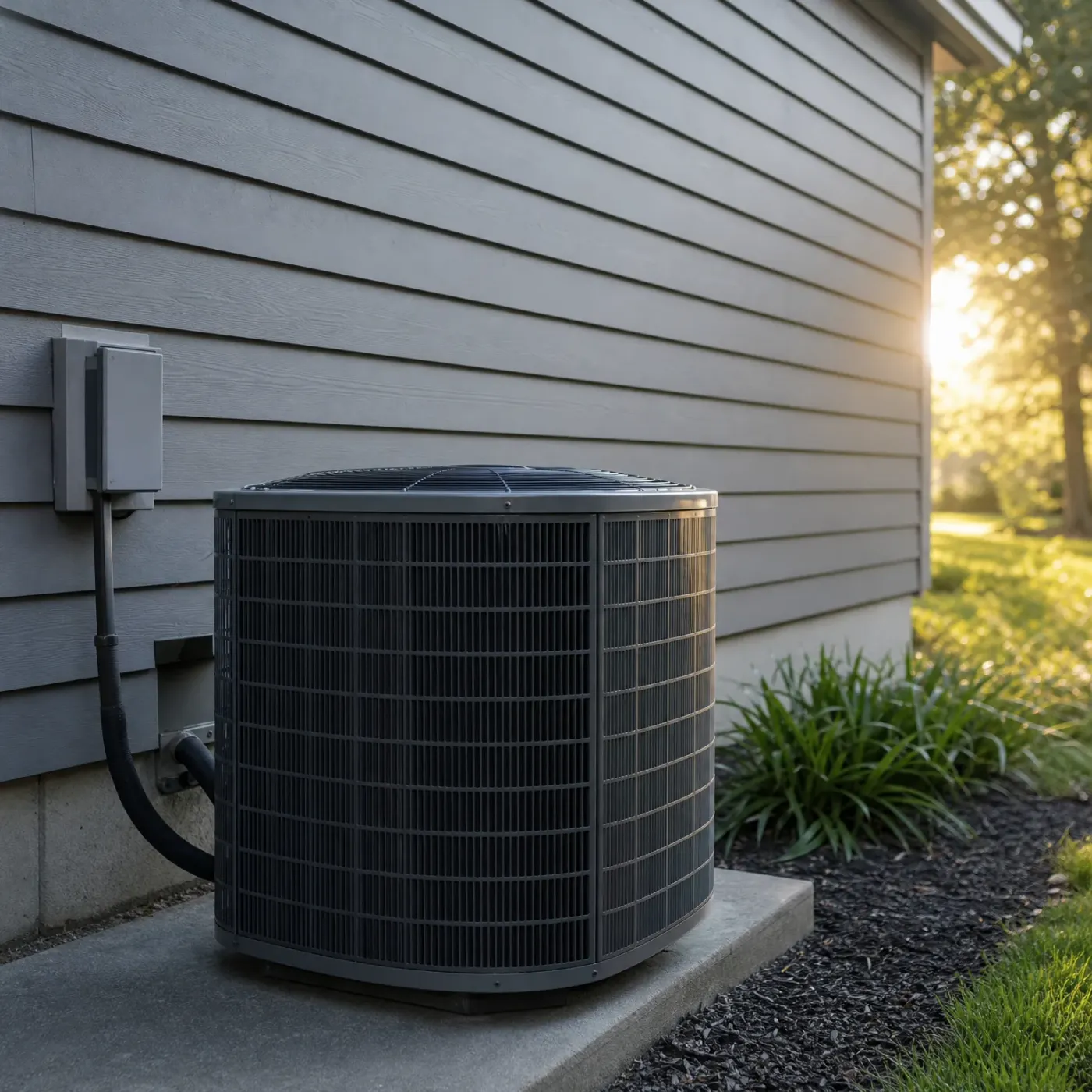
An outdoor air conditioner condenser unit on a concrete pad beside a gray horizontal-lap-sided house, with an electrical disconnect box and refrigerant line on the wall, grass, shrubs and a tree with low sun behind.

Finding a pro stops being your job

Find a licensed pro

Your request stays with one local pro.

No charge to send it. You decide if you hire them.