





Why your heat pump smells like burning in Maryland

RepairHeat PumpMaryland
Step 1 of 2

What ZIP code is the job in?

Why does my heat pump smell like it's burning?

A burning smell from a heat pump gets your attention fast, especially when the system runs almost constantly through a Maryland summer and carries the whole load of heating your home in winter too. With electricity rates what they are here, a unit that smells wrong isn't something to wait out. You want to know whether this is dust burning off or something in the system actually failing.

A burning smell usually means an electrical part is overheating, not dust

A burning or hot plastic smell from a heat pump usually points to something electrical, a failing capacitor, a motor winding breaking down, or wiring that's overheated inside the unit. A light dusty smell for the first few minutes after the system has sat off for a while is normal. A smell that's sharp, lasts, or smells like melting plastic is not. Because Maryland homes lean on heat pumps for both the muggy summer stretch and the cold months, these units run more hours over a year than an AC system that only works half the year. More run time means more wear on the parts that can overheat. If you catch that smell, shutting the system off until it's looked at is the safer move.

  1. Dust on the heat strips burns off as they first kick on

  2. A failing blower motor bearing overheats and starts smoking

  3. Burning plastic or rubber signals wiring insulation melting near the electrical panel

  4. A stuck contactor keeps arcing power until something melts

Is this smell actually something to worry about?

Walk past the indoor unit and you'll catch it before you see anything wrong: a sharp, hot smell, maybe a faint haze near the vents, or the smell riding the air coming out of the registers themselves. Sometimes it's gone in a few minutes, which is often just dust burning off the heat strips. Other times it lingers, gets stronger, or carries that plastic, electrical edge to it. That version doesn't clear on its own. Wiring insulation that's melted or a motor bearing that's overheating can turn into a breaker that won't stay on, a system that shuts down on its own, or in the worst case a fire risk sitting behind your wall.

A smiling man with dark curly hair in a dark green henley shirt sits on a light sofa in a living room with large windows, a lamp, shelving, a stone fireplace, and a bowl of popcorn in the foreground.
A smiling man in a dark long-sleeved henley shirt sits on a beige sofa in a living room, with a bowl of popcorn and a remote on the table in the foreground and shelves, a lamp, and a doorway behind him.
A smiling man with graying hair and stubble in a blue henley shirt sits on a gray sofa with cushions in a living room, with a bowl of popcorn on a wooden table in the foreground.
A smiling man in a dark green long-sleeve shirt reclines on a sofa in a dimly lit living room, with a bowl of popcorn on a side table in the foreground and a bookshelf, lamp, and houseplant behind him.

Call Now or Wait It Out

Call now

  • A contactor that keeps arcing can take out the compressor next, and that repair costs far more than catching it now.
  • Melting wire insulation near the panel is a fire risk, not something to watch and wait on.
  • Once a technician is found, you're not the one tracking down who's licensed, who answers the phone, or who shows up when they say they will.
  • You stop having to describe the smell over and over to three different companies just to get someone out to look at it.
  • The comparing and re-explaining that eats up an evening goes away the moment the form is sent.
  • Maryland summers push a heat pump hard for months straight, and a burning smell now often means a part already failing under that load.

Wait and watch

  • A faint burning smell the first time heat strips kick on after months of disuse usually clears within an hour as the dust burns off.
  • If the smell doesn't return on the next cycle, it likely wasn't a sign of a failing part.
  • Watching it costs you nothing upfront, but it means staying alert to whether the smell comes back stronger or changes character.
  • A blower motor bearing that's just starting to overheat may not fail for a while, though it won't fix itself either.
  • Waiting makes sense only if the smell was brief, mild, and tied to the first run of the season.
  • Since Maryland homes lean on electric heat pumps all winter too, a part left to wear down affects both your comfort and your power bill for months, not just one system.
A gray outdoor condenser unit on a concrete pad beside a light-colored horizontal-siding house, with a disconnect box and refrigerant line on the wall, ornamental grasses and a shrub in mulch nearby, and a concrete patio in the foreground.

Running normally

No smell, no haze, just steady air moving through the vents. The outdoor unit hums along, the lines stay cold to the touch, and the disconnect box sits quiet. This is what your heat pump should look and smell like through a Maryland summer or a cold January night.


An outdoor condenser unit sits on a concrete pad beside a house with horizontal vinyl siding, with a gray electrical disconnect box and conduit on the wall and a shrub at left.

Something's burning

A hot, sharp smell near the indoor unit or riding the air out of the registers. Maybe a haze by the vents, maybe a faint buzz or click from the disconnect box outside. This is the version that needs a technician before it gets worse.

An outdoor air conditioner condenser unit on a concrete pad beside a house with horizontal lap siding, with refrigerant lines entering the wall and a shrub on bare soil to the left.
Before you get your heat pump repair
A gray outdoor condenser unit on a concrete pad beside a light green lap-sided house, with a wall-mounted electrical disconnect box, mulch bed with shrubs, river rock, and a paved walkway in the foreground.
After you get your heat pump repair

Hand off the heat pump problem

Describe your heat pump job once, to one pro.

Asking costs nothing, and the choice to hire stays yours.

A single-story house with gray vinyl siding, dark shingled gable roofs, and white-trimmed windows, set behind a partly dry green lawn under a clear blue sky.

A summer dew point averaging 64°F across Maryland, per NOAA climate data, means the air sitting around your outdoor unit is heavy most days from June through August. Your heat pump has to pull more moisture out of the air to keep the house comfortable, which keeps the compressor and blower running longer stretches at a time. That extra runtime is exactly when a failing bearing or a stuck contactor overheats enough to smell it. A system that might have given you a faint whiff of trouble once a week in a drier climate will push that same problem into something you smell every time it cycles on.

NASA POWER T2MDEW county cells weighted by homes

A gray outdoor condenser unit on a concrete pad beside a house with horizontal lap siding, connected by conduit and lines to a wall-mounted disconnect box, with a shrub and gravel bed to the left.
A clean coil guard and a quiet fan mean the unit is shedding heat the way it's supposed to.
An outdoor air conditioner condenser unit on a concrete pad beside a house with horizontal lap siding, with refrigerant lines and a gray electrical disconnect box on the wall, surrounded by bare dirt.
A fan grille caked in dirt traps heat against the coil until something inside gives out.

How the smell actually starts

  • Heat strips in the air handler glow red-hot to boost warmth on the coldest Maryland nights, and dust on them burns off as a brief, sharp smell.
  • A blower motor bearing that's worn lets the motor overheat, and the smell usually comes with a faint haze or a rattling sound.
  • Wiring insulation melts when a connection loosens, often near the electrical panel or at the contactor, and that smell is more like hot plastic than dust.
  • A stuck contactor keeps arcing every time the compressor cycles, and each arc chars the contacts a little more until the smell turns sharp and constant.
  • A refrigerant leak dripping onto the compressor housing can scorch and give off an acrid odor that's different from an electrical smell.
  • Running the system on heat strips for long stretches during a cold snap puts more load on the wiring than normal heat pump operation does.

Your heat pump leans on electric heat strips to cover the gap on the coldest Maryland nights, and those strips run hot enough to glow. The first time they fire up after months of sitting idle, dust that settled on them burns off, and that's a short, sharp smell that clears on its own. A different smell means a different part is at fault. A blower motor bearing wears down over time, and once it does, the motor works harder and runs hotter than it should, which you'll notice as a faint haze or a rattle alongside the smell. Wiring tells its own story too. A connection near the electrical panel or at the contactor can work loose, and when it does, the insulation around it melts, giving off a smell closer to hot plastic than burnt dust. The contactor itself is a common point of failure. It closes every time the compressor cycles on, and if it sticks, it arcs instead of closing clean, charring the contacts a little more with each cycle until the smell turns sharp and doesn't go away. A refrigerant leak is a different problem entirely. If it drips onto the hot compressor housing, it scorches and gives off an acrid odor, nothing like an electrical smell. And on a hard cold snap, when the system leans on heat strips for hours at a stretch, the wiring carries more load than it does during normal heat pump operation, which is when a weak connection tends to show itself.

Power costs 19.53 cents per kilowatt-hour statewide

At 19.53 cents per kilowatt-hour, a heat pump running rough doesn't just risk a bigger problem down the line, it costs you more every hour it limps along. A stuck contactor or overheating motor pulls extra power long before it fails outright.

EIA-861 2025 statewide residential average

A closed silver laptop and a glazed ceramic mug on a wooden table, with a blurred kitchen counter, potted plant, cutting board and window in the background.

A burning smell has a cause, and it's worth finding now

A burning smell from your heat pump means something specific is happening inside it: dust burning off a heat strip, a bearing overheating, wire insulation melting, or a contactor arcing every time it cycles. One of those is nothing to worry about. The other three get worse, and at 19.53 cents per kilowatt-hour, a unit limping along on a bad part is already costing you more than a working one would.

You don't have to figure out which one it is by yourself, or spend an evening calling around Maryland for someone who can look at it this week. Send the form once, and the search, the calls, and explaining the smell over and over to different shops is no longer something you have to carry. A technician comes to you, finds the actual part, and fixes that part.

Interior corner of a dining room with a round wooden table, a ceramic vase holding olive branches, a dark spindle-back chair near a curtained window, and a sideboard with a lamp against beige walls.
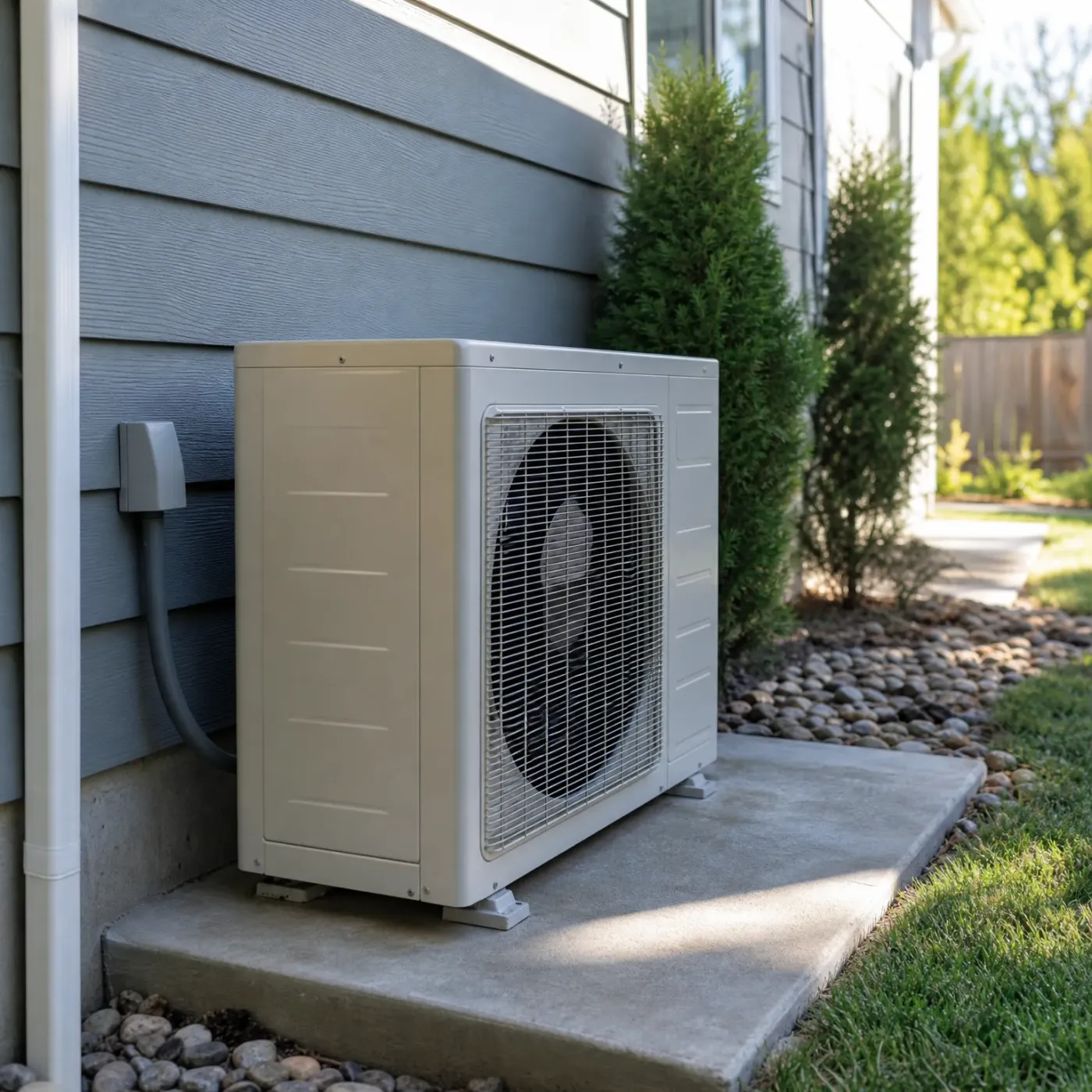
A beige outdoor heat pump or air conditioner condenser unit on a concrete pad beside a gray horizontal-siding house, with a disconnect box and conduit on the wall, shrubs, river rock and lawn nearby.

Let someone else find the pro

Describe it once

Fill out one short form instead of calling around.

No fee to send it, and nothing to sign.