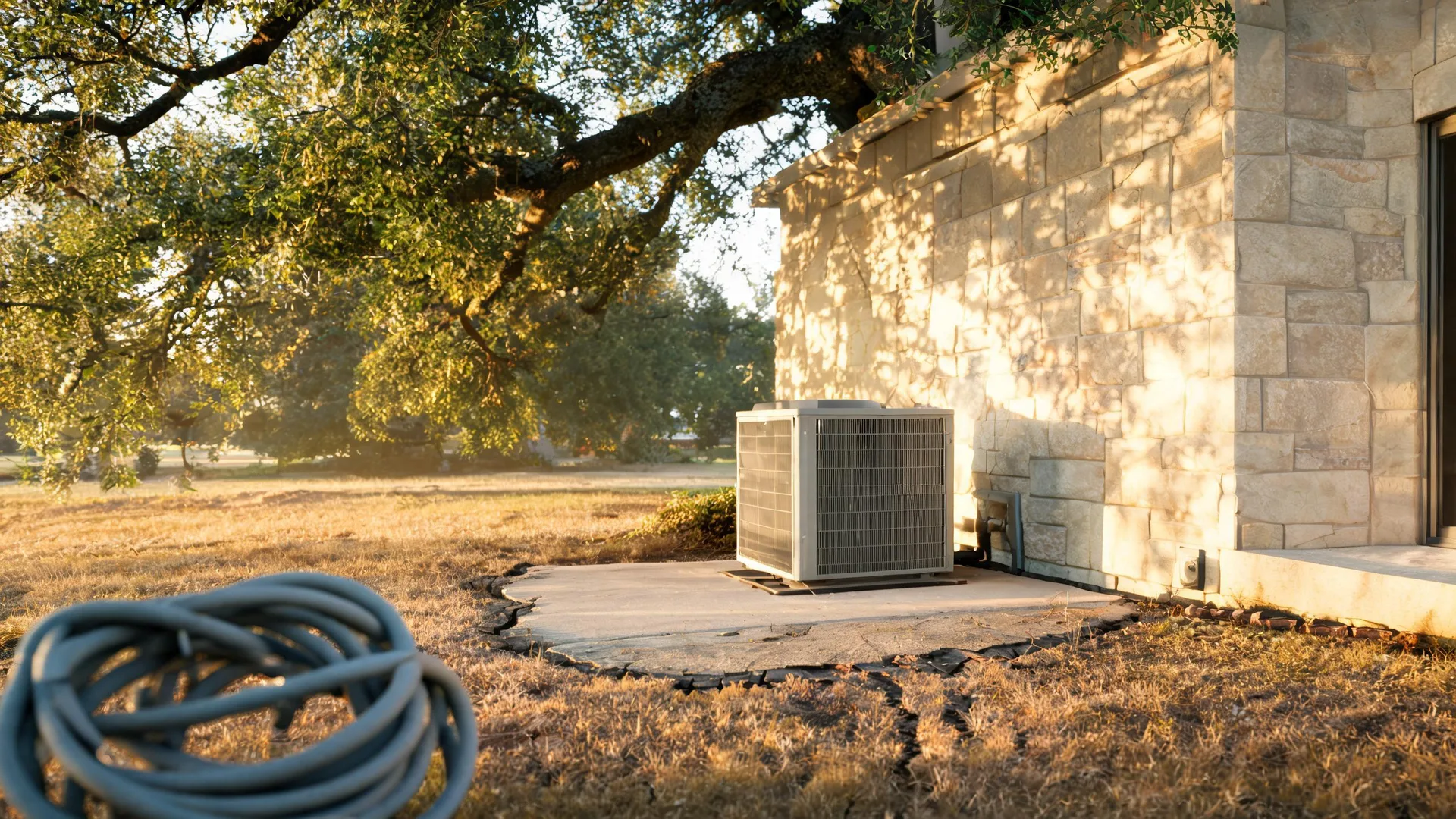
September is the month to get it looked at
Heat here switches over to the heat pump in October. If a part is already weak, September is when to catch it, before the first cold mornings put a full load on it.
Takes about a minute. No obligation.
Heat here switches over to the heat pump in October. If a part is already weak, September is when to catch it, before the first cold mornings put a full load on it.
The first real cold snap is what finds a bad capacitor or a low charge, not the months of steady running after. A heat pump that struggles in those first weeks was already due for a repair.

NOAA nClimDiv, 1991–2020 normals
Winters here mean long heat pump runtimes, but Cumberland doesn't put extra strain on the unit beyond that.
A heat pump that's kept up with here is usually in decent shape mechanically, so a breakdown is more often one bad part than a system on its way out.




So if your heat pump is acting up now, treat it as a repair, not the start of a bigger problem. Overnight lows here average 24°F through December, January and February, and that's the load the system sees every winter, nothing more than that. A unit that's had its filter changed and its coils cleaned isn't working against anything extra. When one quits or runs poorly, the cause is usually a single part, a contactor, a capacitor, a low charge, something a tech can find and replace. Get the actual cause named before you decide whether it's worth fixing, because most of the time it is.
At 17.86 cents a kilowatthour, a heat pump running on a weak capacitor or low charge is spending more than it should every day you leave it. Get the part named and swapped out.
Find a contractorIf your heat pump came with the house, find out its age before paying for a repair. A contractor can read the data plate and tell you how many years it's had. That number is what decides whether a repair is worth it, not how the unit sounds or how old the house is.
Make sure it's set to heat, not auto in a way that's confusing it, and that the setpoint is actually above room temperature. A battery running low in the thermostat can cause odd behavior that looks like a unit problem but isn't.
Walk outside and see if the outdoor fan is spinning and if the coil is clear of ice, leaves, or snow buildup. Then check the filter. A clogged filter restricts airflow enough to make a heat pump run constantly or blow weak, and it's the one thing worth ruling out before calling anyone.
Most heat pump problems announce themselves before the unit quits outright. It runs but doesn't warm the house the way it used to, or it runs constantly instead of cycling off. Ice builds up on the outdoor coil and doesn't clear on its own. You hear it click and try to start, then click off again, that's usually a contactor or capacitor giving out. A hissing or bubbling sound near the lines points to refrigerant escaping, not just running low. Warm air blowing when you expect heat, or the outdoor fan not spinning while the indoor blower runs, both mean something specific is wrong, not the whole system failing at once. Any of these is worth a call before it forces the backup strips to carry the house.
A reversing valve is what lets a heat pump switch between heating and cooling, and when it sticks, the unit keeps doing one or the other no matter what the thermostat asks for. That's a different problem than a low charge or a bad capacitor, and it shows up as heat that won't switch over or air that won't warm up even though the unit is running. Defrost controls fail too, and when they do, the outdoor coil ices over and stays iced because the unit never gets the signal to run its defrost cycle. A failing run capacitor shows up as a compressor or fan motor that hums but won't start, or one that starts hard and shuts off on its own. None of these parts wear out from being used too much over a season. They wear out from age, from electrical strain, from a connection that's worked itself loose over time.