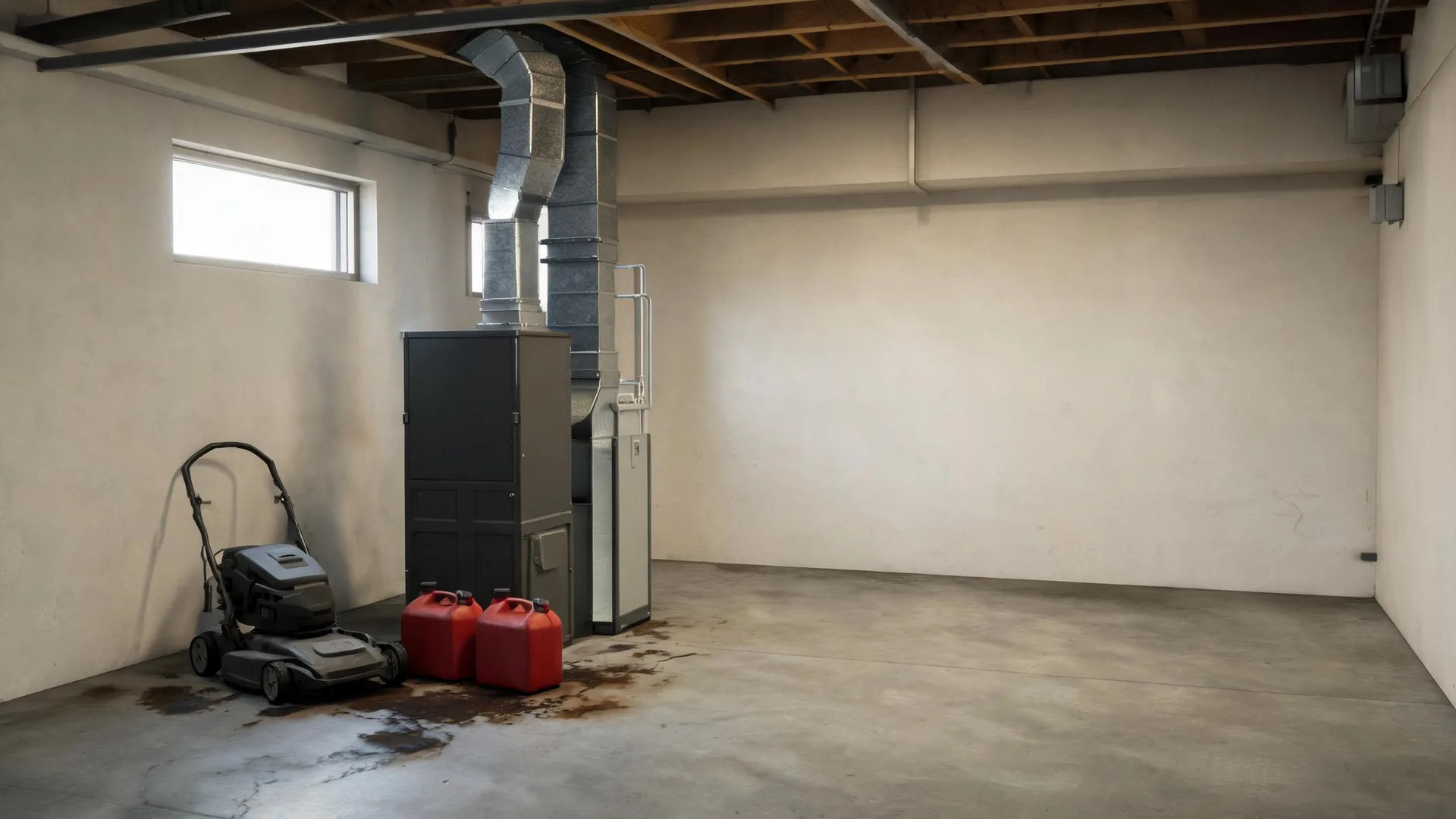
An unfinished basement featuring a forced-air furnace, exposed wooden ceiling joists, bare concrete walls, and miscellaneous items including cardboard boxes and coiled cables on the floor.

Furnace Repair in La Plata, MD

Tell us about the job

Takes about a minute. No obligation.

RepairFurnace or heatingCharles County, MD
Step 1 of 2

What ZIP code is the job in?

A cracked heat exchanger ends the question

A furnace with a cracked heat exchanger is done no matter how new the rest of it looks. The igniter, the blower motor, the circuit board can all be replaced on their own. The heat exchanger can't be replaced economically. That's the part that decides it.


One failing part doesn't mean a failing furnace

Short cycling, a pilot that won't hold, a blower that runs with no heat coming out. Problems like these are usually one part giving out while the rest of the furnace is still good. A tech tests the part, replaces it, and the furnace goes back to work for years. A sudden no-heat call after a string of small repairs is a different story.

7 months
October through April, your furnace is on duty
29°F
the average winter night it heats against
11 winter storms
in ten years, the nights a failure hurts most
Isometric grayscale illustration of a cutaway house showing an interior furnace with a tall flue pipe and ductwork running to rooms under a partially lifted roof.
Your furnace works hardest from November through March.

NOAA nClimDiv, 1991–2020 normals

A cracked heat exchanger that keeps running can push carbon monoxide into the air the blower is moving through the house.

A blower motor forced to strain against a clogged filter or blocked duct burns out its bearings months before it should.

Half the homes in Charles County were built in 1991 or later, and the furnace in one of them is usually worth fixing

Half the homes here were built by 1991
Heat runs October through April
Winter nights average 29°F

Electricity in Maryland ran $52.34 per million Btu in 2024, and that rate applies whether the furnace is running clean or struggling. A furnace with a failing igniter or a motor working too hard doesn't heat any better for the extra draw, it just costs more to do the same job. That cost shows up on every bill while the problem sits there unfixed. Furnaces rarely go from fine to broken overnight. The warning signs show up weeks or months before the no-heat call, and waiting them out means paying full price for a furnace that isn't working full right.

Your furnace problem has an ordinary explanation

Charles County sees its share of wind and storms, but none of it singles out furnaces here for extra wear. A furnace that's acting up is most likely dealing with a normal part failure, the kind any furnace runs into after enough years of work. Get the actual cause checked before deciding what it means for yours.

Find a contractor
A gray high-efficiency gas furnace installed in an unfinished basement, surrounded by gas lines, a condensate drain, and sheet-metal ductwork.

A newer furnace has fewer winters behind it

A furnace in a house built in 1991 or later hasn't been running as many winters as one in an older home. Fewer winters means less wear on the heat exchanger and the blower motor, the parts that decide whether a furnace is worth fixing. If your house falls on that newer side, age isn't the reason to question the furnace. A tech checking it is looking for a worn part, not a worn-out machine.

A smell before a sound

A burning smell when the furnace first kicks on for the season usually clears up as dust burns off the heat exchanger. A smell that lingers, or one that's sharper, like hot metal or something electrical, means a wire or component is overheating. The furnace needs to come off before it runs again.

What the noise is telling you

A bang at startup usually means gas is building up before it lights instead of catching right away. Rattling while the furnace runs is often a loose panel, nothing urgent. Grinding or squealing from the blower is the motor bearings giving out, and that one gets worse until the motor quits.

Before calling anyone, check the thermostat is set to heat and the temperature is actually above room temperature. Go to the breaker box and make sure the furnace breaker hasn't tripped. If the furnace has a standing pilot, look through the little window and see if the flame is lit. Check the air filter. A filter packed with dust chokes off airflow, and some furnaces will shut themselves down rather than run with a blocked filter. Look at the furnace switch too, the one that looks like a light switch on or near the unit itself, since it's easy to bump off by accident. None of this takes tools or special knowledge, and it rules out the simple stuff before a tech ever gets involved.

A diagnostic call starts with questions, not tools. A tech wants to know when the problem started, whether it's constant or comes and goes, and what the furnace was doing right before it acted up. Then comes the panel off and a look at the obvious parts. The igniter glowing or not. The flame sensor's condition. Whether the blower wheel spins free. A multimeter checks for the voltage a part should be getting against what it's actually getting, since a part that tests dead could just be starved of power from somewhere upstream. Gas pressure gets checked at the valve. Static pressure gets checked in the ductwork. A furnace can have a good part failing for a bad reason, and the goal is to find the one thing actually wrong, not to start swapping parts and see what sticks.