






An unfinished basement containing a forced-air furnace with metal ductwork, exposed wooden ceiling joists, a hanging Edison bulb, and bare concrete floors.

Furnace Repair in Chesapeake Beach, MD

Tell us about the job

Takes about a minute. No obligation.

RepairFurnace or heatingCalvert County, MD
Step 1 of 2

What ZIP code is the job in?

Furnaces in Chesapeake Beach run from October through April, and overnight lows sit around 29°F through December, January and February. That's a normal Maryland winter, not a hard one. Nothing about it asks more of a furnace than it's built to handle. A furnace that's struggling here is usually dealing with the same thing a furnace struggles with anywhere. A dirty flame sensor. A failing igniter. A clogged filter choking off airflow. A thermostat that's lost its connection to the system. Winter storms do pass through, 12 of them brought heavy snow or ice over the last ten years, but a furnace that's been kept up handles a cold snap or a brief power blip without trouble. If yours is acting up, the cause is almost always something specific and fixable, not the weather outside.

7 months
October through April, your furnace is on duty
29°F
the average winter night it heats against
12 winter storms
in ten years, the nights a failure hurts most
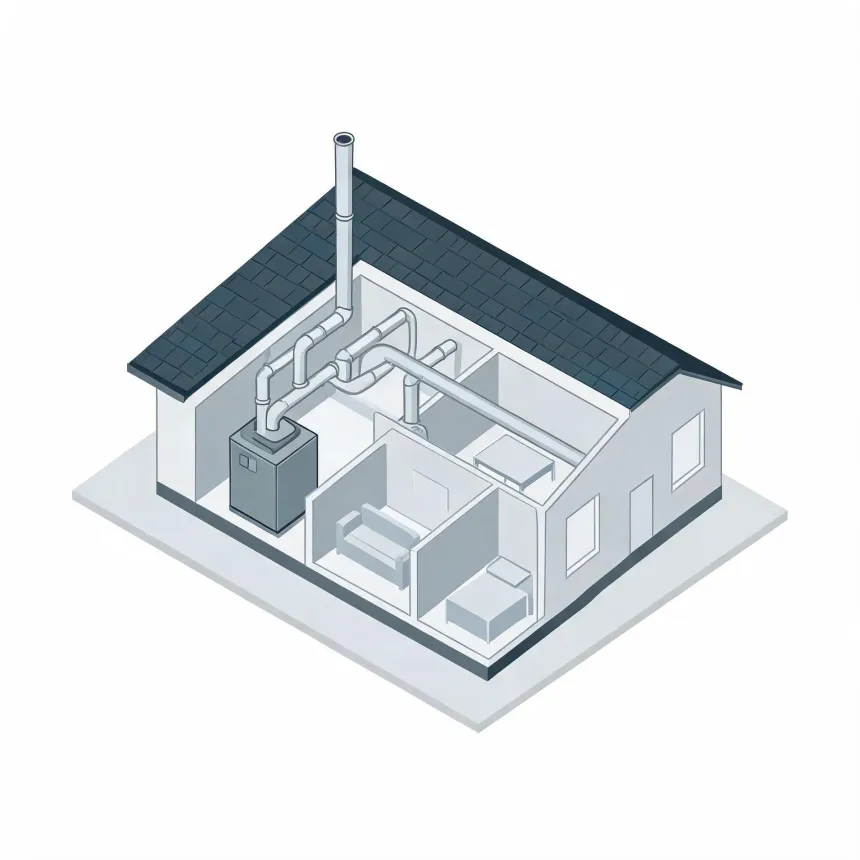
Isometric cutaway illustration of a single-story house showing a gray furnace connected to white ductwork and a flue pipe extending through the shingled roof, with simplified furniture in the interior rooms.
Your furnace works hardest from November through March.

NOAA nClimDiv, 1991–2020 normals

Furnaces in Calvert County start their season in October.

September is the month to get a weak part fixed, before the first cold week finds it.

Maryland's electric rates mean a furnace running wrong drains you every month it stays that way

Heat runs October through April
Winter nights average 29°F
12 winter storms from 2015 to 2024
A lot of the furnaces here are still youngHalf the homes in Calvert County were built in 1990 or later.

At $52.34 per million Btu, electricity here is not cheap to waste. A furnace with a dirty flame sensor or a clogged filter does not fail outright. It runs longer to hit the same temperature, cycling on and off more than it should, and every extra minute shows up on the bill. That cost keeps adding up for as long as the part stays bad. Getting the actual cause checked now stops the drain instead of paying it all winter.

A furnace this age is worth fixing

If your furnace came with a newer Calvert County house, it's got years left in it. Repairing the part that's failing makes more sense than replacing the whole system.

Find a contractor
A man in a dark jacket, cap and tan work pants carries a canvas tool bag up stone steps toward a navy front door, with a potted shrub beside the entry.
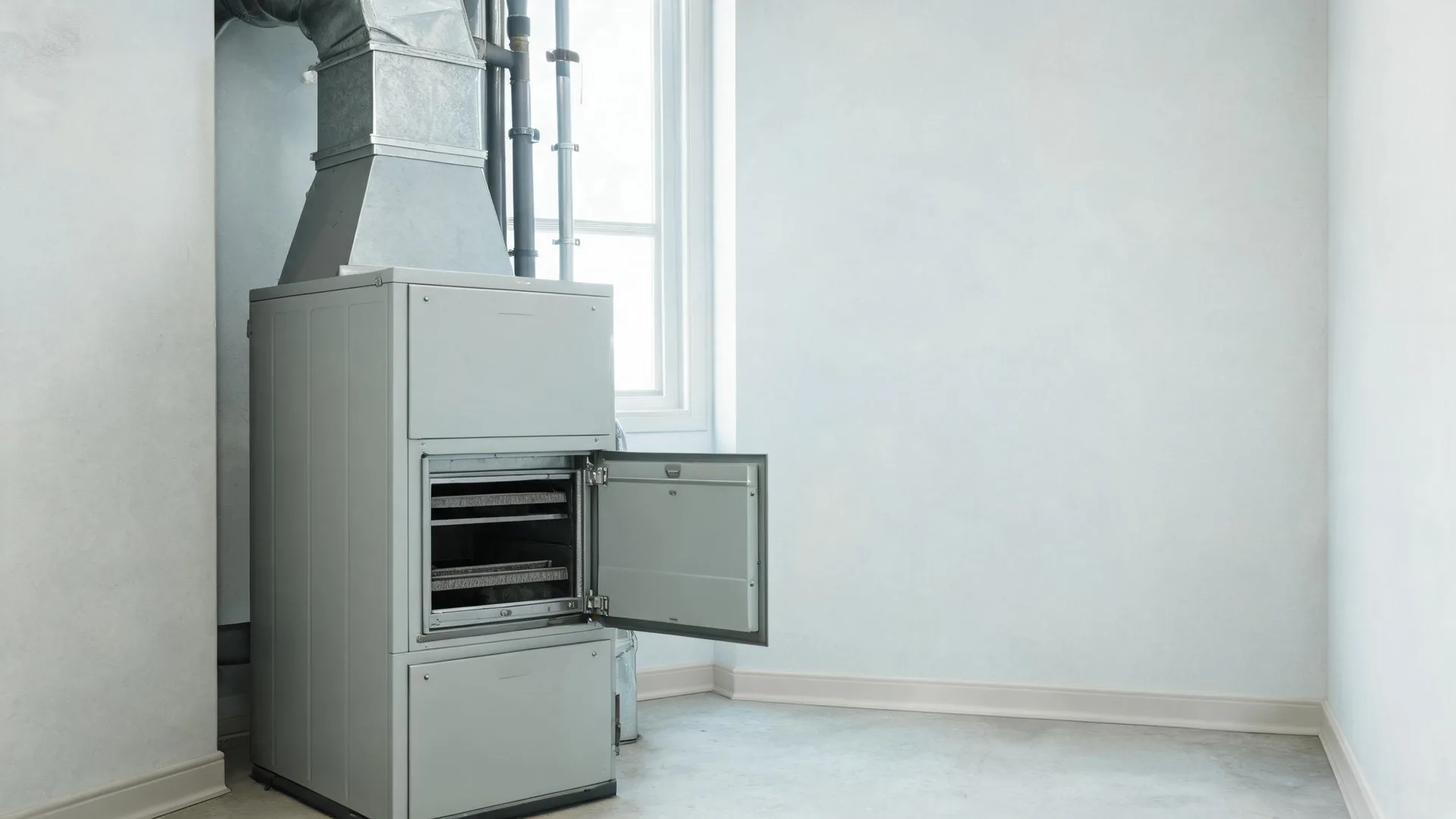
A gray high-efficiency gas furnace installed in an unfinished basement, surrounded by gas lines, a condensate drain, and sheet-metal ductwork.

What a furnace tells you before it quits

A furnace that's about to need a repair usually tells you before it quits outright. It short cycles, running for a few minutes then shutting off before the house warms up. The blower runs but the air coming out feels barely warm. It takes longer than it used to reach the temperature on the thermostat. You hear a clicking at the start of a cycle that doesn't catch, which usually means the igniter is struggling to light the burners. A burning or metallic smell in the first few minutes of a cycle is normal as dust burns off, but a smell that lingers or comes back every time is not. Watch for soot around the vent hood, a yellow flame where it should burn blue, or a furnace that cycles so often the house never feels settled at one temperature. None of these mean the whole system is done. Most of them trace back to one part that's failed or is about to, and catching it early is what keeps a small repair from turning into a no-heat call.

A cracked heat exchanger gets worse under heat

A heat exchanger that's cracked flexes a little more each time the burners fire and the metal heats up. Running the furnace keeps opening that crack wider. Left alone it can let combustion gas into the air the blower pushes through the house, which is why a cracked exchanger is a shut-it-down repair, not a wait-and-see one.
A dirty flame sensor only gets harder to clean

A flame sensor coated in carbon has a harder time detecting the flame, so the furnace shuts off and retries. Each failed attempt leaves a little more residue behind, and a furnace that short cycles today will short cycle worse next week. Caught early, cleaning the sensor is a quick fix. Left running, the sensor eventually fails outright and the furnace won't light at all.

A furnace fails the same handful of ways in every home. The igniter wears out from heating and cooling every cycle until it cracks or stops glowing hot enough to catch the gas. The blower motor runs for years and then its bearings go, so it strains, squeals, or seizes. A draft inducer motor fails and the furnace won't start at all, since it won't fire without proving the exhaust path is clear first. Flame sensors and igniters take the brunt of daily cycling, so they're the parts most likely to need attention before anything else does. Loose wiring or a failing control board can mimic a bigger problem, a furnace that won't respond to the thermostat isn't always a sign the whole unit is going. Most of these are wear parts doing exactly what wear parts do over time, not a sign of something gone wrong.

A furnace is a collection of parts with different lifespans, not one thing that dies all at once. A flame sensor or igniter wears out doing its job every single cycle, and replacing one doesn't mean the rest of the furnace is close behind. The cabinet, the gas valve, the heat exchanger itself usually outlast several of the smaller parts around them. So the question is rarely whether the furnace is old. It's whether the part that failed is a normal wear item or something structural like the heat exchanger. A cracked exchanger is worth replacing the unit over. A bad igniter is not.