






An unfinished concrete basement containing a metal HVAC air handler, exposed wooden ceiling joists with sheet-metal ducts, a hanging bare bulb, copper pipes, and stacked cardboard boxes.

Furnace Repair in Centreville, MD

Tell us about the job

Takes about a minute. No obligation.

RepairFurnace or heatingQueen Anne's County, MD
Step 1 of 2

What ZIP code is the job in?

Furnaces here start running in October and keep going through April, about seven months straight. Whatever was already weak in yours tends to give out in the first few cold weeks, once it gets asked to run hard again. A furnace that was acting up by the end of last season doesn't fix itself sitting idle all summer. If something's off with yours now, in September, that's the better time to get it looked at. Nobody wants to find out their heat is out on the first real cold night.

7 months
October through April, your furnace is on duty
28°F
the average winter night it heats against
9 winter storms
in ten years, the nights a failure hurts most
Isometric cutaway illustration of a single-story house with a dark shingled roof, showing interior rooms with beds and furniture, overhead ductwork, and a gray furnace with a tall flue pipe at the exterior wall.
Your furnace works hardest from November through March.

NOAA nClimDiv, 1991–2020 normals

Nothing about Centreville puts extra strain on a furnace.

So when yours is acting up, it's a normal problem with a normal fix, not something the cold here caused.

Electricity here runs $52.34 per million Btu, and a furnace that's working too hard to heat burns through it every day it's not fixed

Heat runs October through April
Winter nights average 28°F
Climate zone 4A
Half this county was built in 1990 or laterHalf the homes in Queen Anne's County were built in 1990 or later, so a lot of these furnaces still have years left in them.

A furnace that's short cycling, running constantly, or blowing lukewarm air is spending more to heat the same house. That cost shows up on the bill before anyone diagnoses why. Waiting a few weeks to call someone doesn't pause the problem. It just means paying the higher rate a few more weeks while the furnace keeps struggling the same way. Once it's diagnosed, the fix is usually quick, a part replaced, a sensor cleaned, an igniter swapped. Getting that done sooner just means fewer weeks of paying for a furnace that isn't working right.

Worth fixing before it's worth replacing

If your furnace came with the house, check when that was built. A house from 1990 or later puts the furnace well within range for a repair rather than a replacement.

Find a contractor
A gray gas furnace with attached ductwork and piping installed in an unfinished concrete basement.

Running on a bad part doesn't give it time to recover

A cracked heat exchanger gets worse under heat and shrinks back when the furnace shuts off, so the gap that lets gas escape opens wider every time the burner fires. A blower motor with worn bearings is carrying extra friction on every run, and the heat that friction makes has nowhere to go but into the motor windings. A flame sensor with a light coating of oxidation reads weaker each cycle, and once it reads too weak to detect the flame, the furnace shuts itself down instead of running unsafe. An inducer motor that's starting to fail still moves enough air to pass on a mild day, but it's drawing harder to do it, and that strain doesn't ease up with rest. None of these sit still between cycles. They pick up again from wherever the last run left them.

What you'll actually notice first

Most furnace trouble shows up as sound or smell before it shows up as cold air. A bang or boom at startup means gas is building up before it catches. A screech or grind from the blower means a motor bearing is wearing out. A burning or metallic smell that doesn't fade after the first few minutes isn't normal. Short cycling, where the furnace fires, runs a couple minutes, and shuts off again, is usually a flame sensor or a limit switch telling it something's wrong.
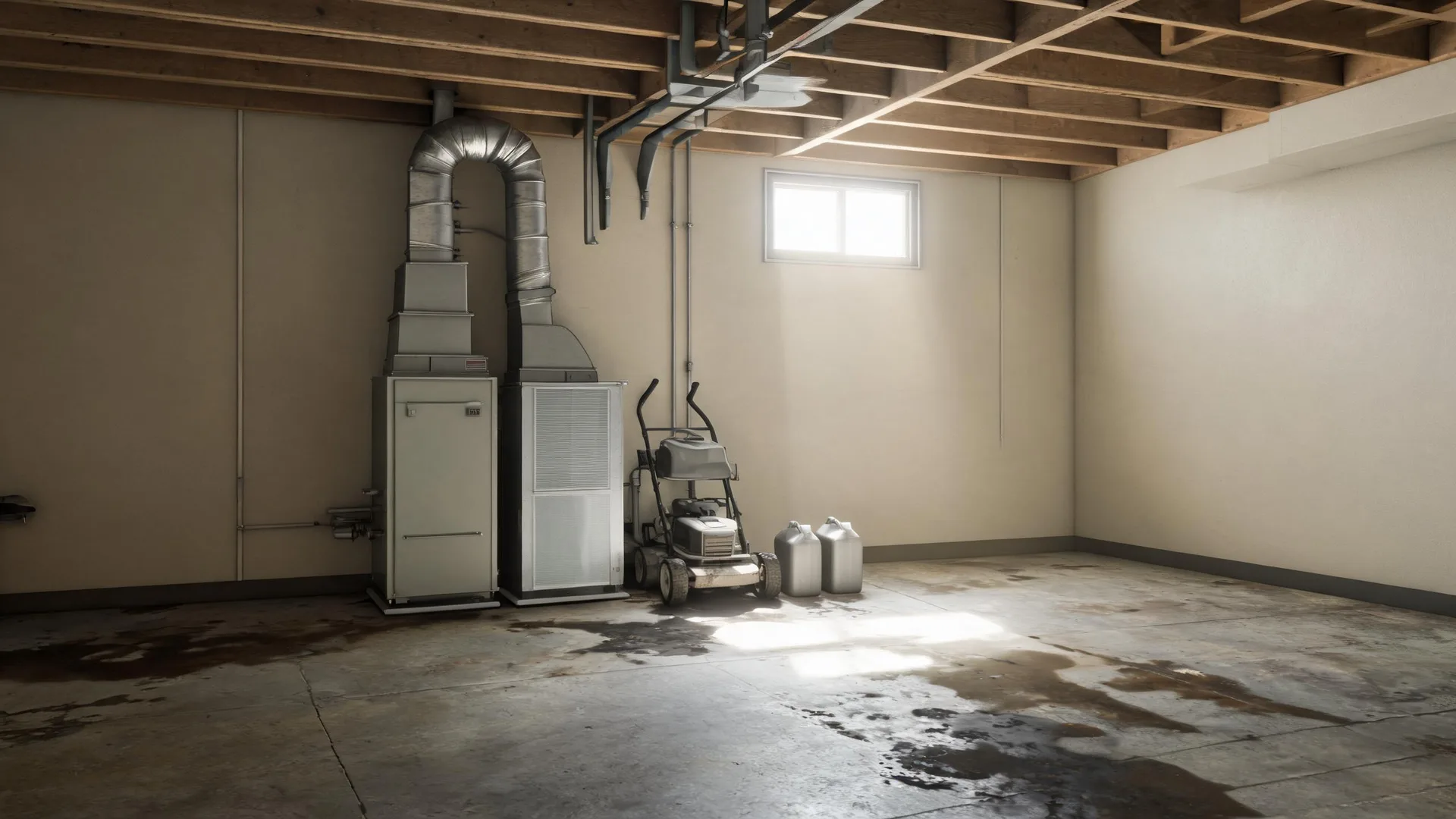
The signs worth stopping for

Air coming out lukewarm instead of hot often means a failing igniter or a gas valve not opening fully. A pilot light that's yellow or flickering instead of steady blue needs a look, since that's a combustion problem, not just an appearance issue. If the furnace runs constantly and never seems to shut off, something is stopping it from reaching the temperature it's set to. Any of these is worth a call. None of them get better from running the furnace less.

Before calling anyone, check the simple things that cause a surprising number of no-heat calls. Make sure the thermostat is set to heat and the set temperature is actually above room temperature, not just left where it was last season. Check the furnace switch, the one that looks like a light switch near the unit, and make sure it's on. Look at the breaker for the furnace and the one for the air conditioner, since most furnaces share a disconnect with the cooling system and a tripped breaker will stop both. If the furnace has a standing pilot, see whether it's lit. Check the air filter, because one that's packed with dust can choke airflow enough to trip a safety switch and shut the whole thing down. None of this fixes a cracked heat exchanger or a failing igniter, but it rules out the things that look like a broken furnace and aren't.

A diagnostic visit starts with the thermostat and the filter, the same things worth checking before anyone's called out, because there's no point pulling panels if the fix is simpler than that. After that it's a look at the flame itself, whether it's burning steady and blue or doing something else, and a check of the flame sensor and igniter since those cause more no-heat calls than anything. The blower gets checked for noise and for how freely it's spinning, since a motor working harder than it should runs hotter than it should. Gas pressure gets tested at the valve, because too little and the air comes out lukewarm, too much and the heat exchanger takes damage it can't undo. The heat exchanger itself gets inspected for cracking, which matters more than anything else on the list since that's a safety problem, not just a comfort one. Most of this takes less time than people expect, because a furnace only has so many parts that cause trouble, and a tech who's seen the symptom before usually knows where to look first.