







Two white colonial houses with lit windows and black shutters photographed at dusk along a tree-lined residential street.

Furnace Installation in Westminster, MD

Tell us about the job

Takes about a minute. No obligation.

New system or replacementFurnace or heatingCarroll County, MD
Step 1 of 2

What ZIP code is the job in?

Electricity in Maryland ran $52.34 per million Btu in 2024, among the higher rates in the country. That's worth knowing even if your new furnace runs on gas, because the fan and controls still pull power every time it cycles on. Whatever fuel it uses, the AFUE rating on the unit decides how much of that cost turns into heat in your house rather than going up the flue. A furnace a few points higher in AFUE burns less fuel for the same warmth. That difference shows up on the bill every month the system runs, not just once.

7 months
October through April, your furnace is on duty
25°F
the average winter night it heats against
80% AFUE
the federal minimum any new unit must meet
Isometric cutaway illustration of a single-story house showing interior rooms with furniture, a furnace unit with connected ductwork and a tall vertical flue pipe extending above the dark shingled roof.
Your furnace works hardest from November through March.

NOAA nClimDiv, 1991–2020 normals

Electricity heats 50.4% of homes in Carroll County, more than any other fuel.

A furnace replacement here most often means matching the electric system already in place.

Weather here doesn't change what furnace to install

215 severe weather events from 2015 to 2024
11% of homes statewide lost power a day or more in 2024
173 damaging wind events from 2015 to 2024
Install before OctoberFurnace season runs seven months here, October through April. September is the month to get it done.

When two quotes come in with a price gap between them, the cheaper one is almost always built around a lower AFUE. The pricier one is buying a furnace that turns more of each fuel cycle into heat instead of sending it up the flue. At $52.34 per million Btu, that difference doesn't close over time, it compounds, since the furnace is firing on cold nights all winter. Before deciding on price alone, ask what AFUE each quote is actually built around.

Your new furnace has to clear 80 percent AFUE, and a credit is there if it clears more

Carroll County falls in climate zone 4A, a mixed zone that puts real demand on both heating and cooling. Any furnace installed here now has to meet the federal minimum of 80 percent AFUE. That floor rises to 95 percent for furnaces built from December 2028 on, so the baseline itself is set to climb. A federal tax credit is available on qualifying high-efficiency equipment, worth checking against before you settle on a unit.

Find a contractor
A man in a dark shirt and tan work pants, seen from behind, climbs stone steps toward a navy front door while carrying a waxed canvas tool tote, with a potted lavender plant beside the entry.
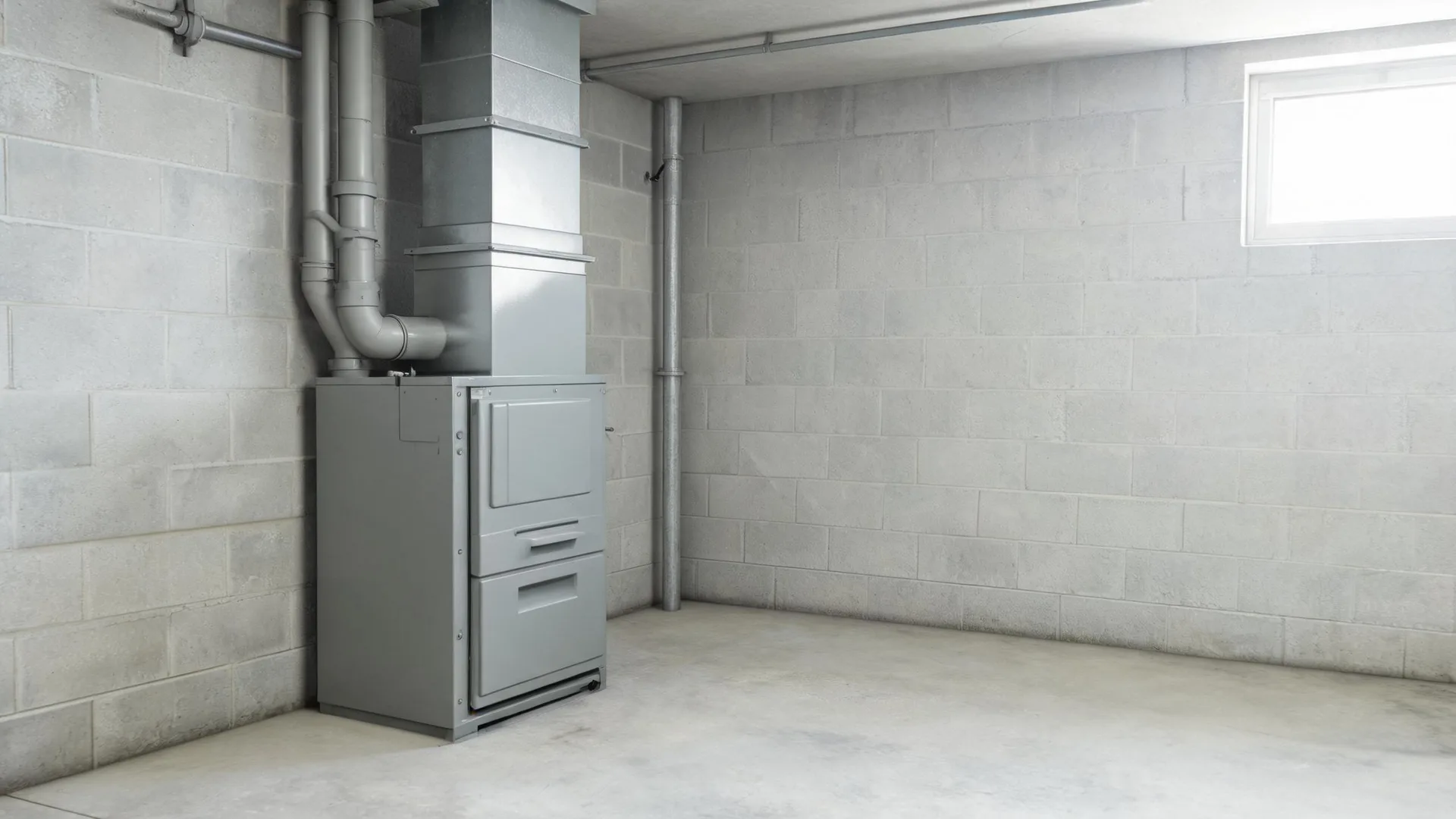
A gray gas furnace with attached ductwork and piping installed in an unfinished concrete basement.

The rating on the label works every time the furnace does

The AFUE number on the label tells you how much of the fuel burning in that furnace turns into heat for your house. The rest goes out the flue. A furnace rated higher keeps burning that same way for every cycle, every night, for as long as you own it. That's different from a one-time spec like blower size or cabinet width. It's a number that's working, or costing you, every time the furnace fires. Over years of winters, the gap between a furnace that clears the minimum and one built well above it adds up to a lot of fuel either turned to heat or sent up the flue.

The house decides the size

A load calculation looks at square footage, window area, insulation and layout to figure out how much heat the house actually loses on a cold night. That number sets the furnace size, not the unit it's replacing. A furnace sized off the old equipment alone can end up wrong if that system was never sized right to begin with.
The ductwork has to match too

A furnace moves air through the ducts already running through the house. If those ducts are too small or too leaky for the new unit's output, the furnace works against them no matter how well it's sized. Matching the furnace to the house means checking what it's pushing air through, not just what it's heating.

The old furnace doesn't just get unbolted and hauled off. The gas line gets capped or reconnected to the new unit, and the flue or venting gets checked, since a new furnace can need a different venting setup than the one it's replacing. The electrical connection and thermostat wiring transfer over too. Whoever installs the new system should haul the old one away as part of the job, not leave it sitting in the garage or basement. If the furnace is original to the house, the ducts and vents around it are probably original too, and that's worth a look while the old equipment is already out of the way.

Installation day starts with the old furnace coming out, not the new one going in. The space gets cleared, the gas and power shut off, and the old unit disconnected before anyone sets the new one in place. Setting the furnace in place is actually one of the quicker parts. More time goes into the connections around it. The gas line, the venting, the duct transitions, the electrical and thermostat wiring all get checked and sealed rather than just reattached. Once it's hooked up, a tech fires it and runs it through a full cycle, checking gas pressure, airflow and temperature rise against what the manufacturer specs for that model. A furnace that looks installed but hasn't been tested through a complete cycle isn't finished yet.