A two-story red brick house with black shutters and a columned entry sits behind a mown lawn, framed by two large deciduous trees, with a long dry-stacked stone wall across the foreground.

Furnace Installation in Princess Anne, MD

Tell us about the job

Takes about a minute. No obligation.

New system or replacementFurnace or heatingSomerset County, MD
Step 1 of 2

What ZIP code is the job in?

The old furnace gets disconnected and hauled off

The installer shuts off the gas and power, disconnects the ductwork and flue connection, and removes the old unit from the house. A furnace isn't bolted to anything structural, so taking it out doesn't open up the walls or floor. The old equipment leaves with the crew. You're not left to find a way to get rid of a dead furnace on your own.


The new furnace has to match what's already there

Your ductwork, gas line and vent were sized for the old furnace, and the new one has to work with them, not the other way around. If the new unit is a different size or type, the installer may need to adjust the plenum or the venting to make the connections work correctly. This is part of why installation takes more than swapping one box for another.

7 months
October through April, your furnace is on duty
30°F
the average winter night it heats against
80% AFUE
the federal minimum any new unit must meet
Isometric cutaway illustration of a single-story house in gray tones, showing interior rooms with furniture, ceiling ductwork, and an exterior furnace unit with a tall flue pipe.
Your furnace works hardest from November through March.

NOAA nClimDiv, 1991–2020 normals

Furnaces here start running in October.

Get it installed in September and it's ready before it has to work.

Winters here don't call for anything bigger than a standard furnace

Heat runs October through April
Winter nights average 30°F
11 winter storms from 2015 to 2024
Furnaces here mostly run on propane or oilMost homes in Somerset County heat with bottled or LP gas or fuel oil, not utility gas.

Somerset County sits in climate zone 4A, humid enough that both heating and cooling have real work to do here. Any gas furnace installed now has to hit at least 80 percent AFUE, the federal floor for non-weatherized furnaces. That floor rises to 95 percent in 2028, so the standard furnace going in today is still well within what's legal and what winters here call for. A federal tax credit is available if you'd rather install above the minimum now instead of waiting.

Efficiency pays here

Power costs more here, so an efficient system pays you back on every bill.

Find a contractor
A man in a cap, dark long-sleeve shirt and brown pants carries a canvas tool bag up wooden porch steps toward a navy front door beside a potted shrub.
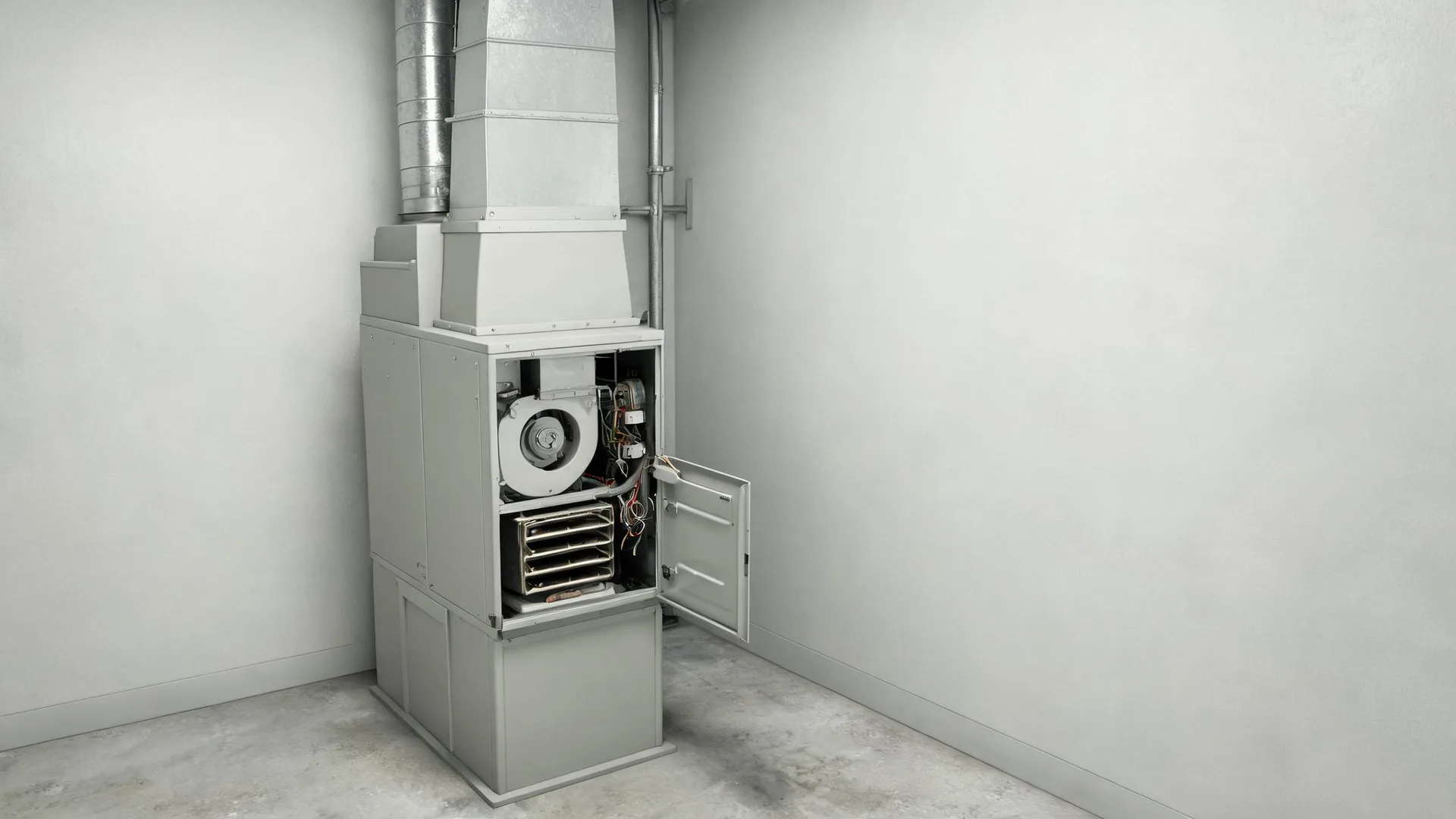
A gray gas furnace with attached ductwork and piping installed in an unfinished concrete basement.

Sized for the house, not the box it replaces

Sizing a furnace comes down to matching its output to how fast the house loses heat, not just the square footage. A contractor works this out room by room, looking at the windows, the insulation, the ceiling height, how many walls face outside. Houses the same size can call for different size furnaces because one holds heat better than the other. A furnace that's too big satisfies the thermostat fast and shuts off again before it's warmed the ductwork or moved enough air through the house. That short cycling wears the ignition system harder over time and leaves rooms far from the thermostat colder than the one it's reading. A furnace that's too small runs long stretches without catching up on the coldest days, and that extra runtime wears it down just the same. Sized right, it runs long enough to heat the house evenly, then shuts off and stays off until it's needed again. That steady pattern is what keeps a furnace lasting as long as it should, not how big a unit the installer could fit.

AFUE tells you what's lost, not what's used

The AFUE number on the label is the share of fuel the furnace actually turns into heat for the house. The rest goes out the flue. A furnace rated higher wastes less gas doing the same job, every time it runs.

The rating only pays off on gas

AFUE measures how a furnace burns fuel, so it only applies to the gas furnace itself. If the house heats with electric resistance or a heat pump, that rating doesn't come into play at all, since there's no combustion to be efficient or wasteful about.

The equipment itself is only part of what an installer is pricing out. The ductwork gets inspected before anything else goes in, and if it's leaking or sized wrong for the new furnace, sealing or modifying it adds to the job. Venting matters too. A furnace that vents differently than the one it replaces, through the sidewall instead of up a chimney, say, means running new pipe and finding a clear path to the outside. The gas line gets checked for whether it can supply the new unit at the right pressure. Ductwork, venting and gas supply are the parts of the house the new furnace has to join up with, and work on any of them shows up in what the installation runs.

Installation day starts with the parts already in the house, not the new furnace. The installer confirms gas, power and venting are ready before the old unit even comes out, because once it's disconnected, there's no heat in the house until the new one is running. Cutting in the plenum and connecting the ductwork takes longer than setting the furnace in place. After it's hooked up, the installer runs it through a full cycle, checking gas pressure, airflow and the flue draft before calling it done. A combustion analyzer gets used to check the exhaust, confirming the furnace is burning clean and venting correctly rather than just turning on and looking for heat to come out. Only once all of that checks out does the job end, not when the furnace first fires.