





White colonial-style houses with lit windows photographed at dusk along a tree-lined street.

Furnace Installation in Mountain Lake Park, MD

Tell us about the job

Takes about a minute. No obligation.

New system or replacementFurnace or heatingGarrett County, MD
Step 1 of 2

What ZIP code is the job in?

The old furnace does not just get left behind. A tech disconnects the gas line and the venting, then the ductwork comes off the plenum before the unit is unhooked from the thermostat wiring and power. If it is a gas furnace, the gas line gets capped off safely before anything is pulled out. The cabinet is usually too heavy and awkward to carry out whole, so it may get broken down on site. Most of what comes out is metal, so it is worth asking the installer whether it goes to a scrap yard instead of a landfill. The new furnace then gets set in the same spot, and the old ductwork and venting get matched up to it or adjusted if the new unit needs something different.

9 months
September through May, your furnace is on duty
21°F
the average winter night it heats against
80% AFUE
the federal minimum any new unit must meet
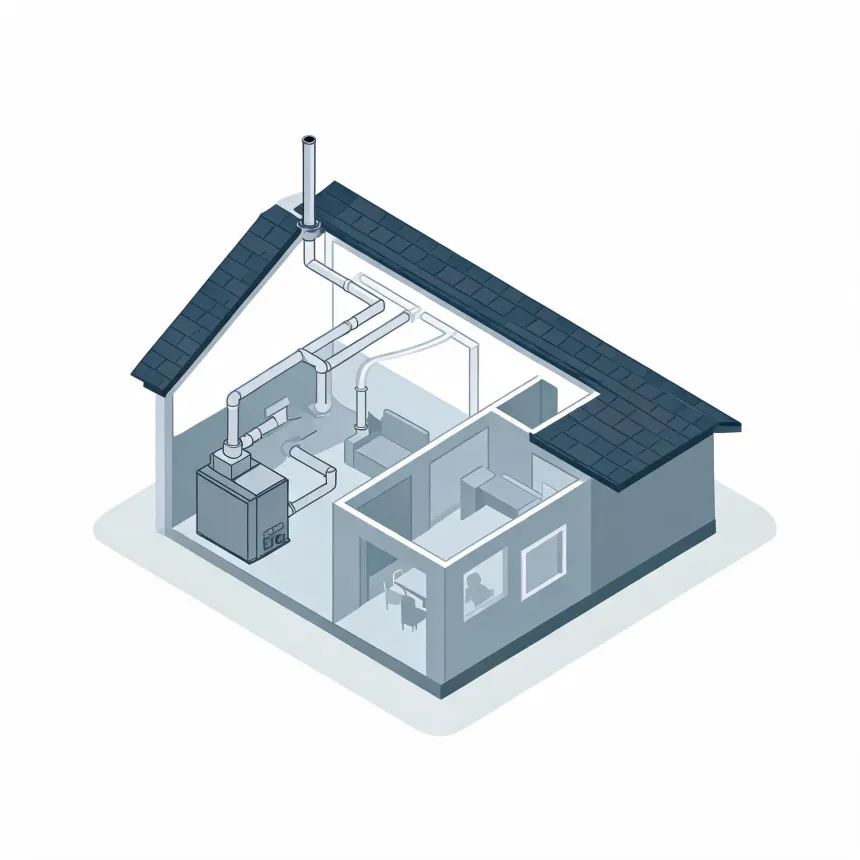
Isometric cutaway illustration of a single-story house showing interior rooms, a furnace unit with connected ductwork, and a flue pipe extending through the dark shingled roof.
Your furnace works hardest from November through March.

NOAA nClimDiv, 1991–2020 normals

Furnaces in Garrett County run from September through May, nine months out of the year.

A furnace working nine months a year needs to be sized for this place, not picked off a shelf.

Nine months of heat means August is the month to get it done

Heat runs September through May
Winter nights average 21°F
Climate zone 5A

A load calculation is what sizes the furnace to the house, not the square footage on a listing. Too big and it short cycles, kicking on and off and wearing out parts faster than it should. Too small and it runs flat out trying to hold a thermostat setting through a night that averages 21°F in January, and still falls short. A rule of thumb sizes off square footage alone and misses both of these. Ask whether the quote is based on a load calculation done for your house before you compare anything else on it.

Size it for how hard it works here

A new system here will work harder than most, every year. Size it right and don't buy on price alone.

Find a contractor
A man in a cap, olive shirt and dark pants carries a canvas tool bag up concrete steps toward a dark blue front door, with a potted shrub beside the entry.
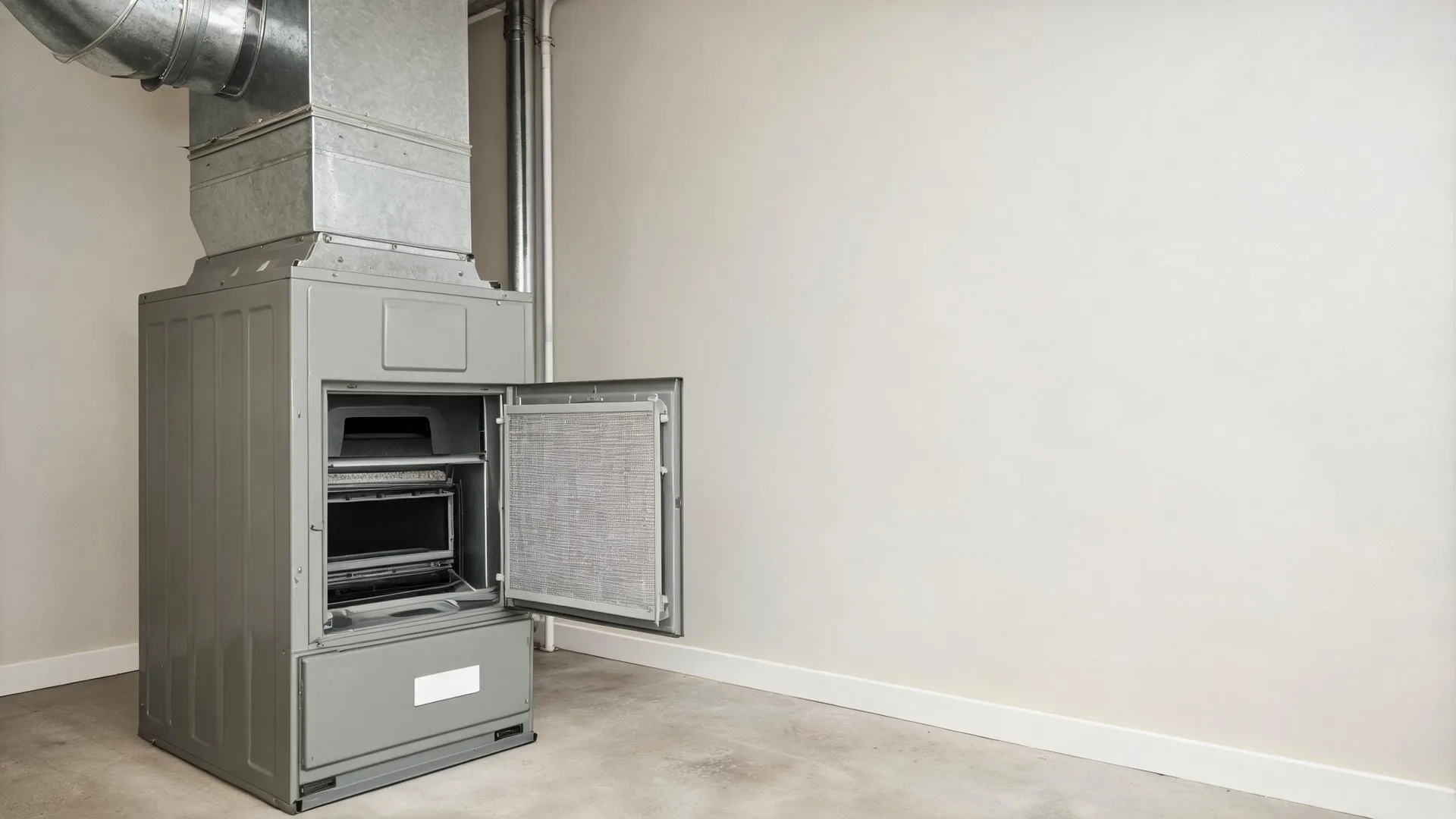
A gray high-efficiency gas furnace installed in an unfinished basement, surrounded by gas lines, a condensate drain, and sheet-metal ductwork.

Ask about stages, not just BTUs

Ask what stage of heat each quote is built around. A single-stage furnace runs at one output, full blast, every time it fires. A modulating furnace can ease into a lower setting and hold there, then step up only when the house actually needs more. The lower setting runs longer and moves air more evenly, instead of blasting hot air and shutting off and letting the house drift cold again. Ask too what the blower motor is. A variable-speed motor ramps up and down with demand rather than switching between just on and off, and that matters on a system that is going to cycle for months straight. Ask about the heat exchanger next. It is the part that separates the flame from the air moving through the house, and it is the part that eventually cracks from years of heating and cooling. Some are built with heavier gauge steel or a different alloy to hold up longer under that kind of cycling. A contractor who can talk through the stages and the heat exchanger without reaching for a brochure is one who knows the equipment, not just the price sheet.

The furnace itself is one line on the quote

The cabinet and burners are only part of what gets installed. Venting material, ductwork modifications, a new thermostat if the old one cannot talk to the new furnace, and the labor to set it all in place and test it factor into the total. Quotes built around the same equipment can still land far apart once these are counted.
The venting a furnace needs can change the job

A furnace that pulls combustion air from inside the house and vents through a chimney is a different install than one that vents through a sidewall with its own intake and exhaust pipe. Switching between these is not just swapping a unit. It can mean new venting run through the house, which changes what the job takes to finish.

Installation day itself usually runs start to finish in one visit. The old equipment comes out first, then the new furnace gets set, connected to the gas line and venting, and wired to the thermostat. Once it's in place, the tech fires it up and checks the gas pressure, checks for proper airflow across the heat exchanger, and confirms the flue is drafting the way it should. A combustion analyzer gets used to read the exhaust and make sure the furnace is burning clean rather than running rich or starving for air. The last step is usually cycling the system a few times to watch how it ignites, ramps up, and shuts down, since a furnace that looks fine sitting still can still have a problem that only shows up once it's actually running.