






White colonial houses with lit windows and dark shutters line a tree-lined street at dusk, bordered by dry-stacked stone walls.

Furnace Installation in Annapolis, MD

Tell us about the job

Takes about a minute. No obligation.

New system or replacementFurnace or heatingAnne Arundel County, MD
Step 1 of 2

What ZIP code is the job in?

Electricity in Maryland cost $52.34 per million Btu last year, among the higher rates around. If your new furnace runs on electric heat, that rate applies to every hour it runs. A furnace with a higher efficiency rating turns more of that electricity into heat in your rooms instead of losing it. That difference shows up on every bill, not just the first one. Ask what efficiency rating a unit carries before you decide between two furnaces priced close together.

7 months
October through April, your furnace is on duty
29°F
the average winter night it heats against
80% AFUE
the federal minimum any new unit must meet
Isometric cutaway illustration of a house with a shingled gable roof, showing a gray furnace unit connected to overhead ductwork and a chimney flue, with simplified furniture in the rooms below.
Your furnace works hardest from November through March.

NOAA nClimDiv, 1991–2020 normals

The furnace itself is only part of the bill, the ductwork it ties into matters just as much.

If the ducts are too small or leaky for the new unit, a contractor has to address that before the furnace can run right.

Seven months of heat a year means a September furnace is one you chose, not one you grabbed

Heat runs October through April
Winter nights average 29°F
Climate zone 4A

A standard furnace sized right for your house is what this calls for, nothing more. Heat runs here from October through April, seven months, and overnight lows average 29°F through December, January and February. That is a normal winter load for a furnace to handle, not a reason to size up or chase a higher tier than you need. A contractor sizing your system works from your square footage, your insulation and your ductwork, not from the thermometer alone. A furnace sized larger than that doesn't heat your house any better. It just cycles on and off more than it should.

A standard furnace is the right call here, outages or not

Anne Arundel County sees damaging wind and storms most years, and Maryland households lose power for a day or more often enough to notice. None of that changes what furnace fits your house. A standard unit, sized the way a contractor sizes any furnace here, handles it fine. If outages matter to you, that's a question about backup power, not about buying a bigger or higher-tier furnace than your house calls for.

Find a contractor
A man in a cap, dark shirt and tan pants carries a worn canvas tool bag up concrete steps toward a dark blue front door with a sidelight window and a large planter beside it.
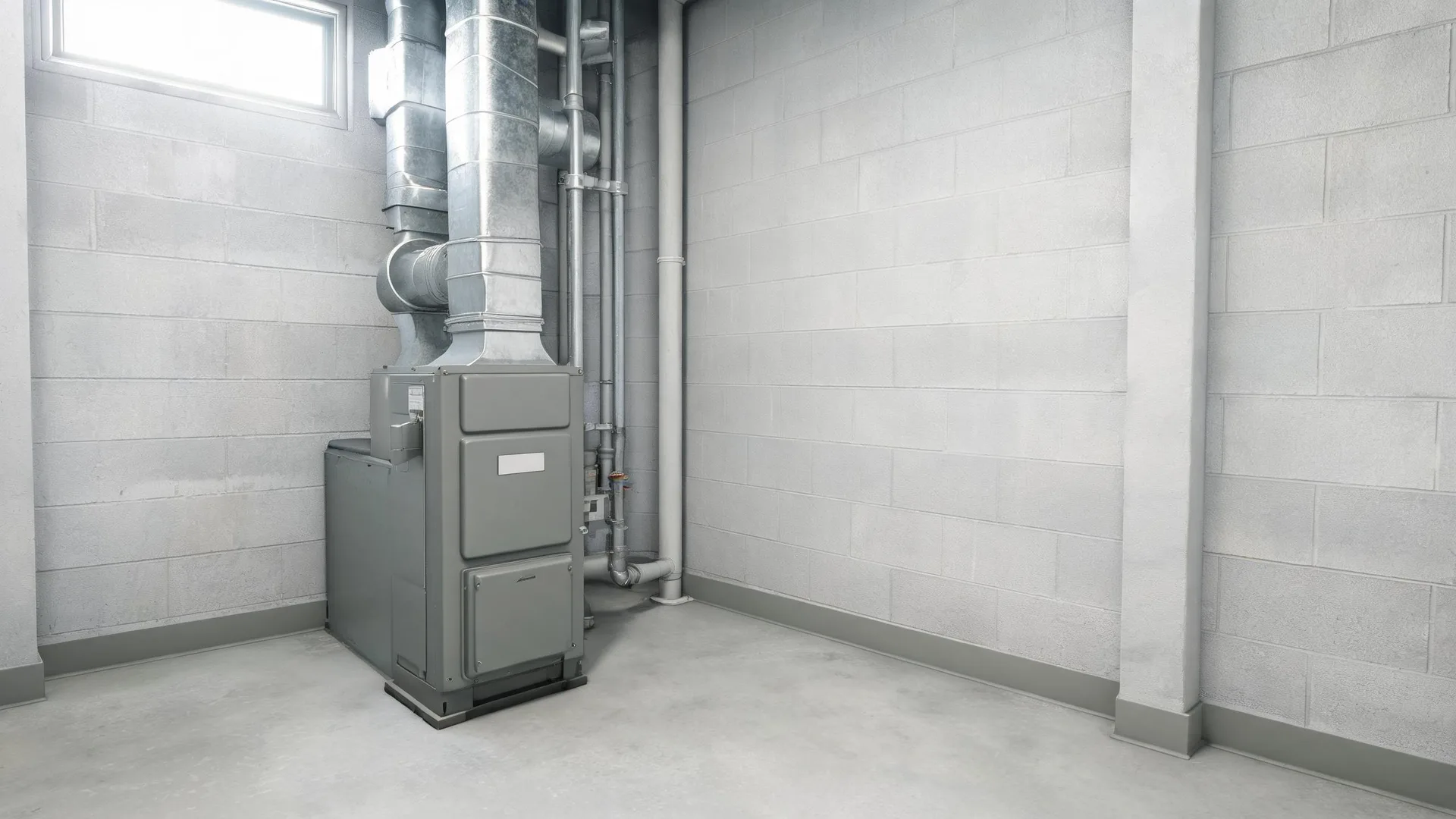
A gray residential gas furnace installed in an unfinished basement, connected to sheet-metal ductwork and PVC pipes.

The rating on the label is about waste, not size

That rating on the label is the AFUE number, and it tells you what share of the fuel your furnace burns actually turns into heat in your rooms. The rest goes out the flue. A furnace with a higher AFUE wastes less fuel doing the same job, every cycle, for as long as you own it. That's separate from capacity. A higher rating doesn't mean a furnace that heats a bigger house or heats it faster, it means one that wastes less while it runs. Furnaces sized the same for a given home can still carry different AFUE ratings, and the one that wastes less costs less to run over its life even though both are doing identical work. How much that rating actually saves you depends on how many hours the furnace fires over a season, so it's worth asking a contractor what each tier is really worth for a system that runs as much as this one will.

A load calculation is the actual math, not a guess

A contractor works out heat loss room by room, using wall and window area, insulation, ceiling height and how much of the house faces outside. That calculation is what sets the size, not the square footage alone and not the old furnace's rating. Houses the same size can still need different sized furnaces because one holds heat better than the other.
Oversized short-cycles, undersized never catches up

A furnace too big for the house heats the air fast, shuts off, and starts again a few minutes later, so it never runs long enough to warm the house evenly or filter the air properly. One too small runs constantly and still leaves rooms short of the thermostat setting on the coldest nights. The right size is the one that runs in long, steady cycles and still keeps up.

A load calculation and an AFUE number only tell you what one unit does on its own. Comparing systems means asking the same questions of each one. Ask what stage the burner runs. A single stage furnace fires at full output or not at all. A modulating one adjusts its flame to match what the house needs right then, so it holds a steadier temperature and spends more time running low and quiet instead of cycling on and off. Ask about the blower motor too. A variable speed blower ramps up and down with the burner, while a standard one runs at a fixed speed whenever it is on. Ask how the system is staged to work with your ductwork, since a modulating furnace earns its keep only when the ducts can actually carry the lower, steadier airflow it puts out. Furnaces can carry the same efficiency rating on paper and still behave nothing alike once they are running.

Install day starts with the old furnace coming out, and that alone can take a couple hours if it's tucked in a tight closet or crawlspace. The contractor runs the new unit in, sets it, and connects the venting, the ductwork trunk, and the fuel or electrical supply it needs to fire. Any duct transitions that don't match the new furnace's output get rebuilt right then, not left for later. Before anything runs, the connections get tested and the vent gets checked for proper slope and clearance, since a furnace that back-drafts into the house is a problem no efficiency rating fixes. Once it's running, the contractor checks the temperature rise across the heat exchanger against what the manufacturer specifies, confirms the blower speed matches the ductwork, and walks the thermostat settings with you before leaving. A furnace that's installed right shouldn't need a return visit to get it breathing properly.