A weathered white picket fence runs along a grassy lawn in front of a row of two-story wood-sided houses with porches and gabled roofs, beneath large leafy trees.

Heat Pump Repair in Ocean City, MD

Tell us about the job

Takes about a minute. No obligation.

RepairHeat PumpWorcester County, MD
Step 1 of 2

What ZIP code is the job in?

This climate doesn't push a heat pump hard

Worcester County sits in a mixed climate, zone 4A, where winter lows average 30°F and summers run humid. A heat pump here cycles through real heating and real cooling, but it isn't fighting single-digit cold snaps or extreme heat for months at a time. That's a moderate load for the equipment to carry.


So a repair here is usually worth it

A heat pump that hasn't been run into the ground by extreme weather is more likely to still have good years left in it. When something goes wrong, the cause is more often a part that's aged out or been skipped on maintenance than a system worn down by constant strain. That's a case for fixing it, not replacing it.

7 months
October through April, your system heats
4 months
June through September, it cools
30°F
the average winter night it heats against
85°F
the average summer afternoon it cools against
Isometric cutaway illustration of a single-story house showing interior ductwork, an indoor air handler, and an outdoor condenser unit connected by lines along the exterior wall.
Your system heats October through April and cools June through September.

NOAA nClimDiv, 1991–2020 normals

Half the homes in Worcester County were built in 1985 or later.

A heat pump installed with a newer home still has years of work left in it, so a repair here usually makes sense.

Electricity here runs 17.86 cents a kWh, so a heat pump limping along is costing you more every month it waits

Power costs 17.86 cents a kWh statewide
45 damaging wind events from 2015 to 2024
12 winter storms from 2015 to 2024
Heat pumps here work September through MayThat's September for heat, June for cooling. A part that's been slipping often fails right when the load picks up.

If your heat pump is short cycling, running constantly, or blowing air that's not quite warm enough, it's not holding steady, it's working harder than it should to get there. That shows up on the bill before it shows up anywhere else. A system low on refrigerant or fighting a failing capacitor still pulls power the whole time it runs, it just does less with it. Waiting a month to get it looked at is a month of paying more for less heat or less cooling. Get a contractor out to find the actual fault before it costs you another cycle.

A newer system here is one worth fixing

If your heat pump came with a newer build here, it's got years left in it. Get the actual fault found and fixed rather than planning around a replacement.

Find a contractor
A white mini-split heat pump outdoor unit mounted on a concrete pad beside a gray-sided house, surrounded by gravel and green shrubs.

What you notice before it quits on you

A failing heat pump rarely stops cold. It tells you first. A hard clunk when it switches between heating and cooling usually means the reversing valve is starting to stick. A hiss or bubbling near the refrigerant lines points to a leak, and a system low on charge will run long and still underperform. Check the outdoor unit too. Some frost in cold weather is normal, but if it stays coated and never clears itself, the defrost cycle isn't doing its job. Inside, feel the air at the vent. Heat pump air runs cooler than a furnace's even when everything is fine, but if it feels barely warmer than the room, the system is struggling to keep up with what you're asking of it. Short cycling, meaning it kicks on and off in quick bursts instead of running a full steady cycle, points to a different problem, often electrical or a thermostat sensor reading wrong. Any one of these is a part falling behind, not a system giving out. Caught early, it's usually a straightforward fix.

Check the thermostat before anything else

Make sure it's set to heat or cool as needed and the temperature is actually set past room temperature. Check the batteries if it has a screen that's dim or blank. A dead thermostat looks exactly like a dead system.

Look at the outdoor unit and the air filter

Clear away leaves, mulch or anything blocking airflow around the outdoor unit, it needs open space on all sides to work. Pull the air filter and hold it up to light. If you can't see light through it, replace it. A clogged filter starves the system and can make it seem like it's failing when it's just suffocating.

Most heat pump failures trace back to a handful of parts that do the most work. The capacitor gives the compressor and fan motors the jolt they need to start, and it weakens with every cycle until it can't do that anymore. The reversing valve is what switches the system between heating and cooling, and because it moves every single cycle, it's one of the first things to stick or leak. Refrigerant doesn't get used up, so if a system is low, it's leaking somewhere in the lines or coils, and that leak won't fix itself. Outdoors, the defrost board and sensor tell the unit when to melt off frost, and if that control fails, ice builds up and blocks airflow entirely. None of these are failures of the whole system. They're single parts wearing out on schedule, which is why most heat pump repairs fix one thing rather than replace everything.

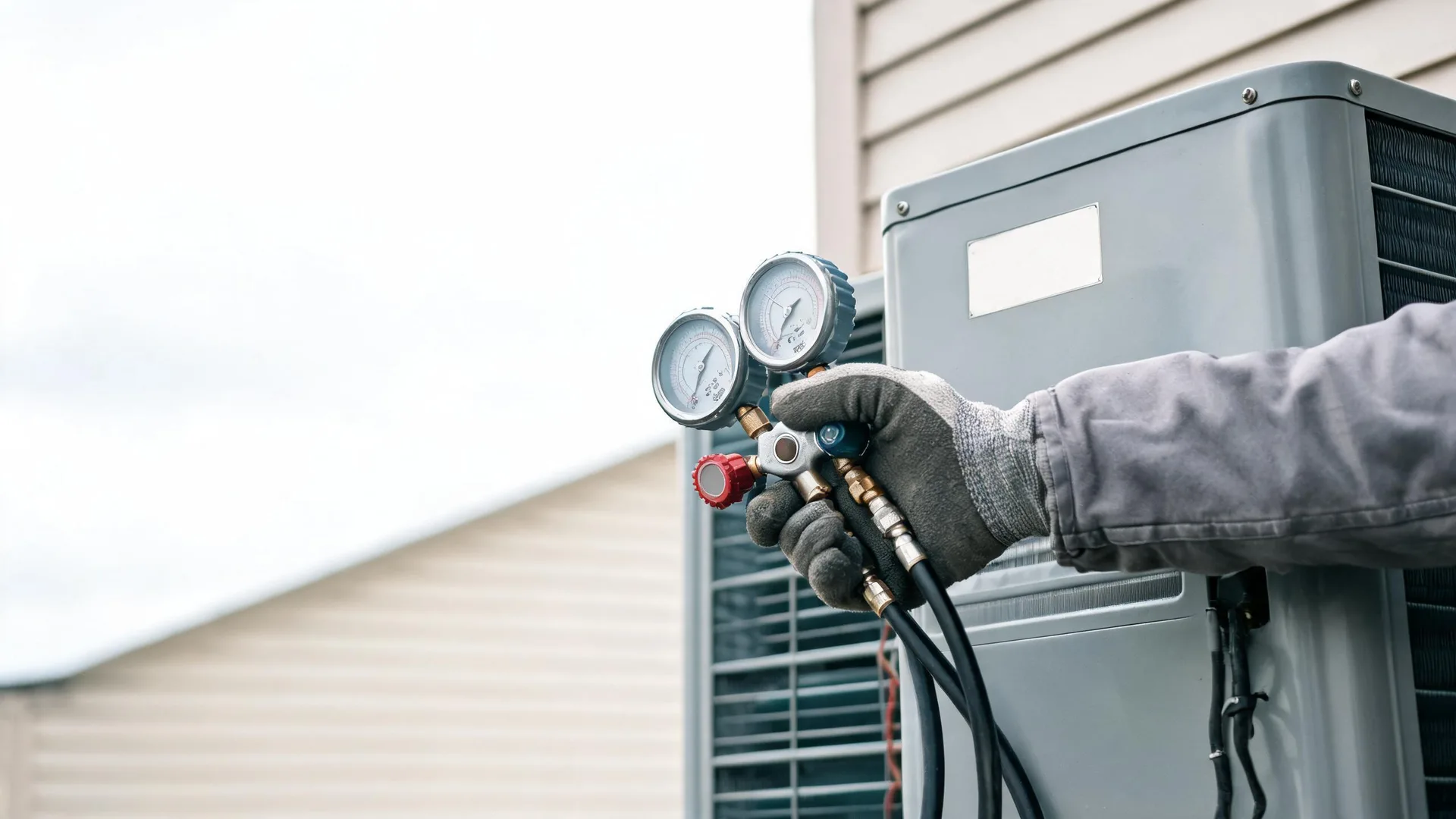
A diagnostic visit starts with the complaint, not the unit. A tech wants to know what it's actually doing wrong, short cycling, weak airflow, ice that won't clear, before touching anything. From there they'll check pressures on the refrigerant lines, test the capacitor under load, and watch a full cycle if the problem is intermittent. The reversing valve gets tested by forcing a switch between heating and cooling and listening for it to actually move. Electrical connections get checked too, since a loose wire can mimic a failing part and send someone chasing the wrong fix. The point of the visit is to find the one part actually causing the symptom, not to replace things until something works.