






A row of similar two-story houses with gray siding and dark shingled roofs stands behind a long white vinyl fence, with mown grass in the foreground and large trees behind.

Heat Pump Repair in Mountain Lake Park, MD

Tell us about the job

Takes about a minute. No obligation.

RepairHeat PumpGarrett County, MD
Step 1 of 2

What ZIP code is the job in?

Garrett County skews newer than a lot of places. Half the homes here were built in 1982 or later, which puts a good share of the county's heat pumps within reach of a normal working life, not past it. If yours came with the house, there's a decent chance it still has years in it. That's worth knowing before anyone talks about replacing instead of repairing. A compressor or a reversing valve acting up in a system that age is usually a repair, not a sign the unit is done.

9 months
September through May, your system heats
2 months
July through August, it cools
21°F
the average winter night it heats against
78°F
the average summer afternoon it cools against
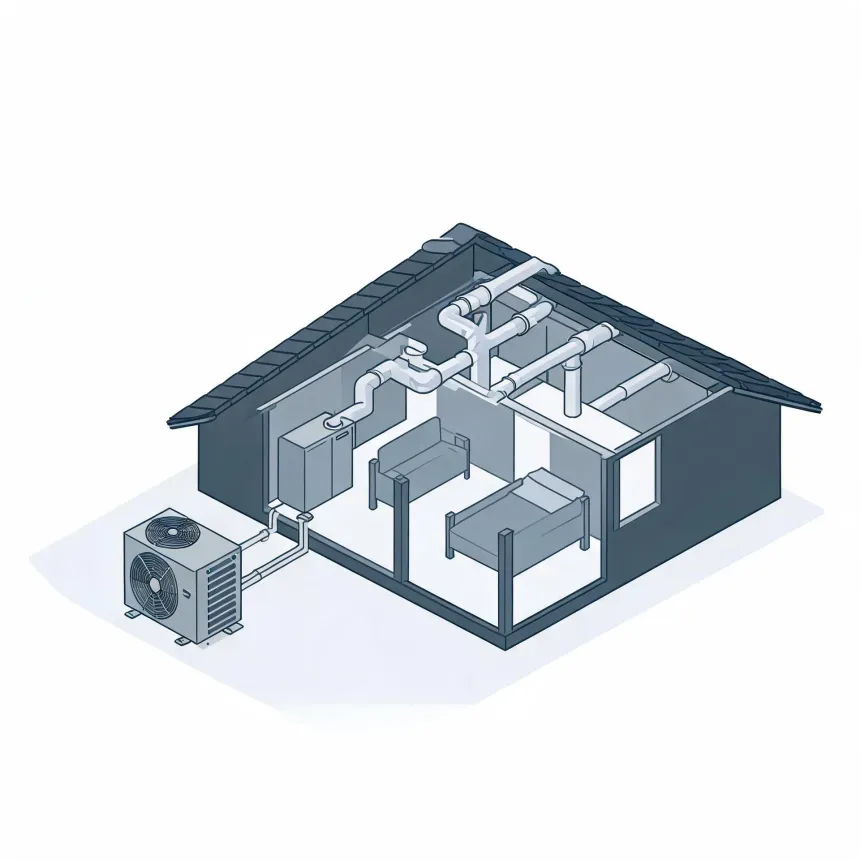
Isometric cutaway illustration of a house showing interior ductwork, an indoor air handler, and beds, with an outdoor condenser unit connected by lines outside the wall.
Your system heats September through May and cools July through August.

NOAA nClimDiv, 1991–2020 normals

Winter here is the hard season for a heat pump, not summer.

Less strain on the system all year means a repair is more often the right call than a replacement.

A heat pump running badly here runs up a real bill at 17.86 cents a kilowatt-hour

Power costs 17.86 cents a kWh statewide
63 damaging wind events from 2015 to 2024
8 hail events from 2015 to 2024
The month that finds the weak spotHeat runs September through May here. August is when a struggling heat pump starts to show it.

So before anyone brings up replacement, get the failure looked at. A compressor that's seized or a reversing valve stuck in one position usually means a part swap, not a new unit, especially in a system still well within its years. If yours came with a mobile home, the repair path is usually the same, though parts access can look different depending on the air handler setup. Either way, a tech can tell you in one visit whether this is a repair or something more, and for most houses here, it's a repair.

Get it fixed. The system's earned that much.

Get the repair done and move on. A heat pump that's spent most of its life on a mild load usually just needs the broken part replaced, not a replacement.

Find a contractor
A man in a dark work shirt, tan cargo pants and boots, seen from behind, climbs porch steps toward a navy front door while carrying a worn leather tool bag.
A residential heat pump outdoor unit mounted on a concrete pad next to a house with gray vinyl siding.

One part fails. That doesn't mean the system did.

A heat pump rarely fails all at once. One part gives out while everything else keeps working fine. A seized compressor, a stuck reversing valve, a dead capacitor. Each of those is a known job with a known fix, and none of them means the system is done. What ages a system faster than normal use is running on a problem nobody caught, because that's what turns a cheap part into a compressor job. Caught early, almost anything on a heat pump gets fixed, not replaced.

A small fault asks the system to work around it

A heat pump with a weak capacitor or a sticking reversing valve doesn't just stop. It keeps cycling, drawing harder on the parts still working to make up for the one that isn't. The compressor takes the brunt of that, since it's the part straining hardest to hit the same output.
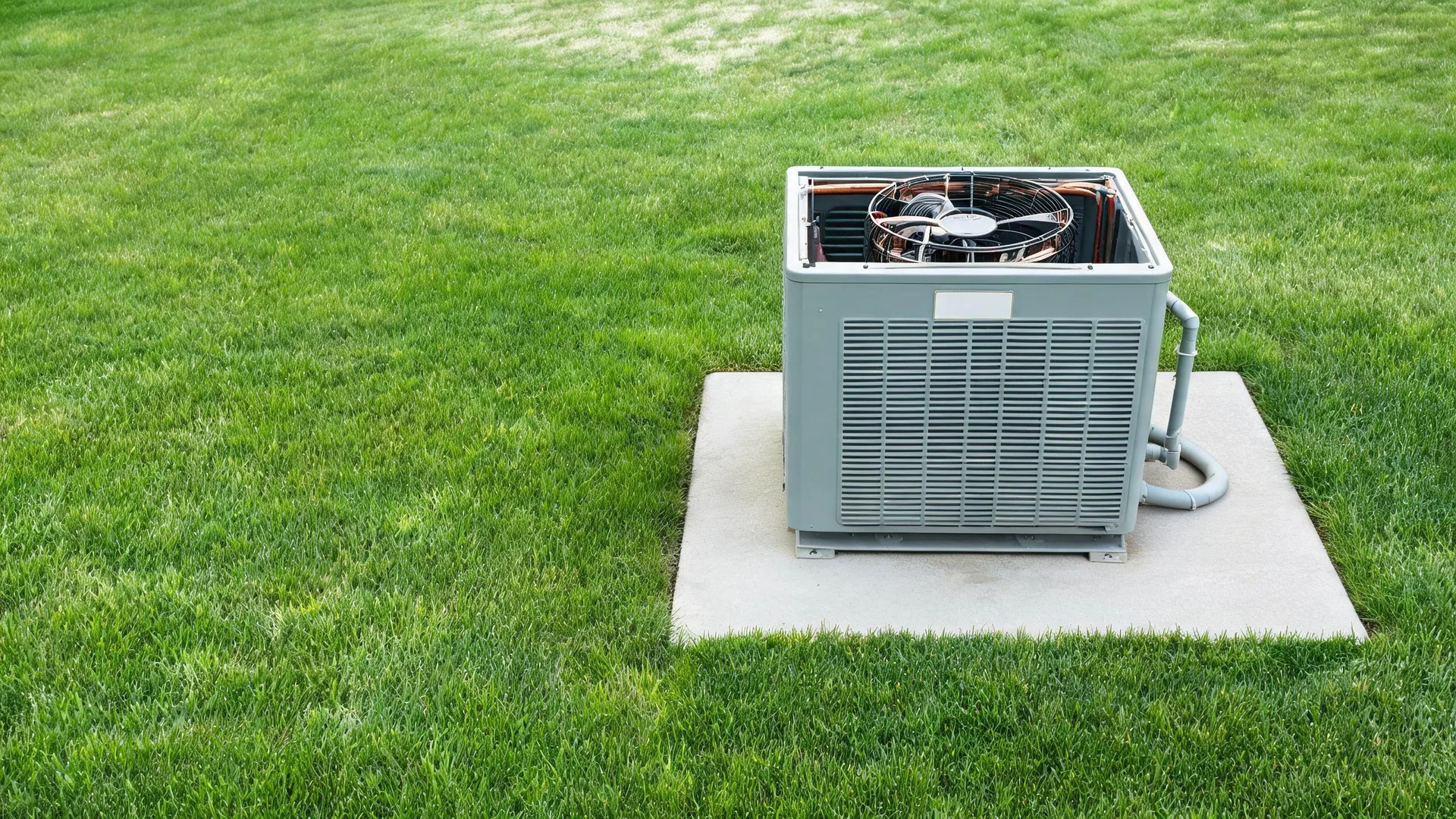
That's how a part swap turns into a compressor job

A failing capacitor or a stuck reversing valve is a contained repair on its own. Left running, the strain it puts on the compressor is what turns a small fix into a much bigger one. Catching it early is what keeps the job small.

Before anyone comes out, a few things are worth checking. Start at the thermostat. Make sure it's set to heat, not fan only, and that the set point is actually above room temperature. Go outside next and look at the coil. Ice or a pile of leaves packed against the fins cuts off airflow, and the system can't move heat if the coil can't breathe. Back inside, pull the filter and hold it up to light. If dust blocks most of it, the air handler is choking the same way the outdoor unit chokes when the coil is iced over. Last, check the breaker panel. A tripped breaker on either the indoor or outdoor unit shuts the whole system down, and that one's a quick fix on its own. None of this tells you what's actually failed inside the unit, but it rules out the simple stuff before a tech has to.

A diagnostic call starts outside at the unit, not inside at the thermostat. The tech hooks up gauges and checks refrigerant pressure first, since a system low on charge or stuck in one mode often points straight at the reversing valve or a leak. From there it's electrical. The tech tests the capacitor, checks the contactor, and reads the amps the compressor is actually pulling against what it should be pulling. Indoors, the tech looks at airflow across the coil and checks the defrost board and sensor, since a bad defrost cycle can mimic other problems from the thermostat. None of this means pulling the unit apart. Once the tech knows which part is actually failing, they can tell you straight whether it's worth fixing and what the fix involves.