






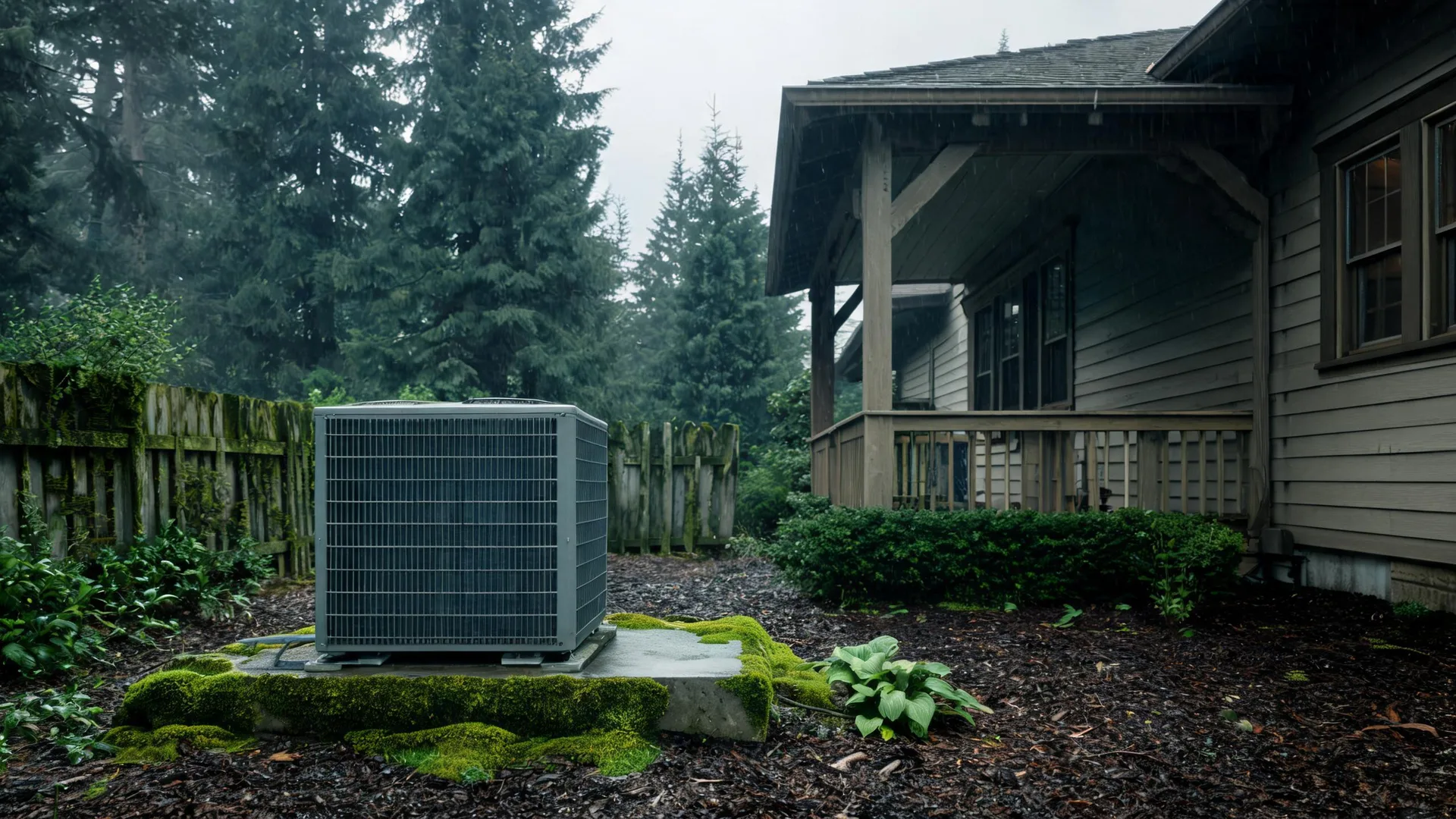
An outdoor HVAC condensing unit on a concrete pad next to a beige single-story house with a dark shingle roof.

Heat Pump Repair in Hagerstown, MD

Tell us about the job

Takes about a minute. No obligation.

RepairHeat PumpWashington County, MD
Step 1 of 2

What ZIP code is the job in?

Heat pumps here run heat from October through April, about seven months straight. The strain on a weak part shows up fast once the system has to hold a house warm through a cold morning instead of just idling along. A capacitor that was already going, or a charge that was already a little low, tends to get found out in the first cold snap. By then it's often a no-heat call instead of a scheduled repair. Having it looked at in September, before the switch, catches that same part while it's still a simple fix.

7 months
October through April, your system heats
3 months
June through August, it cools
25°F
the average winter night it heats against
85°F
the average summer afternoon it cools against
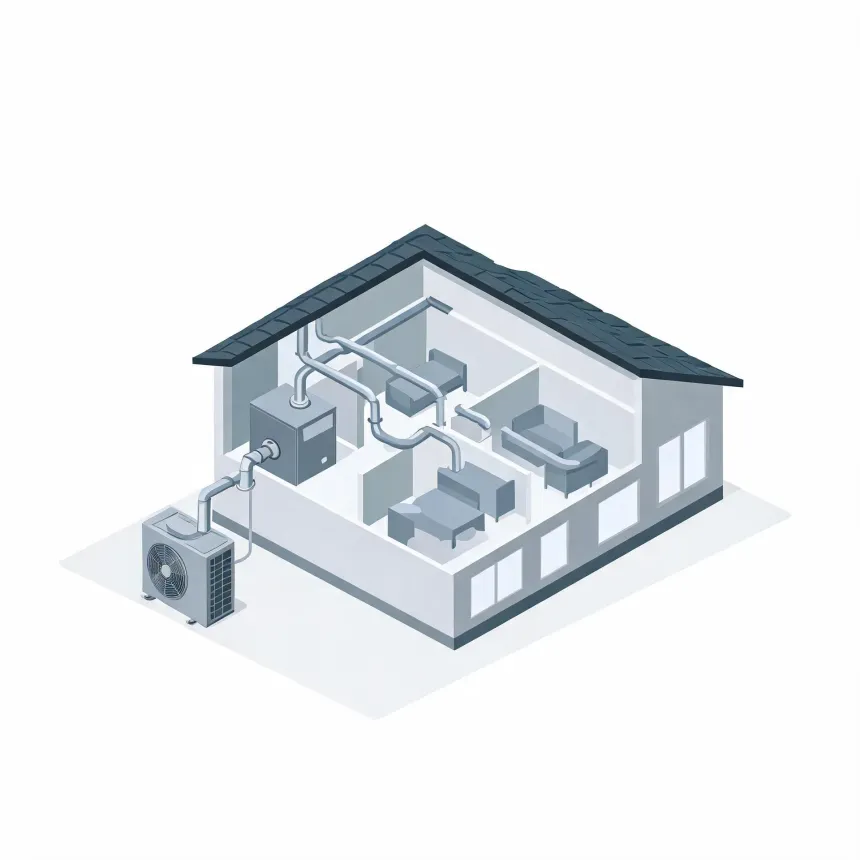
Isometric cutaway illustration of a single-story house showing an indoor air handler, branching ductwork through rooms with furniture, and an outdoor condenser unit connected by a line outside the wall.
Your system heats October through April and cools June through August.

NOAA nClimDiv, 1991–2020 normals

An outdoor unit that keeps losing its charge has a leak somewhere in the coil or the lines, and topping it off again only hides that.

A reversing valve or a compressor is worth repairing on its own, but a leak that keeps coming back is a reason to talk about replacing the system instead.

Half these homes were built by 1974. That's not why your heat pump quit.

Half the homes here were built by 1974
148 damaging wind events from 2015 to 2024
31 hail events from 2015 to 2024
Hagerstown heat pump repair201 severe weather events in Washington County between 2015 and 2024, and none of them are why your heat pump quit.

Winter lows here average 25°F, cold enough that a heat pump has to work for every degree. That's ordinary for this zone, not a strain the system wasn't built for. Washington County sees its share of wind and winter storms too, and an outdoor unit is built to sit through that, bolted down and rated for the weather. What usually brings on a repair call isn't the weather that day. It's a part that was already weak, a contactor pitted from years of cycling or a capacitor that was already reading low. Find that part and the repair is straightforward.

A heat pump that's struggling costs you here before it ever quits

Maryland electricity runs 17.86 cents per kilowatthour, and a heat pump that's struggling still pulls power every time it cycles on. A weak part doesn't just risk a no-heat morning, it makes the compressor work harder for the same heat right now. That cost keeps adding up every day the real problem goes unfound.

Find a contractor
A man in a dark shirt, tan work pants, boots and a cap walks up porch steps toward a navy front door, carrying a canvas tool bag.
A white mini-split heat pump outdoor unit mounted on a concrete pad beside a gray-sided house, surrounded by gravel and green shrubs.

What a heat pump tells you before it quits

Short cycling is usually the first thing an owner notices, the unit kicking on, running a few minutes, then shutting off before the house warms up. That pattern wears on the compressor every time it happens. A hissing sound from the outdoor unit often means refrigerant escaping somewhere in the coil, and ice building up on that same unit outside of defrost points the same direction. Warm air blowing when the thermostat is set to heat is another one worth paying attention to, especially if it only happens in cold weather. None of these fix themselves, and running the system while they're happening just adds hours onto a part that's already failing.

What you can check yourself

Look at the outdoor unit first. If it's packed in ice outside of a normal defrost cycle, or buried in leaves and debris, clear what you can reach and see if that changes anything. Check the thermostat has power and is actually set to heat, not just on. Inside, pull the filter and hold it up to light. If you can't see through it, swap it or clean it. Walk your breaker panel and look for anything tripped. These take a few minutes and rule out the simplest causes before anyone comes out.
What to leave alone

Don't open the outdoor unit's cabinet or touch anything inside it. Refrigerant lines, capacitors and the compressor itself can hurt you even with the system off, and a capacitor holds a charge after power is cut. Don't add refrigerant yourself or let anyone top it off without finding the leak first, since it'll just leak out again. If the system is short cycling or blowing warm air after your own checks come up empty, that's a sign something inside needs a tech, not another look from you.

A heat pump that's icing over or short cycling and gets left running doesn't hold steady, it gets worse. Ice on the outdoor coil blocks airflow, so the system pulls harder to move the same heat, and that extra ice only builds with every cycle. Short cycling wears the compressor's start components a little more each time it kicks on, so a contactor or capacitor that was borderline goes bad sooner than it would have otherwise. Warm air blowing in heat mode often means the reversing valve isn't fully switching, and a system left to keep cycling in that state is working the compressor against itself. None of these settle down on their own. The part causing it stays broken, and running the system just adds hours onto a problem that was already there.

A diagnostic call starts outside, at the unit itself, before any gauges come out. A tech will pull the panel and check the contactor and capacitor by hand, since those are the parts that take the most abuse from daily cycling and fail the most often. From there it's gauges on the lines to read the charge, because a reading that's off tells him whether he's chasing a leak or looking somewhere else entirely. Airflow gets checked too, the filter, the coil, the blower, since restricted air can look like a refrigerant problem when it isn't one. If the reversing valve is suspect, he'll run the system in both modes and feel the lines to see whether it's actually switching. Most of this gets done with the system running, because a part that looks fine sitting still can show itself the moment it has to do its job.