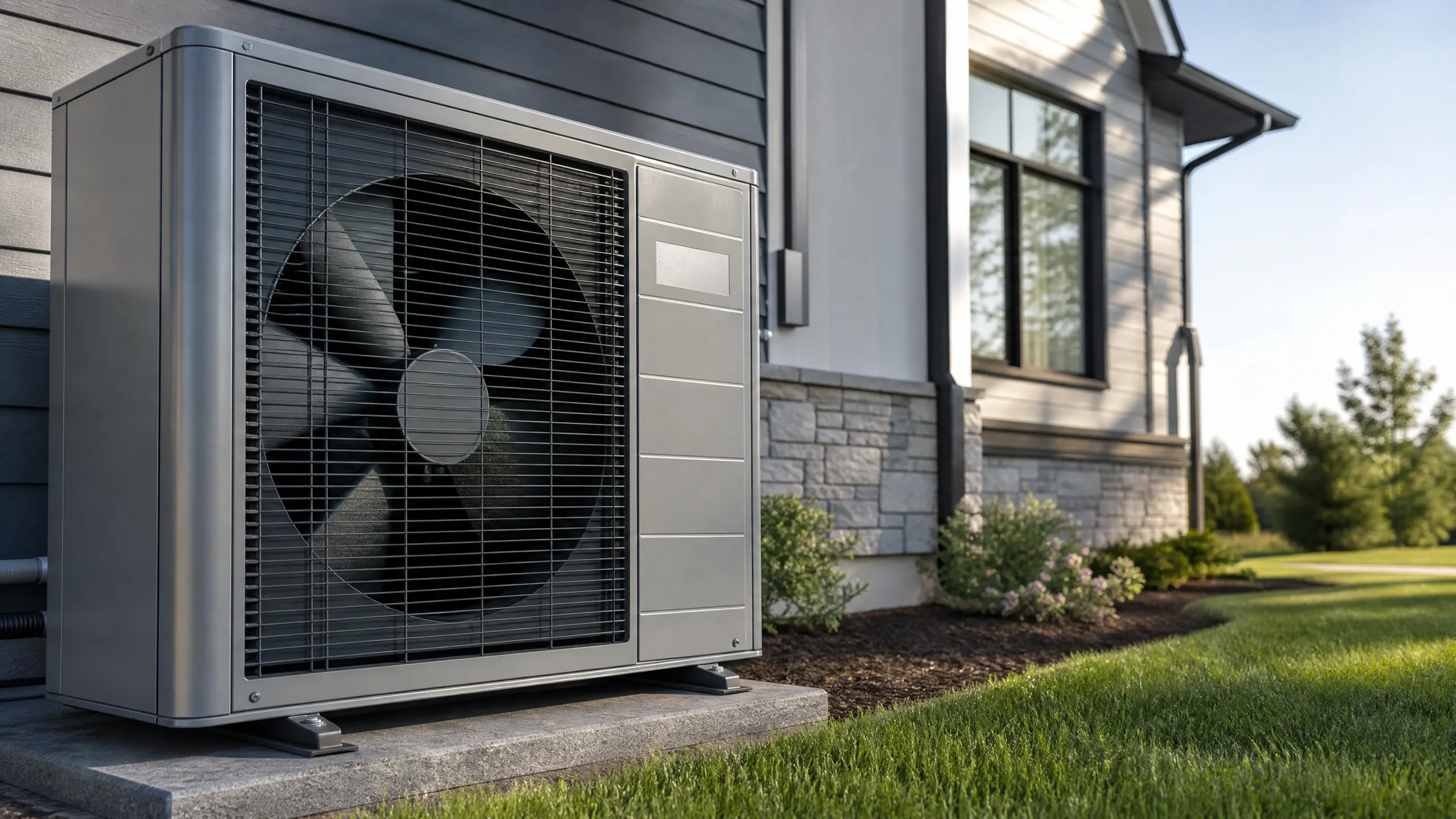





A grey heat pump outdoor unit mounted on a concrete pad against the exterior wall of a house with grey siding and stone veneer.

Heat Pump Repair in Easton, MD

Tell us about the job

Takes about a minute. No obligation.

RepairHeat PumpTalbot County, MD
Step 1 of 2

What ZIP code is the job in?

Talbot County sits in a mixed climate, zone 4A, which means both winter and summer ask something of a heat pump here. That's real work, not none, but it's balanced work. Winter lows average 29°F across December, January and February, which is cold enough to keep a heat pump running steady, not cold enough to push it into constant defrost cycles or long backup-heat stretches. Summers on the humid side keep it working too, but not against the extreme heat load some regions see. A heat pump that splits its work between two seasons instead of grinding through one brutal one tends to hold up better over time. When something goes wrong here, it's more often a part that's reached the end of its life than a system that's been run into the ground.

7 months
October through April, your system heats
4 months
June through September, it cools
29°F
the average winter night it heats against
86°F
the average summer afternoon it cools against
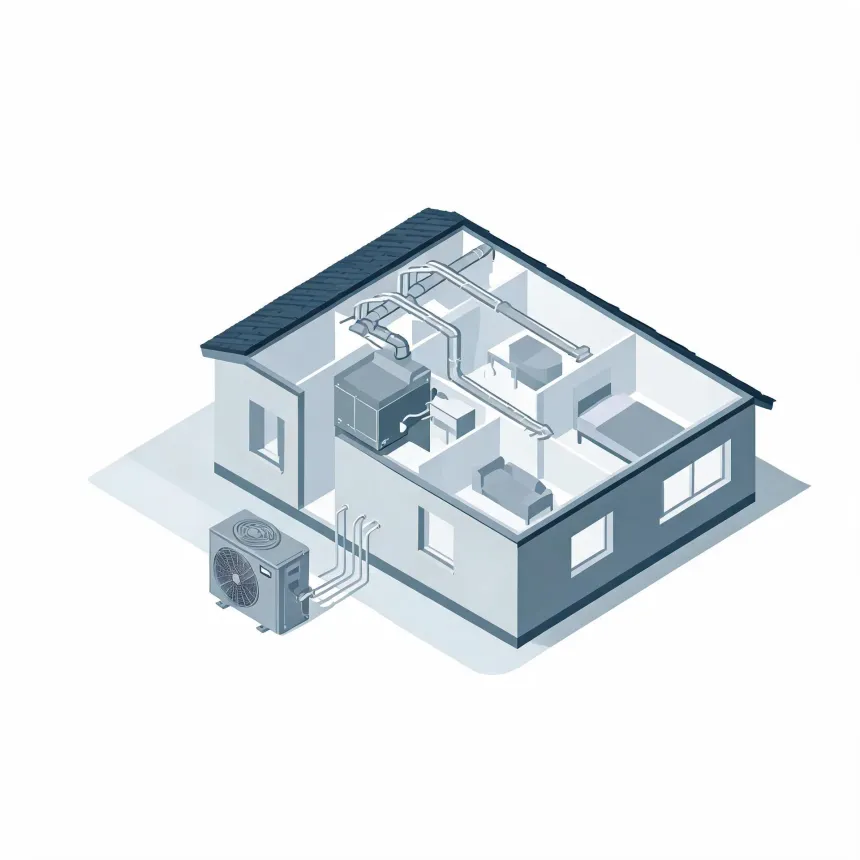
Isometric cutaway illustration of a single-story house showing interior rooms with ductwork, an indoor air handler unit, and an outdoor condenser unit connected by lines along the exterior wall.
Your system heats October through April and cools June through September.

NOAA nClimDiv, 1991–2020 normals

Half the homes in Talbot County were built in 1983 or later.

A heat pump in a newer Talbot County home has likely got years of working life left in it.

A heat pump that's already weak tends to show it in the first cold snap of October or the first hot stretch of June

Cooling runs June through September
Heat runs October through April
93 damaging wind events from 2015 to 2024

Electricity in Maryland ran 17.86 cents per kilowatthour in 2024, well above the national average. A heat pump that's short on refrigerant or running on a weak capacitor pulls more power to do the same job, and you pay that difference every billing cycle until it's fixed. This isn't a system working hard against a brutal climate, so a jump in your bill usually points to a part failing, not the season asking more of it. Worth having someone look at it before another month goes by on a system that's quietly costing you more than it should.

A heat pump with balanced work behind it is usually worth repairing

A heat pump that's had a reasonable split between heating and cooling, instead of getting run hard in one direction, is usually a good candidate for repair rather than replacement. If yours is acting up, get the part identified before you decide it's done.

Find a contractor
A man in a cap, gray work shirt and dark pants, seen from behind, carries a worn canvas tool bag up porch steps toward a dark navy front door beside a potted shrub.
A white mini-split heat pump outdoor unit mounted on a concrete pad beside a gray-sided house, surrounded by gravel and green shrubs.

A newer system still has years to give

If your heat pump came with the house and the house is newer, that's a point in favor of calling a repair tech rather than a replacement crew. A compressor or board failing early on a newer system is usually a one-time fix, not a sign of a system on its way out. Get the part named before anyone talks you into more than that.

What the tech checks first

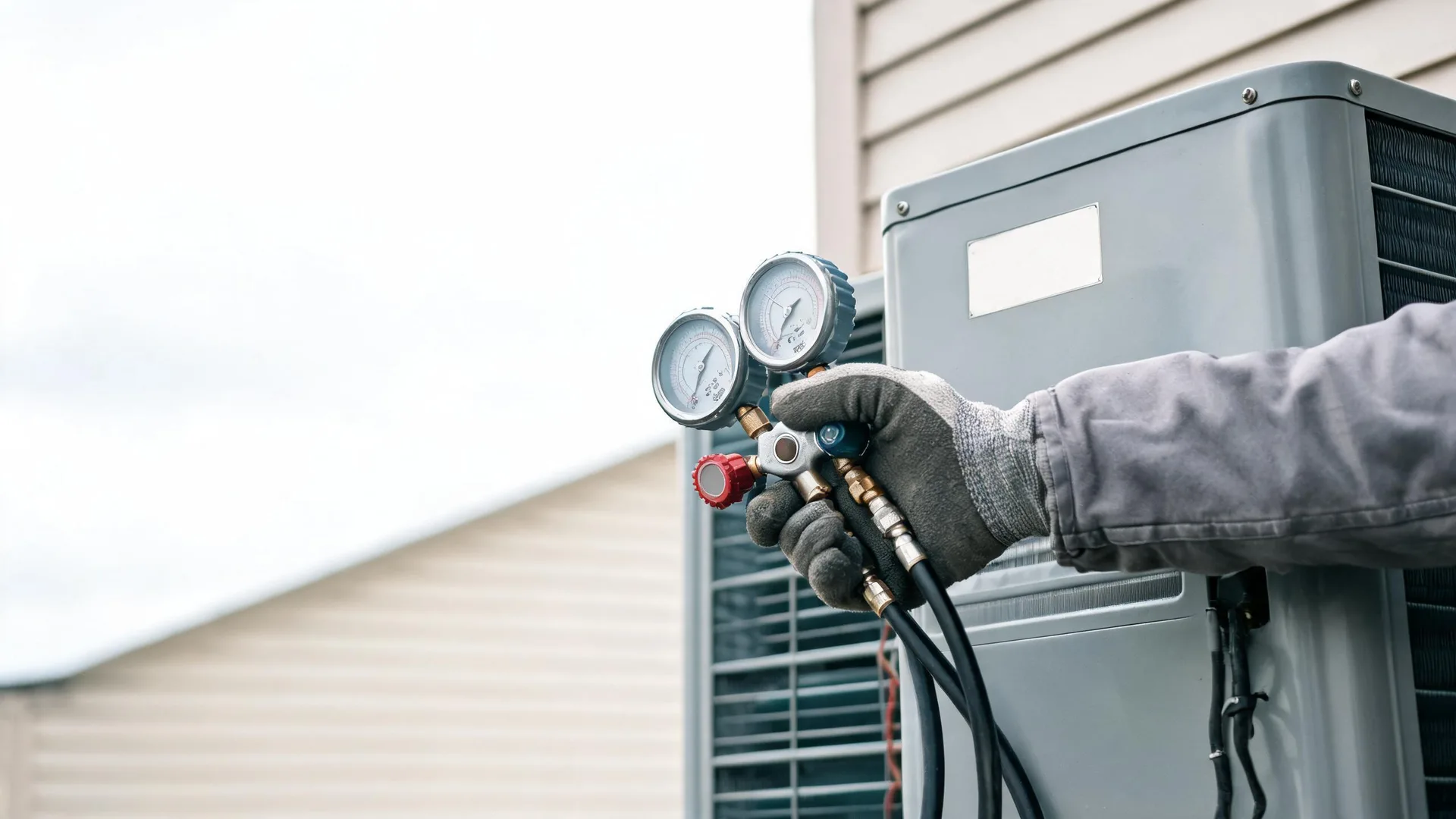
A diagnostic starts with what the system is actually doing. Short cycling, running nonstop, blowing air that isn't warm or cool enough, or not starting at all each point somewhere different. From there it's gauges on the refrigerant charge, a meter on the capacitor and contactor, and a look at the reversing valve to see if it's switching between heating and cooling the way it should. The outside unit and the indoor coil both get checked, since the problem can sit on either side.
Why the part gets named before the work does

A heat pump can show the same symptom for different reasons. Weak heat might trace back to a failing reversing valve, or it might be a refrigerant leak instead. Those are different repairs. Finding the actual part first means the work that gets done is work the system actually needs.

A heat pump that's struggling doesn't fail all at once. It gives you a sign first, something not starting right away, or the air coming out not quite warm enough, and whether that gets worse or stays put from there depends on what's underneath. A low refrigerant charge keeps the compressor working harder than it should to move the same amount of heat, and that strain is what eventually takes the compressor out with it. A failing capacitor makes the motor it's tied to draw more current each time it tries to start, and a motor that keeps starting under that kind of strain burns out sooner than it would otherwise. Ice on the outdoor coil blocks airflow, and a system that keeps running with the coil iced over is working against its own defrost cycle instead of with it. None of this means every noise or odd cycle is an emergency. It means the part causing it is usually easier to replace now than after it's taken something else down with it.

Repair versus replacement comes down to what's actually broken, not just the system's age. A compressor failure late in a unit's life usually means the whole system is reaching that point together, and putting a new compressor in an old cabinet often just buys time before the next part goes. A compressor failure on a system that's otherwise been sound is a different situation, since one part failing early doesn't mean the rest are close behind. Boards, capacitors, contactors and fan motors fail more or less on their own schedule, independent of how old the unit is, and replacing one of those is rarely a reason to replace the system around it. The questions worth asking are how old the unit actually is, whether this is the first real repair it's needed or another in a string of them, and whether the part that failed is one that usually takes others down with it or one that stands alone. A tech who names the part before talking about the system can usually answer that in a straightforward way.