White colonial houses with lit windows photographed at dusk along a tree-lined residential street.

Heat Pump Repair in Dundalk, MD

Tell us about the job

Takes about a minute. No obligation.

RepairHeat PumpBaltimore County, MD
Step 1 of 2

What ZIP code is the job in?

Winter here is what a heat pump is built for

Dundalk sits in a zone that asks for real heating and real cooling. Overnight lows average 26°F through December, January and February. A heat pump working hard on a cold night isn't a sign something is wrong with your area. It's the system doing the job it was sized for.


So look at the unit, not the weather

When a heat pump in Dundalk stops keeping up, the cause is almost always something a tech can find fast. A low refrigerant charge. A failing defrost control. A reversing valve stuck in one position. Nothing about this county points to anything unusual. Get the actual fault diagnosed before assuming the system is on its way out.

7 months
October through April, your system heats
4 months
June through September, it cools
26°F
the average winter night it heats against
85°F
the average summer afternoon it cools against
Isometric cutaway illustration of a small house showing ducted air distribution, an indoor air handler, and an outdoor condenser unit connected by lines, with a sofa and bed in the rooms.
Your system heats October through April and cools June through September.

NOAA nClimDiv, 1991–2020 normals

Heat here starts in October, after a September that barely touches the heat pump.

The first cold stretch is when a weak part finally gets tested, so October is when repair calls start.

A struggling heat pump costs more to run here than almost anywhere else

Power costs 17.86 cents a kWh statewide
314 damaging wind events from 2015 to 2024
45 hail events from 2015 to 2024

At 17.86 cents per kilowatt-hour, Maryland electricity isn't cheap, and a heat pump that's lost some of its charge or is running a weak compressor pulls more of it every hour it runs. That cost shows up on the bill whether or not the house feels warm enough. A unit that's short-cycling or stuck in a bad defrost pattern doesn't rest, it just keeps drawing power to fight a problem it can't fix on its own. The longer a bad part sits in there, the more it costs to run between now and the day it gets replaced. Have a tech check the charge and the controls before another month goes by on it.

Half the homes here were built in 1973 or earlier

Half the homes in Baltimore County were built in 1973 or earlier. A heat pump doesn't last as long as the house around it, so if yours came with the place, it's probably not the original unit. Whatever is in there now has put in real years already. An older system still breaks down the normal way, one part at a time, but it's worth knowing how much life is left in it before paying for a repair that might outlive the compressor.

Find a contractor
A man in a dark jacket, cap and tan work pants carries a canvas tool bag up stone steps toward a navy front door, with a potted shrub beside the entry.
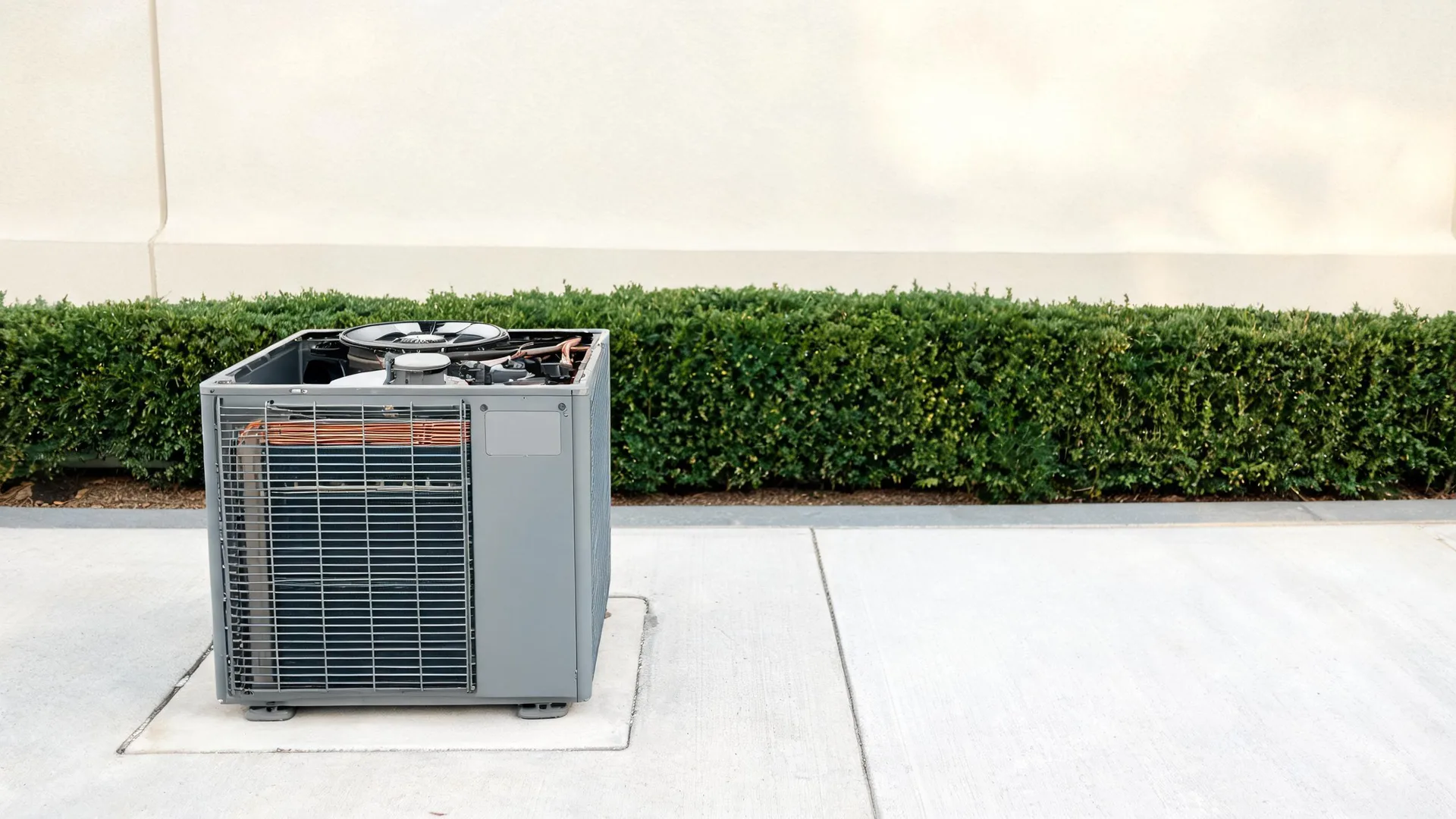
A gray heat pump condenser unit mounted on a concrete pad against the gray lap-siding exterior wall of a house.

Ask what's left in it before you pay to fix it

If you know when the system was put in, that's the number that matters, not the age of the house. No record of it, no sticker on the unit, no memory of it being swapped out, treat it as original and ask the tech for a straight answer on how much life is left before approving a repair.

Check the filter first

A clogged filter starves the system of airflow, and a heat pump reads that as a problem with the coil or the compressor. Pull it out and look at it. If you can't see light through it, swap it before you call anyone. It's the one fix that's actually yours to make.

Look at the outdoor unit

Walk outside and look at the coil. If it's buried in ice beyond the normal thin frost of a defrost cycle, or packed with leaves and grass clippings, that's blocking the airflow it needs to move heat. Clear what you can reach by hand. Don't chip at ice, and don't go near the wiring or the refrigerant lines yourself.

A heat pump that's struggling doesn't fail cleanly. It compensates. If the charge is low, the compressor runs longer to move the same heat, and that extra runtime wears the bearings and windings faster than normal use would. If the reversing valve is stuck, the system can get caught defrosting when it should be heating, so it leans harder on backup heat strips to cover the gap, and those strips pull hard and weren't meant to carry the load alone. A coil losing airflow makes the compressor work against resistance it wasn't built to push through. None of this shows up as a sudden stop. It shows up as longer cycles, a house that's never quite warm enough, and a part quietly running past where it should have been pulled and checked.

A diagnostic visit starts at the thermostat and works outward. The tech confirms the call for heat or cool is actually reaching the unit, then checks the readings that don't lie. Refrigerant pressures on both sides. The temperature of the air coming off the coil against the air going in. Those numbers point straight at a low charge, a failing compressor, or a reversing valve that isn't shifting when it should. From there it's the electrical side, the capacitor, the contactor, the defrost board, each checked against what it's supposed to read rather than guessed at. Fault codes get pulled on models that have them and checked against the actual symptom. Nothing gets swapped out on a hunch. The goal is to find the one part that's actually failing, not to replace parts until something changes.