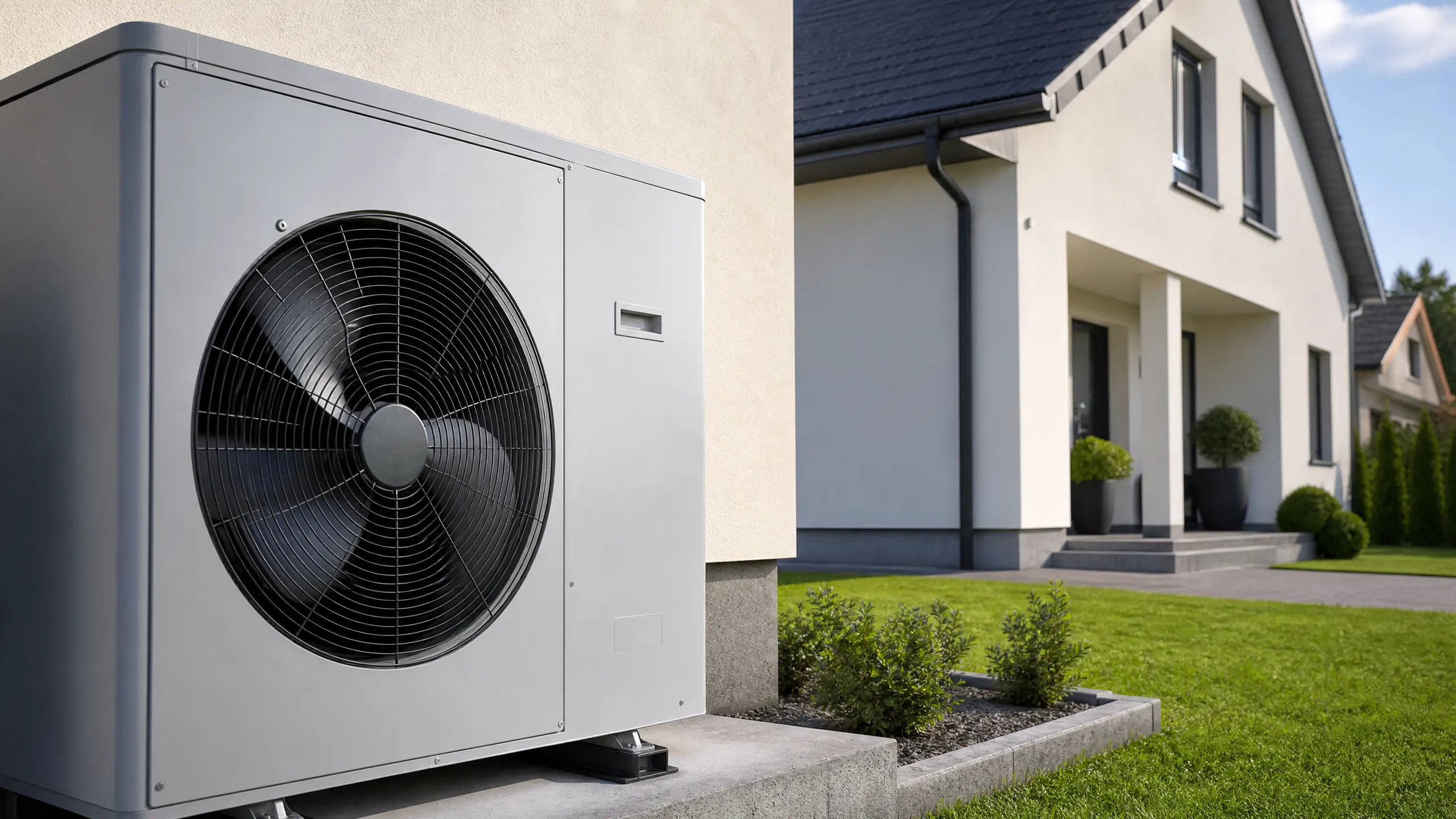






A grey air-source heat pump outdoor unit mounted on a concrete pad next to a modern white-rendered residential house.

Heat Pump Repair in Denton, MD

Tell us about the job

Takes about a minute. No obligation.

RepairHeat PumpCaroline County, MD
Step 1 of 2

What ZIP code is the job in?

Caroline County sits in a mixed climate, zone 4A, humid enough to keep a heat pump working in both directions, heating in winter and cooling in summer. Winters here aren't brutal. The overnight low averages 28°F across December, January and February, well short of the extremes that push a heat pump into constant defrost cycles or run its backup heat strips hard. That matters for repair, because a heat pump that hasn't been fighting single-digit nights year after year has less wear on the compressor and reversing valve. When something goes wrong here, it's more often a part that failed or a system that missed service, not a machine worn out from carrying more than it was built for. That's usually a repair worth making.

7 months
October through April, your system heats
4 months
June through September, it cools
28°F
the average winter night it heats against
86°F
the average summer afternoon it cools against
Isometric illustration of a cutaway single-story house showing interior ductwork and an air handler connected by lines to an outdoor condenser unit on a pad beside the building.
Your system heats October through April and cools June through September.

NOAA nClimDiv, 1991–2020 normals

Half the homes in Caroline County were built in 1981 or later.

A heat pump that came with a newer house still has working life ahead of it, and that makes repair the right call.

A heat pump running up your bill here costs more every month it stays broken

Power costs 17.86 cents a kWh statewide
75 damaging wind events from 2015 to 2024
9 winter storms from 2015 to 2024

Heat pump here runs October through April, so September is the month to get it checked before the cold sets in. That first cold snap after months of sitting idle is when a weak part tends to give out, a contactor or capacitor that was already close to failing. Cooling only runs June through September, four months against seven, so the switchover into heating is the bigger test this system sees each year. A problem that shows up in October is rarely the system wearing out. It's more likely one part that needed attention and didn't get it.

A newer heat pump is worth repairing

If your heat pump came with a newer house, get it repaired rather than replaced. A system that still has years ahead of it is worth fixing when a part fails.

Find a contractor
A man in a dark cap, gray long-sleeve shirt and brown work pants climbs porch steps toward a navy front door, carrying a canvas tool tote with tools in its pockets, beside a potted evergreen shrub in a blue planter.
A gray air-source heat pump mounted on a concrete pad next to a house with gray vinyl siding, surrounded by gravel and flanked by green shrubs and white hydrangea flowers.

It's taken real weather and kept going

Wind has hit this county 75 times in the past decade, and winter storms 9 times. A heat pump that's kept running through that without damage isn't fragile. When one quits now, the weather isn't why. It's a part that failed or a service that got skipped, and that's a reason to fix it, not replace it.

It's blowing air that isn't the right temperature

A heat pump stuck on one setting, or blowing air that feels barely warmer than the room, is usually losing refrigerant. Sometimes the reversing valve isn't switching over the way it should. It won't fix itself. Left alone, it runs longer to do less, and whatever caused it tends to get worse.
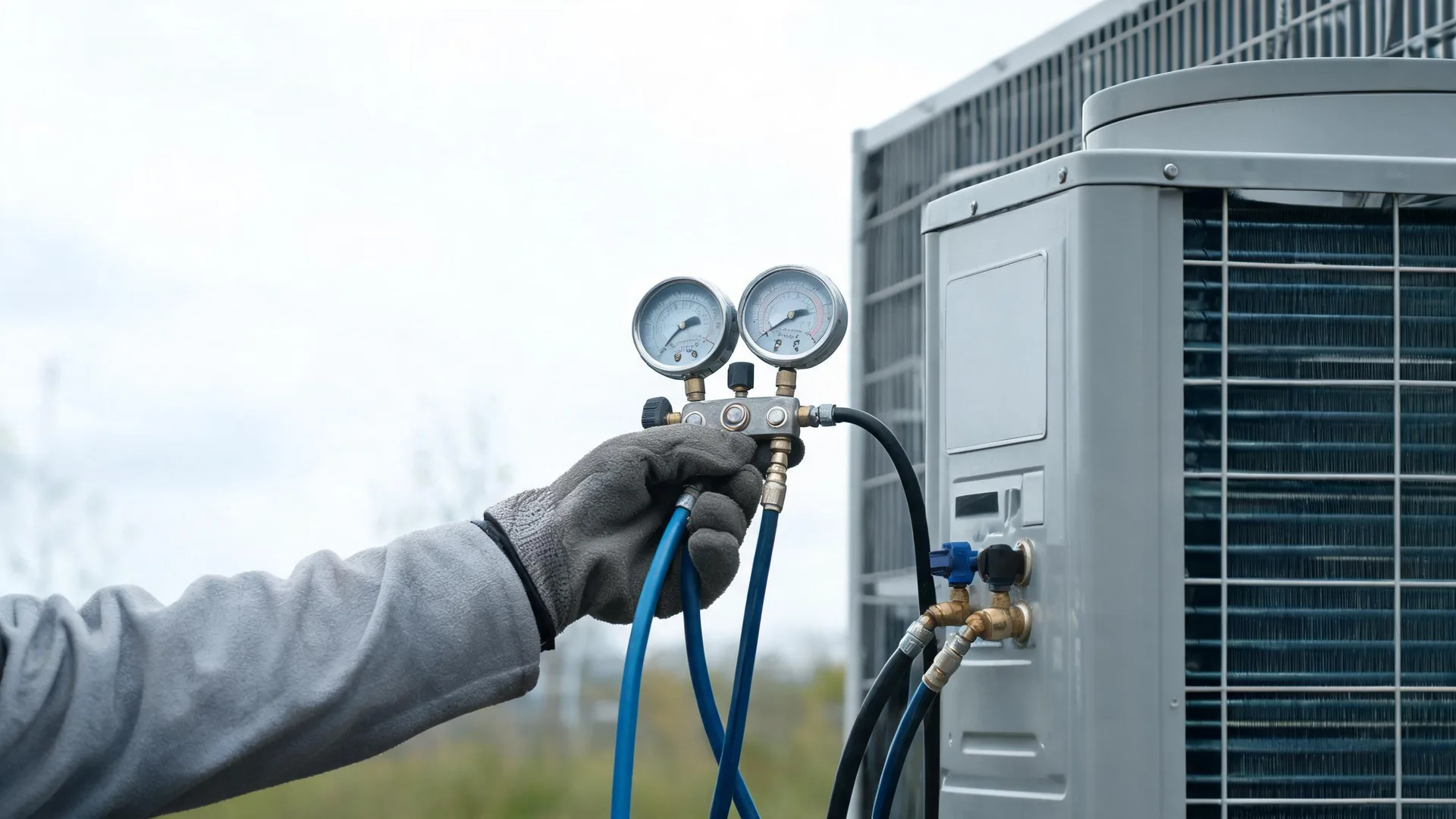
It's making noise it didn't used to make

A rattle on startup points to something specific. So does a hard clunk when it switches between heating and cooling, or a hum that never turns into a running compressor. A failing contactor, a weak capacitor, a motor bearing on its way out all start this way. None of them get quieter on their own. Catching it while it's still a noise, before it's a no-start, keeps the job small.

A heat pump that's struggling doesn't rest when you leave it running. It just works harder to make up the difference. Low refrigerant means the compressor runs longer to move the same heat, and that extra runtime wears it faster than the leak alone would. A failing capacitor makes the motor draw more current to start, and that heat builds up in the windings until one burns out. A dirty coil makes the whole system work against itself, running longer cycles to hit the same temperature and putting hours on every part at once. What starts as one worn part can end as a failed compressor, and the compressor is what the rest of the system depends on.

Most of the time, repair versus replacement comes down to what's actually failed. A contactor, a capacitor, a blower motor, a reversing valve, these get replaced on their own and the system runs like it did before. None of that work touches the compressor, and the compressor is most of what a heat pump costs. So a repair bill on one of these parts isn't a down payment on a bigger failure, it's just fixing the thing that broke. Where it gets harder is a compressor itself failing, or a refrigerant leak inside the coil that can't be patched. That's a different conversation, because at that point you're pricing a major repair against a whole new system rather than a quick fix. Age matters less than people think. A heat pump that's been serviced every year and never run short on refrigerant can still have plenty of life in the parts that matter most.