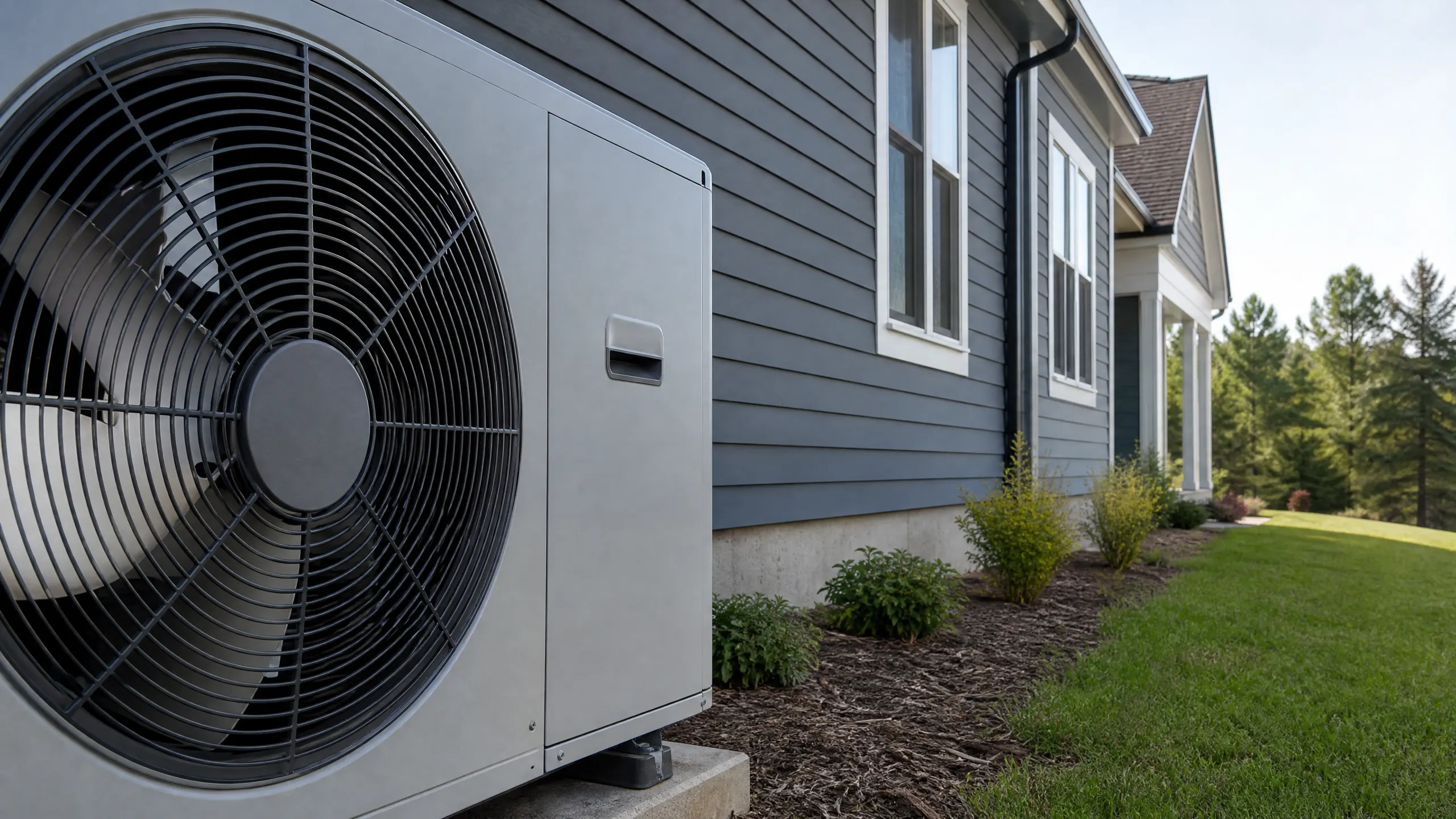
A heat pump outdoor unit mounted on a concrete pad next to the gray-sided exterior wall of a residential house.

Heat Pump Repair in Columbia, MD

Tell us about the job

Takes about a minute. No obligation.

RepairHeat PumpHoward County, MD
Step 1 of 2

What ZIP code is the job in?

Zone 4A cuts both ways

Columbia sits in climate zone 4A, which asks real work of a heat pump in both directions, humid summers and winters with overnight lows averaging 26 degrees. Neither season is mild, but neither one pushes the system past what it's built for either.


Moderate load means a fair diagnosis

A heat pump that hasn't been run ragged tends to fail for a clear reason, a worn part or something that was never right from the install, not from years of strain. That makes a repair more likely to actually fix the problem.

7 months
October through April, your system heats
4 months
June through September, it cools
26°F
the average winter night it heats against
85°F
the average summer afternoon it cools against
Isometric cutaway illustration of a two-room house showing an indoor air handler with ductwork connected by lines to an outdoor condenser unit on a pad.
Your system heats October through April and cools June through September.

NOAA nClimDiv, 1991–2020 normals

Half the houses in Howard County were built in 1989 or later.

A heat pump that came with a newer house still has years in it, and that's worth fixing over replacing.

Electricity here runs 17.86 cents a kWh, so a heat pump limping along costs you more every month it goes unfixed

Power costs 17.86 cents a kWh statewide
177 damaging wind events from 2015 to 2024
14 hail events from 2015 to 2024

If your heat pump came with the house and the house is newer, get the diagnosis before you think about replacing. A worn contactor or a failed capacitor doesn't care how old the unit is, and either one is a straightforward fix. Ask the contractor what's actually wrong before deciding it needs to be replaced. On a unit still well within its working life, repair is almost always the right call.

Heading into October, a heat pump shows you its weak spots

Heat here runs October through April, seven months on the system. The first cold snap after September is when a worn part gives out, right as it's asked to carry the load again. If yours is acting up now, get it looked at before that first real cold week finds the weak spot for you.

Find a contractor
A man in a cap, dark shirt and tan pants carries a worn canvas tool bag up concrete steps toward a dark blue front door with a sidelight window and a large planter beside it.
A gray heat pump condenser unit mounted on a concrete pad against the gray lap-siding exterior wall of a house.

A mixed climate wears a system evenly, not hard

That time-lapse covers the months this heat pump runs, not a single brutal stretch. Summers here ask it to pull humidity out of the air, winters ask it to work against overnight lows that average 26 degrees, and it switches jobs with the seasons instead of grinding at one extreme for months straight. A unit cycling through a year like that tends to wear evenly. If something fails now, it's more likely a specific part worn past its point than a system worked past what it's built for. That's the kind of failure a repair actually fixes.

The reversing valve is the part unique to this machine

A heat pump has one part a straight AC system doesn't have. The reversing valve switches it between heating and cooling. When it sticks, the system keeps running but stops switching, so it blows cold air when you need heat or won't come out of defrost. A stuck valve is a common reason a heat pump acts fine one day and wrong the next.

Outside, the coil and the defrost cycle take the wear

The outdoor unit works through weather an indoor system never sees. The coil picks up dirt, leaves and ice, and a sensor or control board tells it when to run a defrost cycle to clear the frost off. When that sensor drifts or the board misreads it, the coil ices over and stays iced, and the system loses capacity fast. Worn contactors and failing capacitors out there cause plenty of no-start and short-cycling complaints too.

Before calling anyone, look at the outdoor unit. If the coil is caked in ice or buried in leaves, that alone can make the system act like it's failing. Check the thermostat is set to heat and the temperature is actually set above room temperature, because a setting bumped by accident looks exactly like a breakdown from the inside. Go to the air handler and check the filter. A filter clogged with dust chokes the airflow, and a heat pump starved for airflow will ice up outside or short cycle. Check that the outdoor unit has clear space around it, nothing stacked against it or blocking the fan. Last, check the breaker box for anything tripped. If the filter's clean, the thermostat's right, and the outdoor unit is clear but it still won't heat, that's a part worn out inside it, and it's time to get a tech out before it gets worse.

A heat pump worth fixing usually tells on itself. The compressor is the expensive part, and it either runs or it doesn't, so if the system is heating and cooling but doing it poorly, you're almost always looking at a part around the compressor, not the compressor itself. A contactor, a capacitor, a defrost sensor, a reversing valve stuck halfway. Those get replaced on their own without touching the rest of the system. What changes the math is the compressor failing or the coil developing a refrigerant leak, because both of those sit at the core of what the unit does and cost the most to put right. Ask the contractor straight out which kind of failure this is. That answer tells you more than the age of the unit ever will.