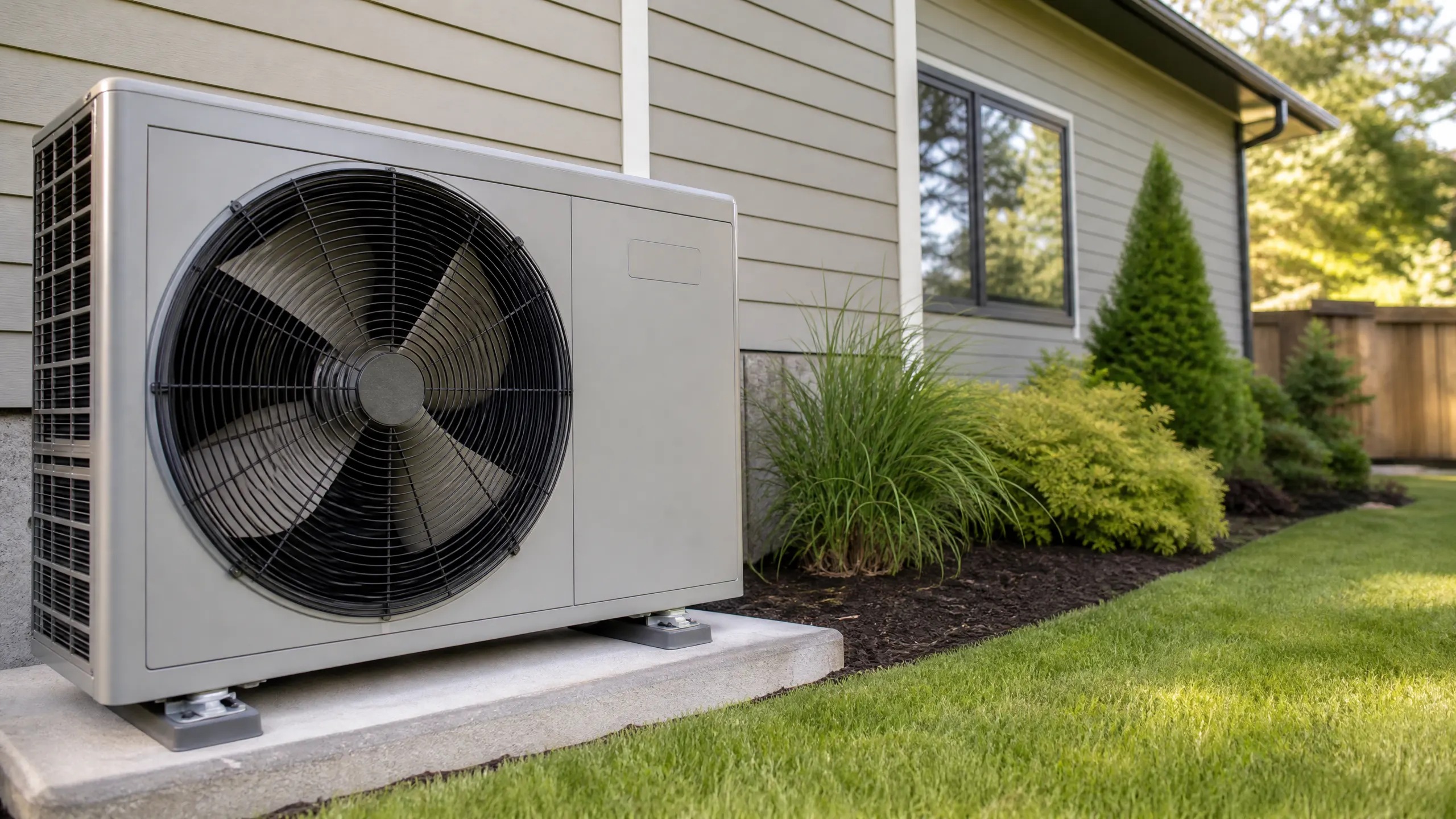





An outdoor heat pump unit mounted on a concrete pad beside a house with beige siding and a landscaped garden bed.

Heat Pump Repair in Cambridge, MD

Tell us about the job

Takes about a minute. No obligation.

RepairHeat PumpDorchester County, MD
Step 1 of 2

What ZIP code is the job in?

May is when a heat pump in Dorchester County earns its keep or shows its age. The system sat idle since September, and the first real cooling demand in June will find whatever was already wearing thin, a weak capacitor, a low charge, a contactor pitted from last year's final cycles. A unit that struggles in the first week of June usually had the problem before June arrived. Getting it looked at in May means a repair happens on your schedule, not during the first hot afternoon when the house is already climbing.

7 months
October through April, your system heats
4 months
June through September, it cools
29°F
the average winter night it heats against
86°F
the average summer afternoon it cools against
Isometric cutaway illustration of a small house showing interior ductwork and an air handler connected by lines to an outdoor condenser unit on a pad beside the building.
Your system heats October through April and cools June through September.

NOAA nClimDiv, 1991–2020 normals

Dorchester County asks real work of a heat pump, but it doesn't push the machine to extremes in either direction.

A heat pump here usually fails from age or a neglected part, not from strain, so most repairs are worth making.

At 17.86 cents a kilowatt-hour, a heat pump running wrong runs up the bill every day it's ignored

Power costs 17.86 cents a kWh statewide
58 damaging wind events from 2015 to 2024
12 winter storms from 2015 to 2024

A heat pump running wrong gets more expensive every day it waits

That weak capacitor or low charge does not fix itself, and at 17.86 cents a kilowatt-hour it keeps costing you while it sits. Get it looked at before the next hot stretch finds it.

Find a contractor
A gray outdoor HVAC unit mounted on a concrete pad beside a house with gray lap siding and a stone foundation.

What a tech actually checks

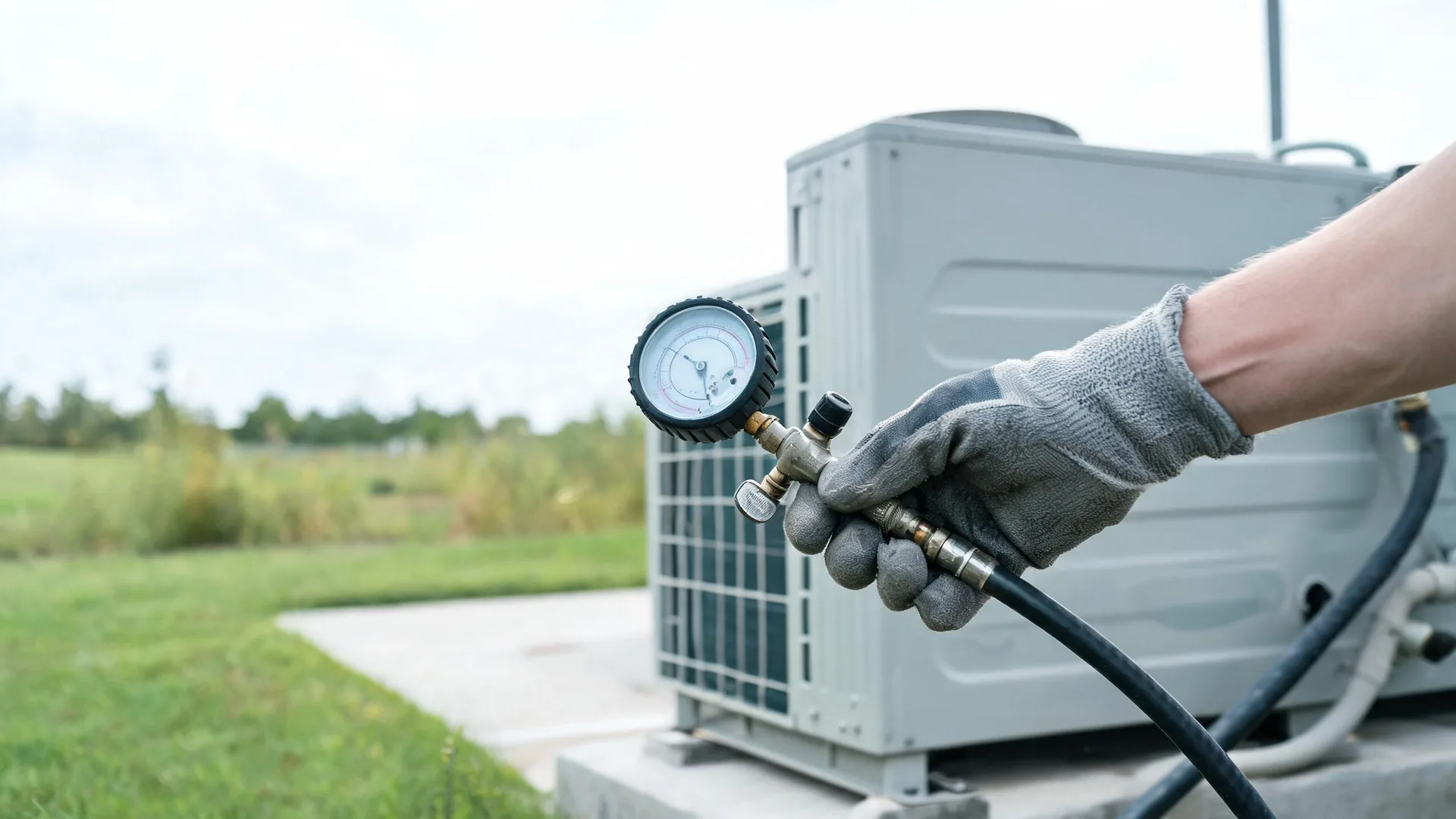
A diagnostic starts with the thermostat, not the outdoor unit. A tech checks the call for cooling is actually reaching the system before touching anything outside. From there it's gauges on the refrigerant lines, a clamp meter on the compressor and fan motor, and a look at the contactor and capacitor, since those take the most wear from cycling on and off. If the system is short cycling or running but not cooling, the charge gets checked against what the manufacturer specifies for that unit. A pitted contactor or a capacitor reading below its rating gets found this way, not guessed at. The visit ends with the tech telling you what's worn, what's failing, and what's still fine, so the only parts replaced are the ones that need it.

The reversing valve is the part unique to this machine

A heat pump has one part a straight air conditioner doesn't have. The reversing valve switches it between heating and cooling. When it sticks, the system runs but stays stuck in one mode, or it short cycles trying to switch. This wears in slowly over years of switching back and forth, so by the time it fails outright it's usually been giving small signs for a while.
Most failures are the same parts any AC has

Outside of the reversing valve, a heat pump fails the way any outdoor condenser unit does. The capacitor weakens with age and heat cycling until it can't kick the compressor or fan motor into gear. The contactor pits from arcing every time it closes, until it sticks or stops making contact. A slow refrigerant leak shows up as the system running long, running constantly, or not cooling even though it never seems to stop trying.

Before you call anyone, there's a few things worth a look. Check the thermostat first, since a dead battery or a setting bumped to the wrong mode will mimic a real failure. Go outside and see if the outdoor fan is spinning. If it's dead quiet out there and the indoor blower is running, that's worth telling the tech before they arrive. Check the breaker too, heat pumps trip breakers like anything else, and a reset that holds is good news. Pull the air filter and hold it up to a light. If you can't see through it, that's restricting airflow enough to look like a bigger problem than it is. None of this fixes a weak capacitor or a stuck reversing valve, but it rules out the simple causes before anyone touches the system.

Most of what fails on a heat pump is a part built to be swapped, not a reason to replace the whole system. A capacitor, a contactor, a reversing valve, these can all be replaced on their own without touching the compressor at all, and a compressor that's still holding its charge has plenty of life left in it. What changes the math is a compressor that's failing itself, or a system where the repairs keep stacking up one after another. A unit that needed a new capacitor last year and a contactor this year isn't unlucky, it's aging the way these systems age, and the next part in line is usually already wearing thin. If a tech tells you the compressor is going, that's the one repair that tends to cost as much as starting over, since it's the part everything else depends on. Short of that, a repair is almost always the right call.