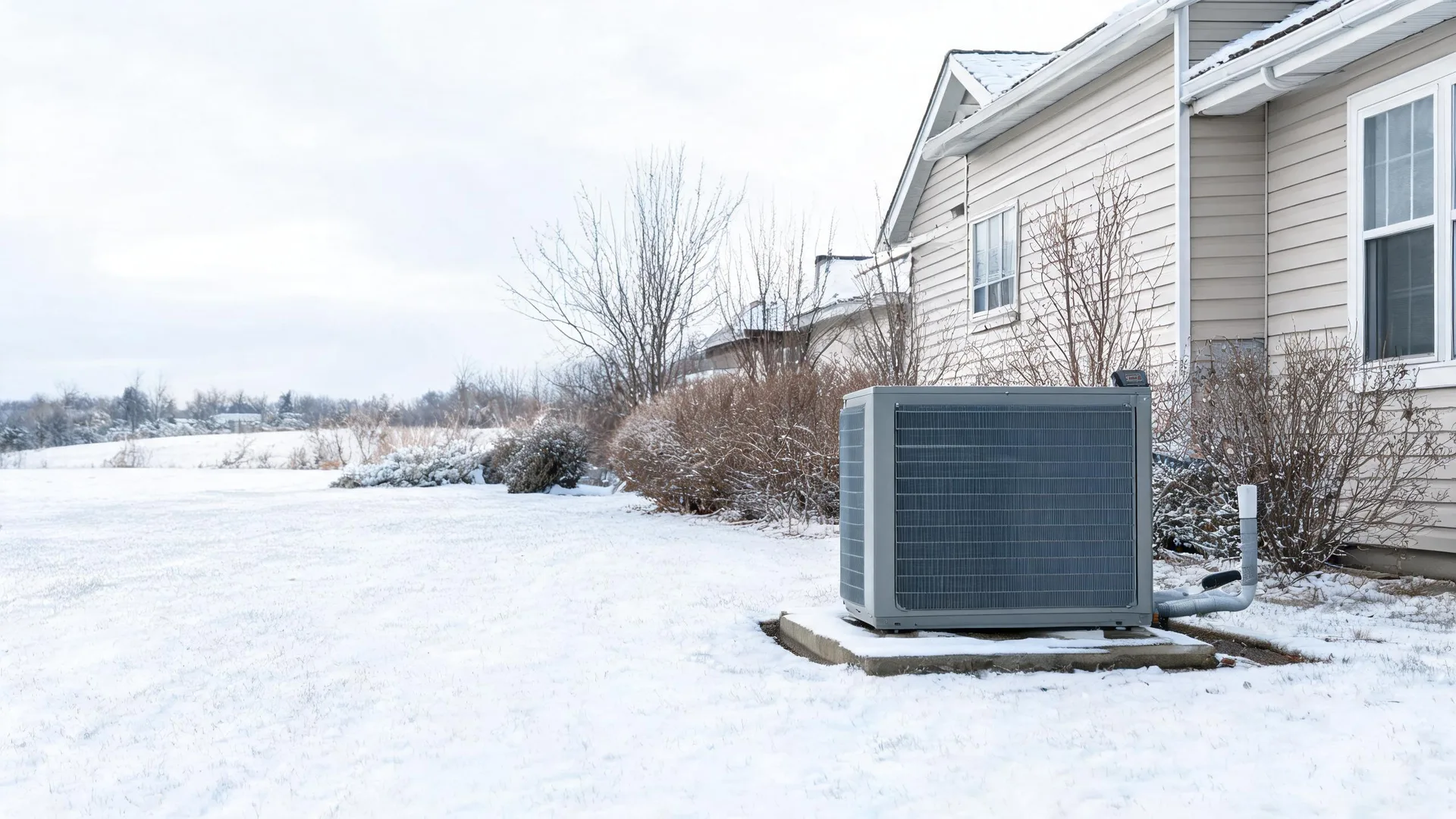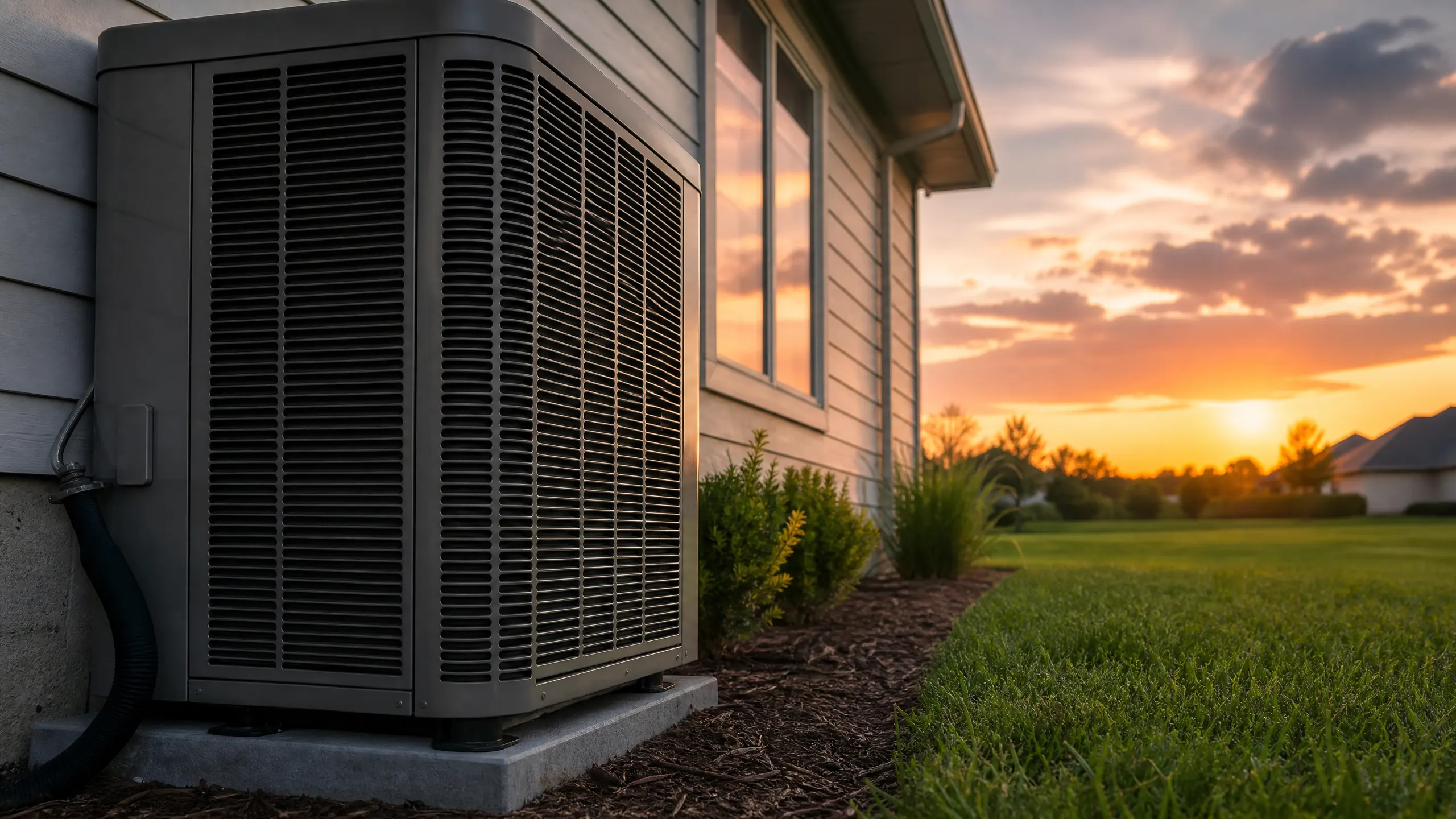
An outdoor air conditioning condenser unit mounted on a concrete pad beside a house at sunset.

Heat Pump Maintenance in La Plata, MD

Tell us about the job

Takes about a minute. No obligation.

Tune-up, service, or cleaningHeat PumpCharles County, MD
Step 1 of 2

What ZIP code is the job in?

Keep the filter clean

A dirty filter chokes the airflow a heat pump needs to move heat in either direction. Check it on a regular schedule and replace or rinse it when it looks gray or clogged. A clean filter is the one thing a homeowner can judge just by looking at it.


Keep the outdoor unit clear

The outdoor unit needs open space around it to pull in air. Keep leaves, grass clippings, mulch and anything stacked against it away from the cabinet. In winter, clear snow or ice buildup off the top and sides but leave the coil fins and refrigerant lines alone. Bent fins or a damaged line are a job for the contractor, not something to pry at by hand.

A quick visit checks the filter and calls it done.

A thorough one pulls the panels, checks refrigerant charge, and tests the reversing valve so the heat pump actually switches modes when it needs to.

October through April, this heat pump works for seven months straight. September is when it gets checked.

Cooling runs June through September
Heat runs October through April
188 damaging wind events from 2015 to 2024

Charles County gets its share of rough weather. Damaging wind hit 188 times between 2015 and 2024, with hail, a handful of tornadoes, and a tropical storm mixed in. None of that changes what a heat pump needs checked, or how often. Wind and hail test the cabinet and the coil fins, not the filter or the refrigerant charge, and those are the same whether the year was calm or not. What weather like this does affect is power. When it comes back on after an outage, the heat pump should restart on its own. If it doesn't, that's worth a call, but it's not something a yearly visit would have caught either way. One visit a year still covers what actually needs checking here.

A neglected heat pump costs more to run here

Electricity here runs 17.86 cents a kilowatt-hour. A heat pump working harder than it should, because of a dirty filter or a low charge, burns through that rate for every month it runs. A tune-up catches that before a season of bills does.

Find a contractor
A gray heat pump outdoor unit mounted on a concrete pad next to a residential house with lap siding and stone accents.

Steady work, not strain

Zone 4A asks real work of a heat pump here, but the winters are not extreme. The overnight low averages 29°F across December, January and February, well short of the cold that pushes a heat pump to its limit. That is a steady load, not a hard one. What shortens a heat pump's life here is more often a filter left too long or a refrigerant charge that slipped low and went unnoticed. A yearly check catches those before they turn into a repair.

The indoor coil has to stay clean too

A dirty filter lets dust past it, and that dust lands on the indoor coil. Once it's coated, the coil can't transfer heat the way it should, in heating or cooling mode. A contractor checks this coil on a maintenance visit because by the time it's dirty enough to notice from the airflow alone, it's already working against the system.

The condensate drain needs a clear path

Whenever a heat pump runs in cooling mode, the indoor coil pulls moisture out of the air, and that water has to leave through the condensate drain line. Algae and sludge build up in that line over time and can block it. A blocked drain backs water up into the pan and sometimes into the house. Clearing that line is routine work on a tune-up, not something that shows itself until the pan overflows.

A heat pump that never gets looked at doesn't fail all at once. The reversing valve sticks and it quietly runs in the wrong mode. The refrigerant charge drops a little at a time and nobody notices because the air coming out still feels like something. Meanwhile the compressor works harder to move the same amount of heat, every cycle, all season. That strain doesn't announce itself. It just wears down the one part in the system that's hardest to replace. By the time the heat pump stops working entirely, the skipped maintenance happened months or years before the breakdown did.

A proper tune-up starts with power off and panels off, not a glance at the thermostat. The contractor checks refrigerant charge against what the system calls for, because too little and the compressor strains, too much and it can flood back into the compressor and damage it. The reversing valve gets tested in both directions, not just the one the season happens to be in, since a valve that sticks in heating mode won't show itself until the first hot week asks it to cool. Electrical connections get checked for looseness and corrosion, and the capacitor gets tested, because a weak one makes the compressor and fan motor work harder to start every cycle. The blower wheel gets looked at for dust buildup, since a caked wheel moves less air no matter how clean the filter is. Outdoors, the coil fins get checked for dirt and get straightened if they're bent, because bent fins block airflow the same as dirt does.