




Two white multi-story colonial houses with lit windows and black shutters photographed at night, fronted by a stone wall.

Heat Pump Maintenance in Chesapeake Beach, MD

Tell us about the job

Takes about a minute. No obligation.

Tune-up, service, or cleaningHeat PumpCalvert County, MD
Step 1 of 2

What ZIP code is the job in?

Half the homes in Calvert County were built in 1990 or later, so if your house is one of them, your heat pump is likely newer too. A newer heat pump still has years of work ahead of it, and what happens during those years comes down to upkeep. The coils stay clean, the refrigerant charge stays correct, the electrical connections stay tight, and all of that keeps the system running the way it did when it was installed. Skip that upkeep and a heat pump that should run well into its second decade starts losing efficiency years earlier than it should. A yearly check is what keeps a newer system worth having.

A heat pump in Calvert County isn't fighting extreme heat most of the year.

Less strain on the system means a yearly check is more likely to keep it running than to come too late.

September is the month to get it checked, before heat takes over in October

Cooling runs June through September
Heat runs October through April
120 damaging wind events from 2015 to 2024

A dirty coil or a weak refrigerant charge makes a heat pump work harder to move the same amount of heat, and that extra work shows up on the electric bill. Maryland homes paid 17.86 cents per kilowatthour in 2024, well above what a lot of the country pays, so a system running inefficiently here costs more to ignore than it would somewhere cheaper. A tune-up catches the dirty coil or the low charge before it turns into higher bills every month it goes unchecked. The check itself costs far less than what a neglected system quietly adds to a year of electric bills.

A newer heat pump is worth keeping that way

If your home was built in 1990 or later, your heat pump probably still has a lot of good years in it. A yearly check is what gets it there without losing efficiency along the way.

Find a contractor
A gray heat pump condenser unit mounted on a concrete pad against the gray lap-siding exterior wall of a house.

A light enough load that one check a year covers it

The overnight low here only averages 29°F in December, January and February, so the heat pump isn't working against deep cold the way it would farther north. That holds on the cooling side too, since Calvert County doesn't see the extreme heat that pushes a system hard all summer. One check a year is enough to catch a failing capacitor or a drifting refrigerant charge before either one turns into a breakdown on a night when the house needs the heat most.

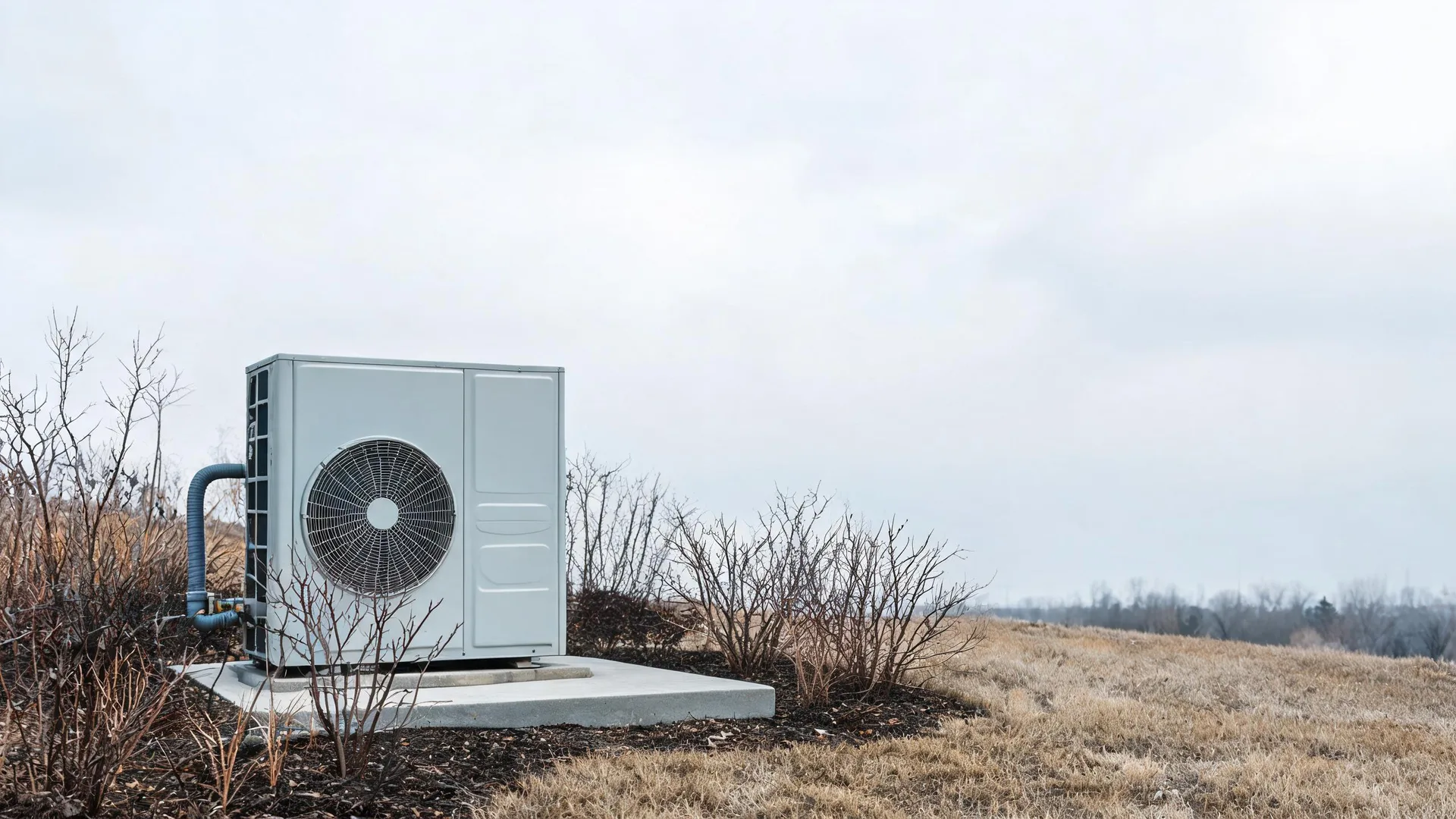
Keep the outdoor unit clear

The outdoor unit needs open air on all sides to move heat in or out. Leaves, mulch, grass clippings and anything stacked against it block that airflow and make the system work harder. Walk past it now and then and clear away anything piled near the cabinet.
Change the filter on a schedule

A clogged filter starves the system of airflow, and a heat pump moving too little air loses capacity and can ice up the indoor coil. Check it monthly and replace or clean it when it looks dirty, rather than waiting for a set date. This is the one thing between visits that actually prevents a breakdown instead of just catching one early.

A tune-up gets inside places a homeowner never sees. A tech pulls the panel and checks refrigerant pressure against what the system is supposed to run at, not just whether it blows cold. Too little charge and the compressor works harder than it should, wearing down parts that were built to last years longer. The contacts and connections inside the electrical panel get checked too, since a loose connection can run hot for months before it finally fails. The reversing valve gets tested, because that's the part that switches the system between heating and cooling, and a valve that's sticking won't necessarily show it until the season it's needed most. None of this is visible from the thermostat, which is exactly why it gets missed without someone checking it directly.

A tune-up also covers what keeps the system running quietly and safely, not just efficiently. A tech checks the condensate drain to make sure it isn't clogged, because a blocked drain backs water up into the unit instead of away from it. The blower wheel gets inspected for dust buildup, since a dirty wheel moves less air even when the motor itself is fine. Refrigerant lines get checked for proper insulation, because a bare line loses efficiency and can sweat enough to cause damage nearby. The defrost cycle gets tested too, since a heat pump that can't clear frost off the outdoor coil in winter loses heating capacity right when the house needs it. None of these are things a homeowner would catch from inside the house.