




A row of illuminated white colonial houses with black shutters and a stone wall along a road at dusk.

Heat Pump Maintenance in Centreville, MD

Tell us about the job

Takes about a minute. No obligation.

Tune-up, service, or cleaningHeat PumpQueen Anne's County, MD
Step 1 of 2

What ZIP code is the job in?

Half the homes in Queen Anne's County were built in 1990 or later. If your heat pump came with a newer house, it likely still has plenty of working life left in it. A yearly check on a younger system catches small problems while they're still small, a worn contactor or a low refrigerant charge, before they turn into a breakdown. That's a different job than servicing a system that's already near the end. On a newer unit, maintenance is what keeps it running the way it did when it was installed.

Centreville asks real work of a heat pump, mixed climate, winters averaging 28°F overnight, summers humid enough to earn zone 4A.

Real work is not hard work, so a yearly check is usually enough to keep it going.

Electricity here runs 17.86 cents a kilowatt-hour, so a dirty coil or a low charge costs you more every month it goes unfixed

Power costs 17.86 cents a kWh statewide
104 damaging wind events from 2015 to 2024
9 winter storms from 2015 to 2024

A yearly check is the action worth taking on that. Have the coil cleaned and the refrigerant charge checked before the summer runs start. A dirty coil or a low charge makes the system run longer to move the same amount of heat, and every extra hour shows up on the bill at 17.86 cents a kilowatt-hour. That's a quick thing for a contractor to catch during a routine visit, and a lot cheaper to fix in spring than to pay for all summer.

Schedule the yearly check before anything forces the issue

A yearly check is a small job precisely because the system isn't fighting Centreville's weather too hard to begin with. That's what makes it worth doing on schedule instead of waiting for a problem to show up on its own.

Find a contractor
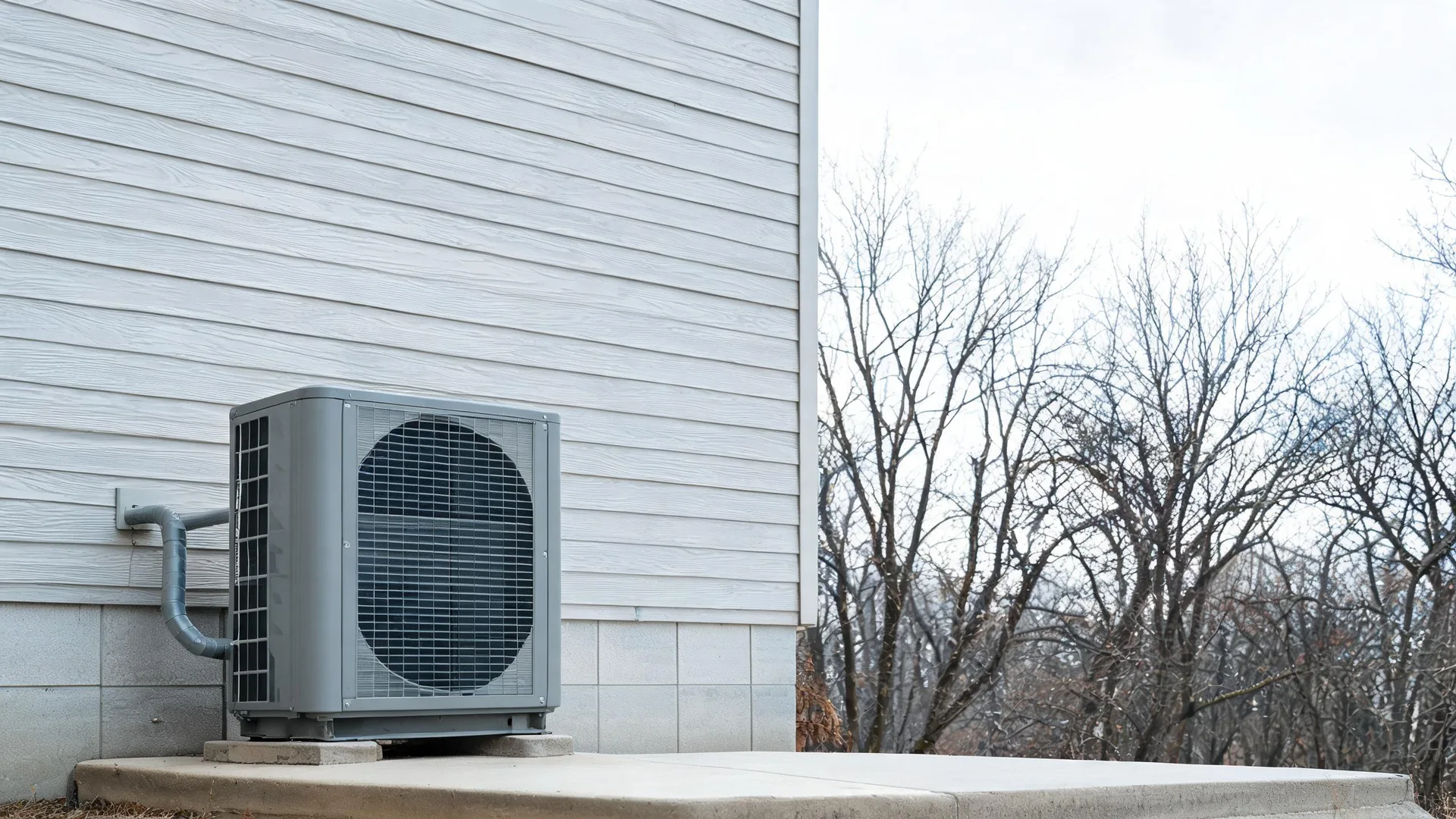
A gray outdoor HVAC unit mounted on a concrete pad beside a house with gray lap siding and a stone foundation.

Put it on the calendar once and let it run

Book the yearly check for the same time each year instead of waiting for a reason to call. On a system still within its working life, that one visit covers the whole job. There's no backlog of wear to catch up on, so the appointment stays short and stays routine, year after year.

The refrigerant charge drifts without anyone touching it

A heat pump loses a little refrigerant over time through the same fittings and coils that held it fine before. A low charge makes the compressor work harder to move the same heat, in winter and in summer both, since it's the same refrigerant loop doing both jobs. Nothing looks wrong from the thermostat. The system still runs, just not on the charge it was designed for, and the compressor takes that strain every time it cycles on.
Small faults start leaning on the compressor

A missed check usually just means a dirty coil or a weak contactor sits a while longer than it should. Left alone, that kind of fault doesn't stay separate. The compressor ends up making up for whatever else in the system isn't pulling its weight, since it's the one part that has to move the heat no matter what shape the rest of the system is in. A yearly check is what keeps those faults small and apart instead of letting them pile onto the compressor.

Between visits, the main thing worth doing is keeping air moving through the system both ways. Check the filter and change it when it looks gray or clogged, since a blocked filter starves the indoor coil and makes the whole system work harder for less heat or cooling. Walk outside and look at the outdoor unit too. Leaves, grass clippings and dryer lint build up on the fins and block airflow the same way a dirty filter does. Keep anything from piling against the sides, and after a snowfall, clear it off so the unit isn't trying to pull air through a drift. Inside, make sure furniture or curtains aren't blocking the vents. None of this replaces a real inspection, but a system that can breathe on both ends is a system that isn't fighting itself between checks.

A real tune-up starts outside, with the outdoor unit's coil and fan. The tech washes the coil fins clean so the system can actually shed or pull heat the way it's supposed to, then checks the fan motor and blades for wobble or wear. Inside, the indoor coil gets checked too, along with the blower wheel, since a dirty blower moves less air no matter how clean the ducts are. The refrigerant charge gets measured against what the system is supposed to hold, not just topped off. Electrical connections get tightened, since a loose connection is what burns out a contactor or a capacitor early. The tech also checks the reversing valve, the part that lets a heat pump switch between heating and cooling, and makes sure it's shifting cleanly both ways. None of this is guesswork. Every reading gets compared against what the manufacturer says the system should be doing at that point.