







A two-story red brick house with black shutters and a columned entry sits behind a mown lawn, framed by two large deciduous trees, with a long dry-stacked stone wall across the foreground.

Heat Pump Installation in Leonardtown, MD

Tell us about the job

Takes about a minute. No obligation.

New system or replacementHeat PumpSt. Mary's County, MD
Step 1 of 2

What ZIP code is the job in?

Maryland homes paid 17.86 cents per kilowatthour in 2024, well above what a lot of the country pays. A heat pump earns that rate back through how it moves heat instead of making it, so the efficiency rating on the unit matters more here than it would somewhere with cheaper power. Two systems with the same price tag can land on very different bills once they're running at that rate. Worth comparing the efficiency numbers as closely as the install price when you're looking at options.

7 months
October through April, your system heats
4 months
June through September, it cools
29°F
the average winter night it heats against
86°F
the average summer afternoon it cools against
Isometric line illustration of a cutaway single-story building showing interior rooms, ceiling ductwork, an indoor air handler, and an outdoor condenser unit connected by refrigerant lines.
Your system heats October through April and cools June through September.

NOAA nClimDiv, 1991–2020 normals

Electricity already heats 62.1% of homes in St. Mary's County.

A heat pump runs on the same electric service this house already has.

St. Mary's County loses power more than most. Standard equipment still fits.

192 severe weather events from 2015 to 2024
11% of homes statewide lost power a day or more in 2024
146 damaging wind events from 2015 to 2024
A mild climate for the equipmentNights average 29°F in winter. Zone 4A calls for real heating and cooling, not extremes.

Heat here runs October through April, about seven months. If you're installing new, September is the month to get it done. A heat pump put in before the cold sets in gets to run its first cycles in mild weather, which is when a contractor can still catch a wiring issue or a refrigerant charge that's off before you're depending on the system to keep the house warm. Install in October instead and you're doing it while you already need heat, which narrows your options and puts pressure on a timeline that should be yours to set.

Efficiency pays here

Power costs more here, so an efficient system pays you back on every bill.

Find a contractor
A man in a cap, dark long-sleeve shirt and brown pants carries a canvas tool bag up wooden porch steps toward a navy front door beside a potted shrub.
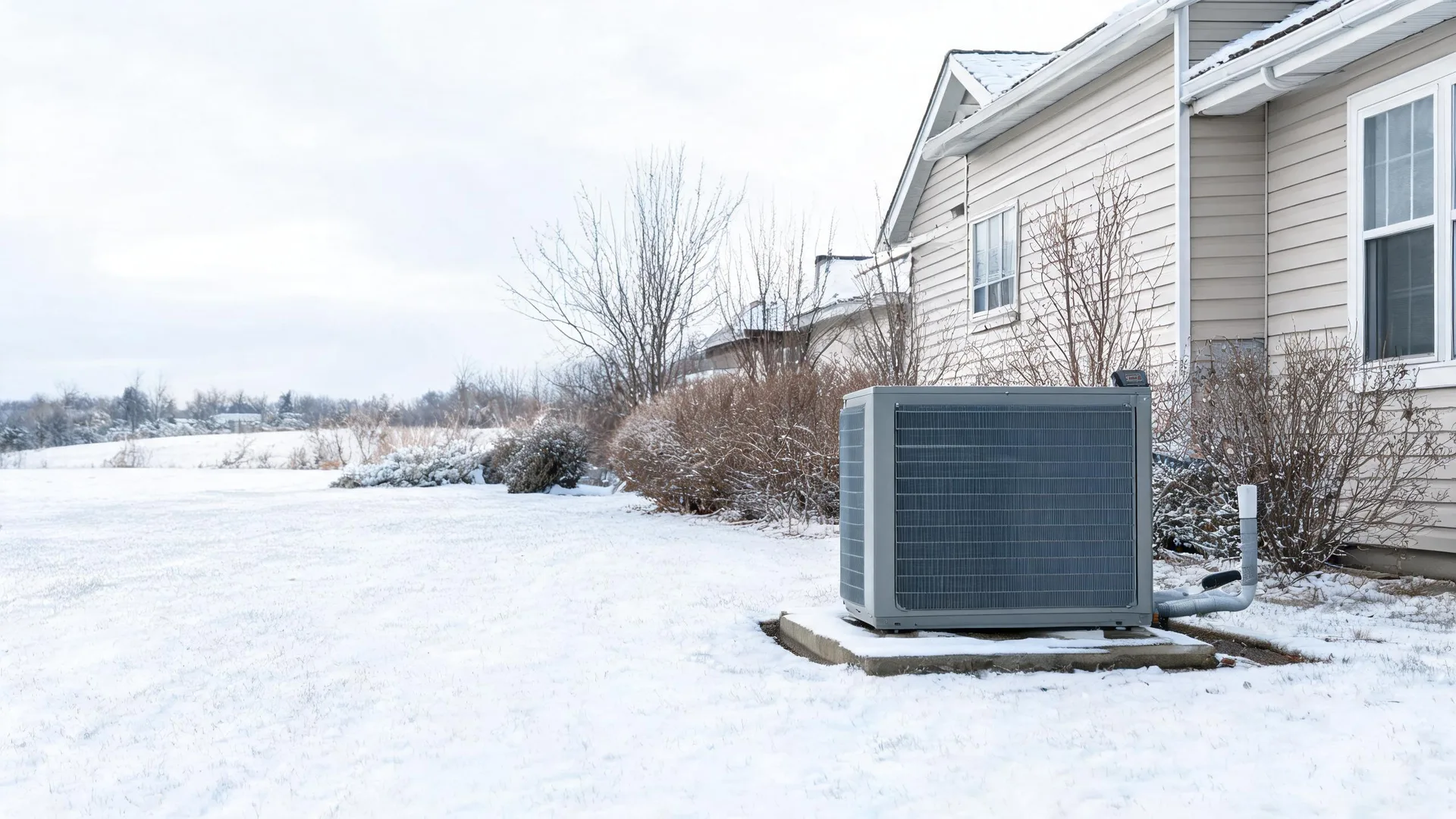
A gray heat pump outdoor unit mounted on a concrete pad next to a residential house with lap siding and stone accents.

Not run to its limits, so built right matters more than built high

The day-into-night run above is what this system does most of the year, not the coldest nights. A heat pump sized for this zone has headroom most days, since 29°F is the average low, not the usual extreme. That headroom means a reliable mid-tier model will hold up fine here. You don't need to chase the highest HSPF2 number on the lot to get a system that lasts. Put the difference toward the install itself. A clean refrigerant charge and correct wiring do more for how long this system runs than one extra point of efficiency rating.

The size has to match the house

A heat pump that's too big cycles on and off instead of running long, steady stretches, and that short cycling wears on the compressor. One that's too small runs constantly and still can't keep up on the coldest days. Getting the size right means a contractor has to measure the house and calculate its actual heat loss and heat gain, not just match whatever was there before. That measuring and calculating is itself part of what you're paying for.
The ductwork decides more than the unit does

A heat pump can only move air as well as the ducts let it. Ducts that are too narrow, leaky, or poorly routed force the system to work harder to push the same air, and no amount of equipment quality fixes that. If the ducts need sealing or modification to handle the new system, that work adds to the job separately from the cost of the heat pump itself. Existing ductwork that's already in good shape and sized right keeps the installation simpler.

Whatever is out there now gets disconnected before anything new goes in, and that includes the refrigerant inside it. A technician has to recover that refrigerant into a tank rather than let it vent into the air, and that is a legal requirement, not a courtesy. The old outdoor unit, the indoor coil, and the line set all come out. If the system being replaced is a furnace paired with central air, the furnace and its venting come out too, since a heat pump uses neither. Copper line sets are sometimes reused if they're sized right and still in good condition, but a contractor has to check that before counting on it. Most of what comes out, the metal cabinet, the coil, the copper, gets scrapped rather than hauled to a landfill, since there's value in the materials themselves.

Install day starts outside. The old condenser gets disconnected and the refrigerant recovered before anything else happens. Once that's clear, the new outdoor unit goes on its pad and the indoor coil or air handler gets set. Then the line set connecting them gets run and brazed. That line set has to be pressure tested and pulled down into a vacuum before any refrigerant goes in. That step clears out moisture and air that would otherwise damage the compressor. Electrical work usually follows, a dedicated circuit and disconnect for the outdoor unit, and low voltage control wiring run to the thermostat. Once everything is connected, a contractor charges the system to the exact weight specified for that unit and that line length, not by guesswork. The last part of the day is running the system through a full cycle in both heating and cooling, checking temperatures, pressures and airflow at the vents before calling it done.