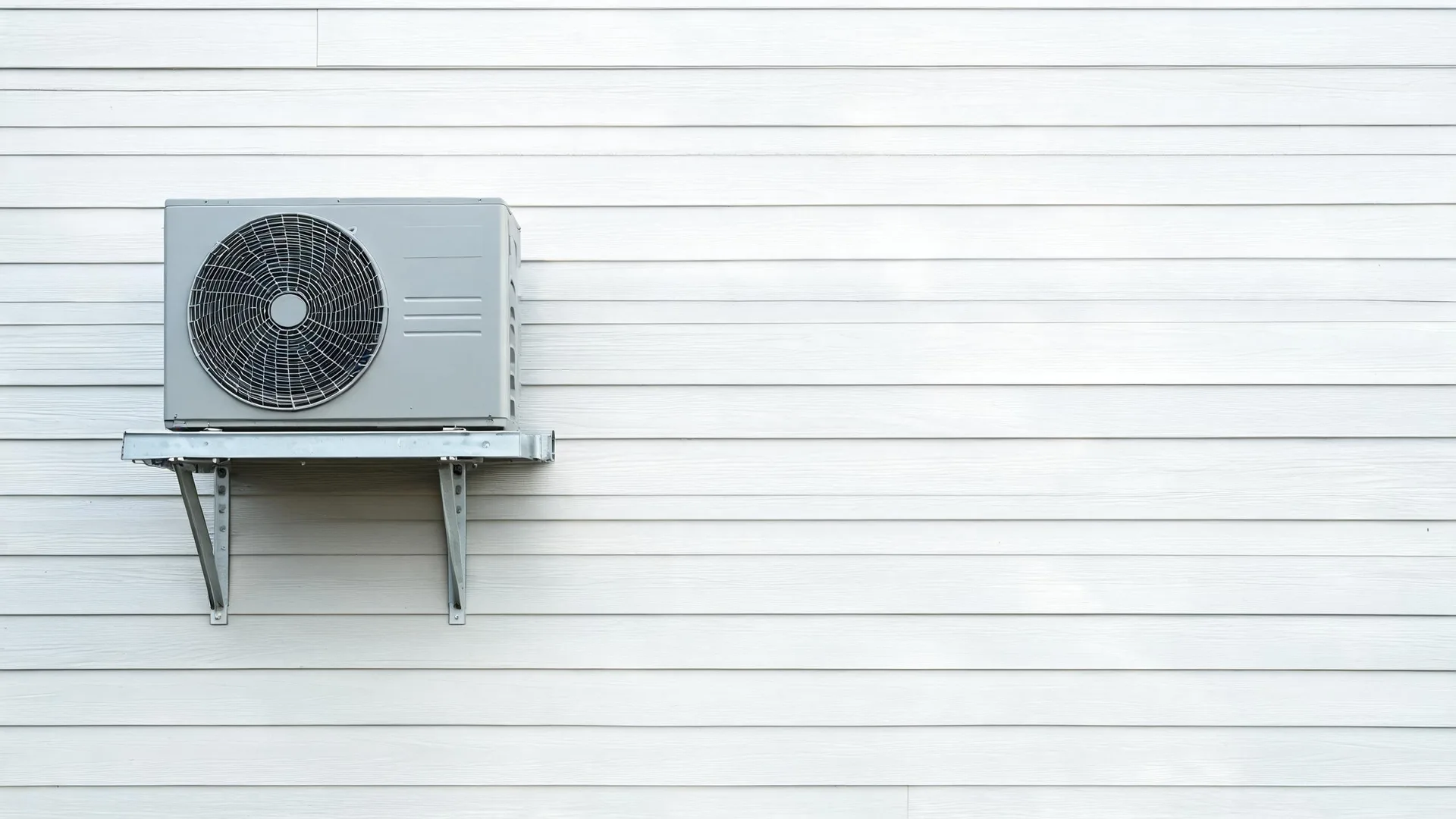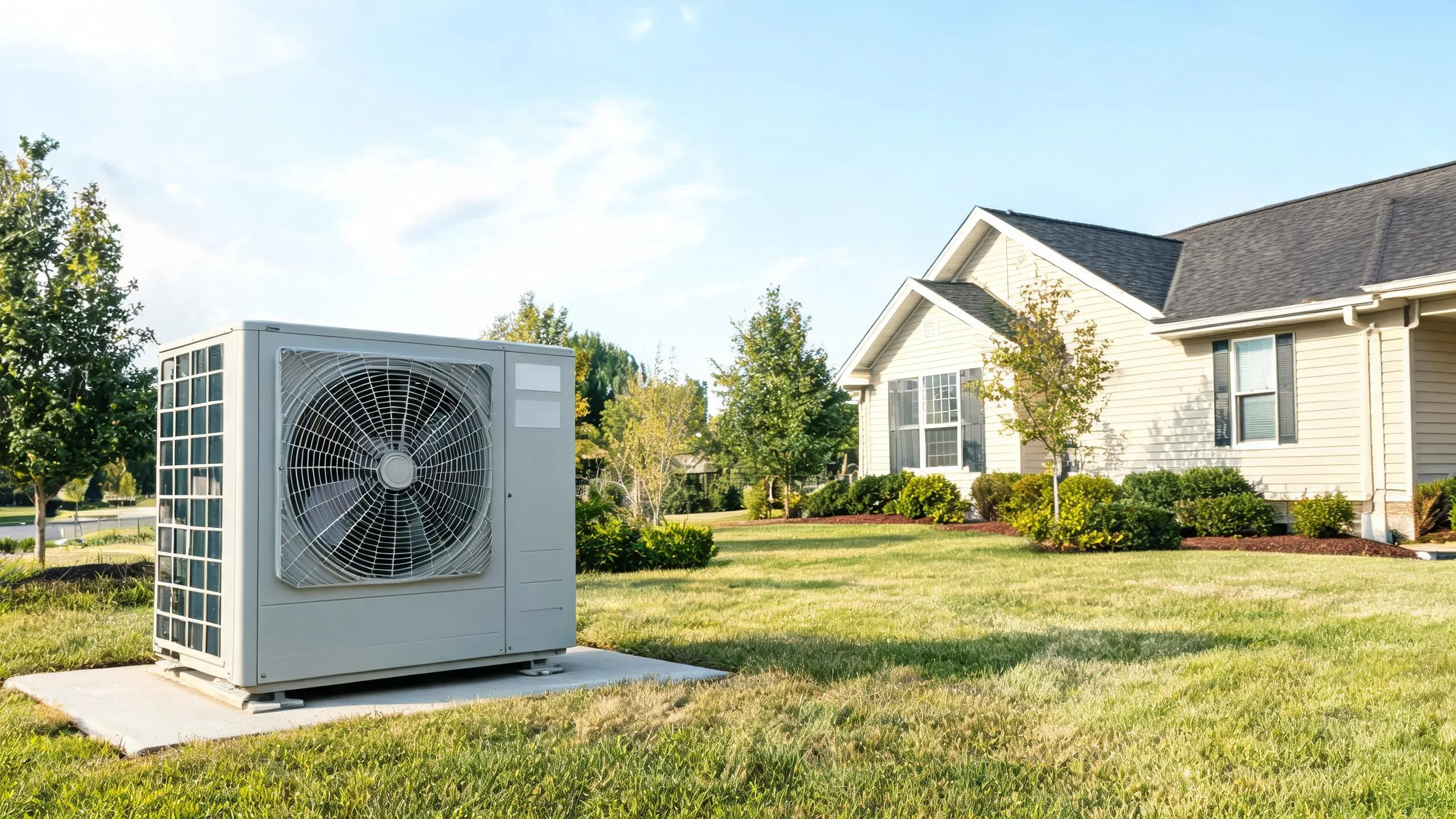
A grey heat pump outdoor unit mounted on a concrete pad in a suburban backyard, with a single-storey house visible behind it.

Heat Pump Installation in Chesapeake Beach, MD

Tell us about the job

Takes about a minute. No obligation.

New system or replacementHeat PumpCalvert County, MD
Step 1 of 2

What ZIP code is the job in?

Electricity here runs 17.86 cents a kilowatt-hour

Maryland homeowners paid that rate in 2024, higher than a lot of the country. A heat pump runs on electricity for both heat and air conditioning, so that rate applies to the system year round, not just one season.

Efficiency matters more when the rate is higher

Two heat pumps doing the same job can pull very different amounts of power to do it. At this rate per kilowatt-hour, that difference shows up on every bill the system is on, not just the big ones.

7 months
October through April, your system heats
4 months
June through September, it cools
29°F
the average winter night it heats against
85°F
the average summer afternoon it cools against
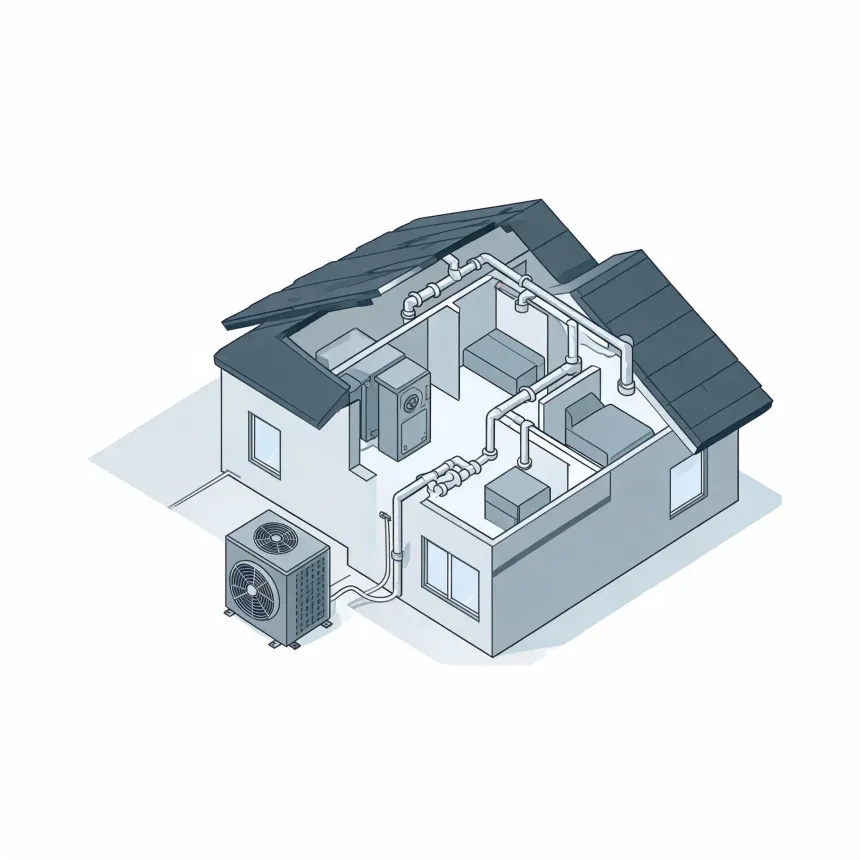
Isometric grayscale illustration of a cutaway two-story house showing interior ductwork, an indoor air handler unit, and an outdoor condenser unit on a pad beside the building.
Your system heats October through April and cools June through September.

NOAA nClimDiv, 1991–2020 normals

Electricity already heats 73.1% of homes in Calvert County.

A heat pump fits the wiring and setup already in place for most houses here.

A mixed climate works a heat pump, but wind and ice are what wear on a home here, not heat load

120 damaging wind events from 2015 to 2024
14 hail events from 2015 to 2024
12 winter storms from 2015 to 2024
Get it in before SeptemberHeat here runs October through April, about seven months a year.

Calvert County falls under zone 4A, a mixed climate that works both the heating and cooling side of a system. Any heat pump installed here has to meet the federal minimum for that equipment, 14.3 SEER2 for cooling and 7.5 HSPF2 for heating. That number is a floor, not a selling point, so a contractor quoting a system at this rating is quoting the least the law allows. Central air sold in this region has its own minimum, set higher than what the rest of the country requires. Either way, the climate here is demanding enough that the federal tax credit for high-efficiency equipment is worth asking about when you compare systems.

The rate is fixed. What you install decides the bill

Electricity here runs 17.86 cents a kilowatt-hour, and a heat pump bills against that rate year round. When you compare quotes, ask what each system pulls to do the job, not just what it costs to put in.

Find a contractor
A man in a cap, gray long-sleeve shirt and brown work pants walks up porch steps toward a dark blue front door, carrying a canvas tool bag, with gray horizontal siding and a potted flowering plant nearby.
A dark gray heat pump unit mounted on a concrete pad next to a house with gray siding and a stone veneer wall.

The old system doesn't just get hauled away

The old equipment doesn't get left for scrap day one. A contractor disconnects the refrigerant lines, recovers whatever refrigerant is still in the system, and that part isn't optional. Venting it is against the law, so it gets pulled into a tank and taken off site for reuse or proper disposal. The outdoor unit, the indoor coil or air handler, the line set if it's being replaced too, all of it comes out once the refrigerant is clear. Copper and other metal in the old equipment usually gets recycled rather than landfilled. If the ductwork is staying, it gets checked before the new system ties into it, since leaks or damage that didn't matter much to the old unit can undercut the new one's efficiency from day one.

Ask for the manual J, not a guess

A heat pump sized off square footage alone can end up wrong in both directions. One that's too big will short cycle, turning on and off before it really pulls moisture out of the air or settles into steady heating. One that's too small will run constantly and lean on backup heat strips more than it should. A contractor who does a room by room load calculation can tell you why they landed on the size they're quoting, not just what size it is.

Ask what happens when it's coldest out

Every heat pump loses capacity as the outdoor temperature drops, and at some point it needs backup heat to keep up. Ask where that point is for the system you're comparing, and what kind of backup it switches to. Some systems lean on electric resistance strips, which cost more to run than the compressor does. A system with a lower balance point leans on that backup less often.

A manual J looks at the whole house, not just the square footage. It counts windows, insulation, ceiling height, which way rooms face, even how the rooms get used day to day. Houses that look alike on paper can still call for different sized systems once that work is done. Sizing by a rule of thumb skips all of that and tends to land on a bigger unit than the house actually needs. That bigger unit cycles on, satisfies the thermostat fast, and shuts off again before it's run long enough to pull moisture out of the air or warm the house evenly. The right size runs longer and steadier, and keeps the temperature from swinging room to room.

Installation day starts with the old equipment coming out, if there is any, and the new outdoor unit going on a pad with clear airflow on all sides. Indoors, the air handler or coil ties into the existing ductwork, or a line set gets run if it's a ductless setup. The refrigerant lines get connected, pressure tested, then pulled into a vacuum to clear out air and moisture before any refrigerant goes in. Either one left behind wears on the compressor over time. The electrical work comes next, a dedicated circuit, a disconnect box outside, and a thermostat wired in and set to match the equipment. Once it's powered on, a tech checks the refrigerant charge, the airflow across the coil, and that the system ramps through its stages the way it should. A walkthrough at the end should cover the thermostat, the filter location, and what the backup heat does when the outdoor unit can't keep up on its own.