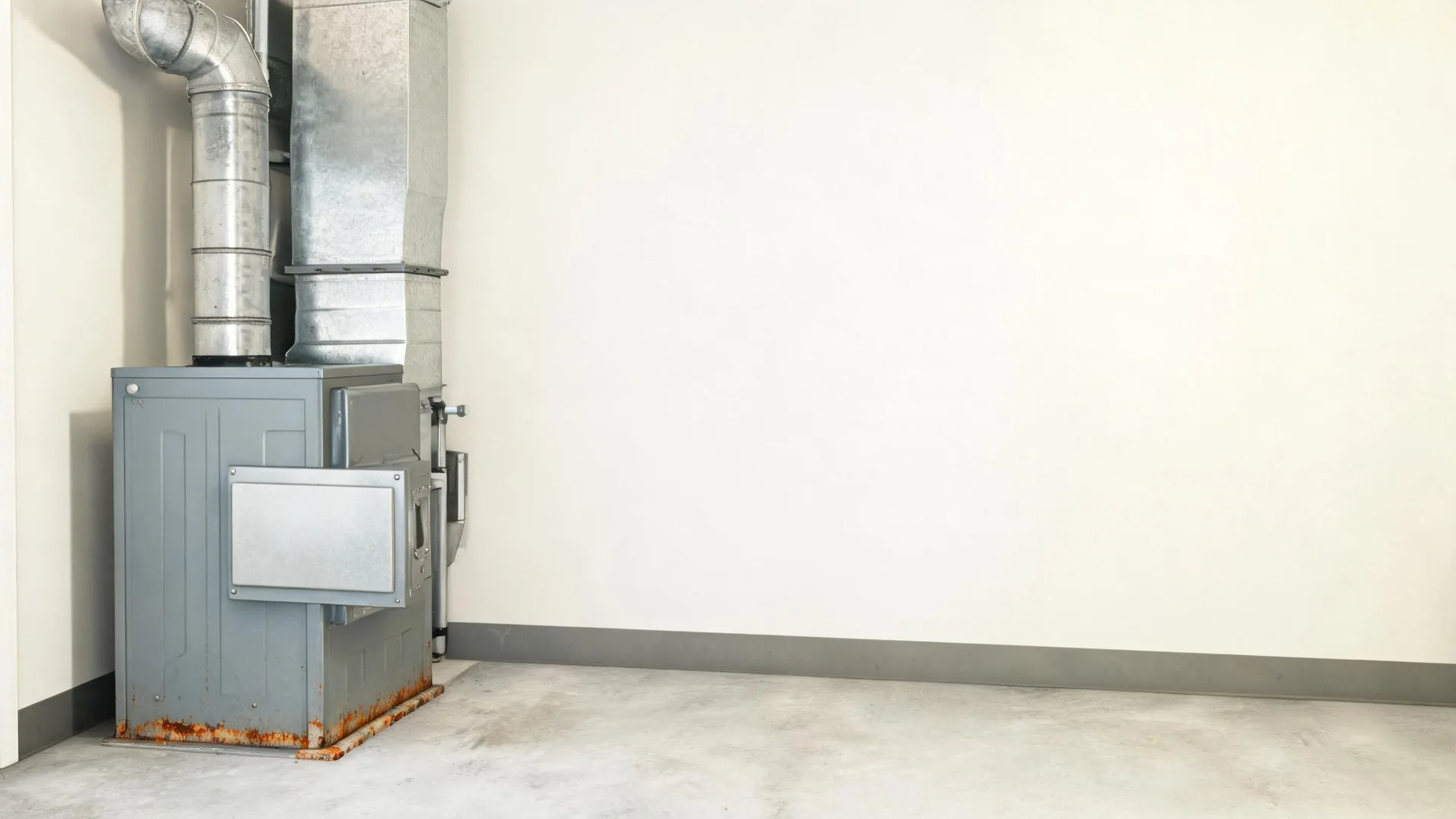
An empty unfinished basement containing a forced-air furnace with overhead ductwork, exposed ceiling joists, and a single hanging light bulb.

Furnace Repair in Westminster, MD

Tell us about the job

Takes about a minute. No obligation.

RepairFurnace or heatingCarroll County, MD
Step 1 of 2

What ZIP code is the job in?

September is the month to catch it

Furnaces in Carroll County sit idle most of the year and start running again in October. A part that was already failing, a cracked igniter or a stuck valve, usually waits until that first real cold snap to show it.

The first cold week finds the weak part

Seven months of runtime from October through April puts real load on a furnace right away. If something was marginal going into fall, that first week of steady firing is when it quits, not partway through winter.

7 months
October through April, your furnace is on duty
25°F
the average winter night it heats against
21 winter storms
in ten years, the nights a failure hurts most
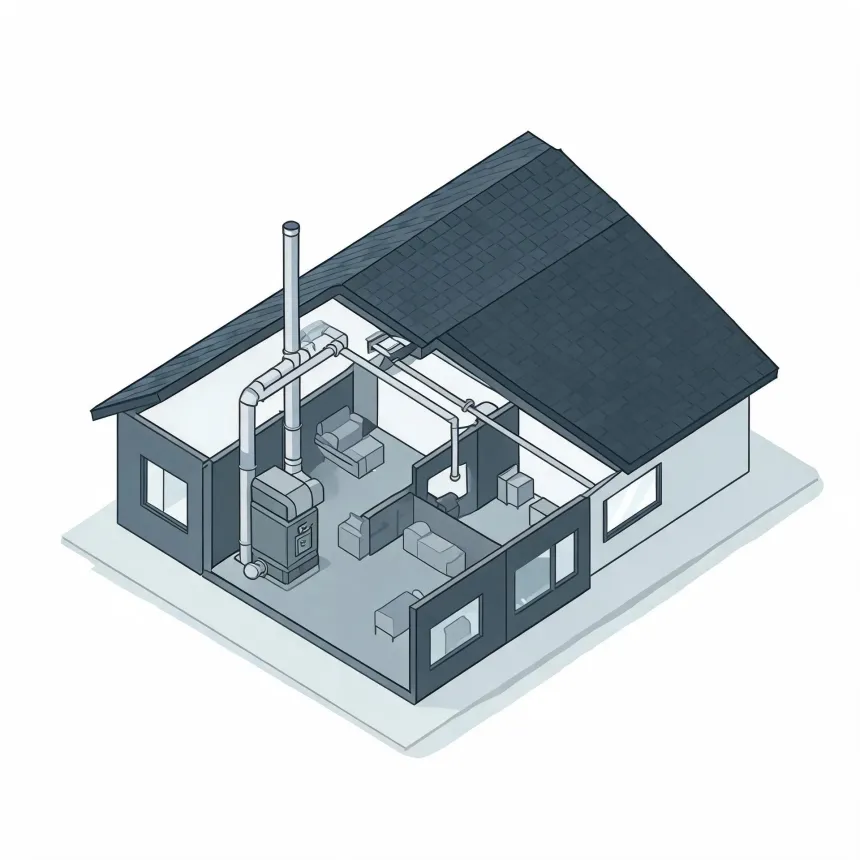
Isometric cutaway illustration of a single-story house showing interior rooms with furniture, a furnace unit connected to ducting and vertical flue pipes running through the roof.
Your furnace works hardest from November through March.

NOAA nClimDiv, 1991–2020 normals

Check the filter before anything else. A filter clogged with dust chokes airflow and can shut the furnace down or ice up the coil above it.

Check the thermostat batteries and the switch on the wall by the furnace itself, the one that looks like a light switch. Both get bumped off and mistaken for a bigger problem.

A furnace running badly here runs up the bill fast

Heat runs October through April
Winter nights average 25°F
21 winter storms from 2015 to 2024

Half the homes in Carroll County were built in 1983 or later. If your house falls on that side of the line, the furnace in it probably isn't that old either, even counting a replacement along the way. A furnace that age with a real problem, a cracked igniter or a failed control board, is usually worth fixing. The parts are still made and still common, and nothing about its age argues against repairing it. A technician can tell you what's actually wrong once they're in front of it.

Nothing unusual is wearing out your furnace, just the usual part

Carroll County sees its share of severe weather, winter storms included. None of that is what's wrong with your furnace. Weather doesn't wear out an igniter or a control board faster here than anywhere else. If it's acting up, it's most likely the usual part, worth finding and worth fixing.

Find a contractor
A man in a dark long-sleeve shirt and tan work pants carries a canvas tool bag up porch steps toward a navy blue front door, with a potted shrub beside the entry.
A gray residential gas furnace installed in an unfinished basement, surrounded by ductwork, a metal flue pipe, and a gas supply line.

A newer furnace is worth the repair call

A furnace built alongside a newer house has had less time to put hours on its parts, and less reason for anyone to have deferred work on it. That's a case for calling a repair tech instead of a replacement crew when something quits. Get the diagnosis first. Let what's actually broken decide the rest.

The igniter goes first

A hot surface igniter is a thin strip that cycles on and off every time the furnace fires. That heating and cooling eventually cracks it, and once it's cracked it stops glowing enough to light the gas. This is the most common reason a furnace won't start at all.

Flame sensors get dirty, not broken

The flame sensor confirms the burners actually lit, and shuts the gas back off if they didn't. A thin layer of film builds up on the rod over time and the furnace reads it as no flame, even with the burners going. Most of the time this just needs cleaning, not replacing.

A furnace that's struggling still tries to do the job you're asking of it, and that's the problem. A cracked heat exchanger left alone can let exhaust mix into the air the blower pushes through the house. A limit switch that's tripping gets reset by the furnace itself, over and over, each time putting more strain on a blower motor that wasn't built to cycle that hard. An igniter that's barely working will keep drawing power trying to glow hot enough, right up until it gives out completely. None of these get better with more runtime. The furnace doesn't know it's hurting itself, it just keeps firing when it's told to, and the small problem stays small for exactly as long as it takes someone to shut it off and have it looked at.

Most furnace repairs are worth doing. The parts that fail, an igniter, a flame sensor, a control board, a draft inducer motor, are built to be swapped out on their own, and swapping one doesn't shorten the life of anything else in the furnace. Replacement makes sense when the heat exchanger is cracked, since that's the part that isn't sold separately from the whole unit, or when the furnace is already old enough that one repair just buys time until the next one. Short of that, a furnace with one bad part and an otherwise sound cabinet and blower has no reason to be replaced instead of repaired. The repair fixes what's actually wrong. Replacing it fixes that too, plus a lot of parts that weren't broken.