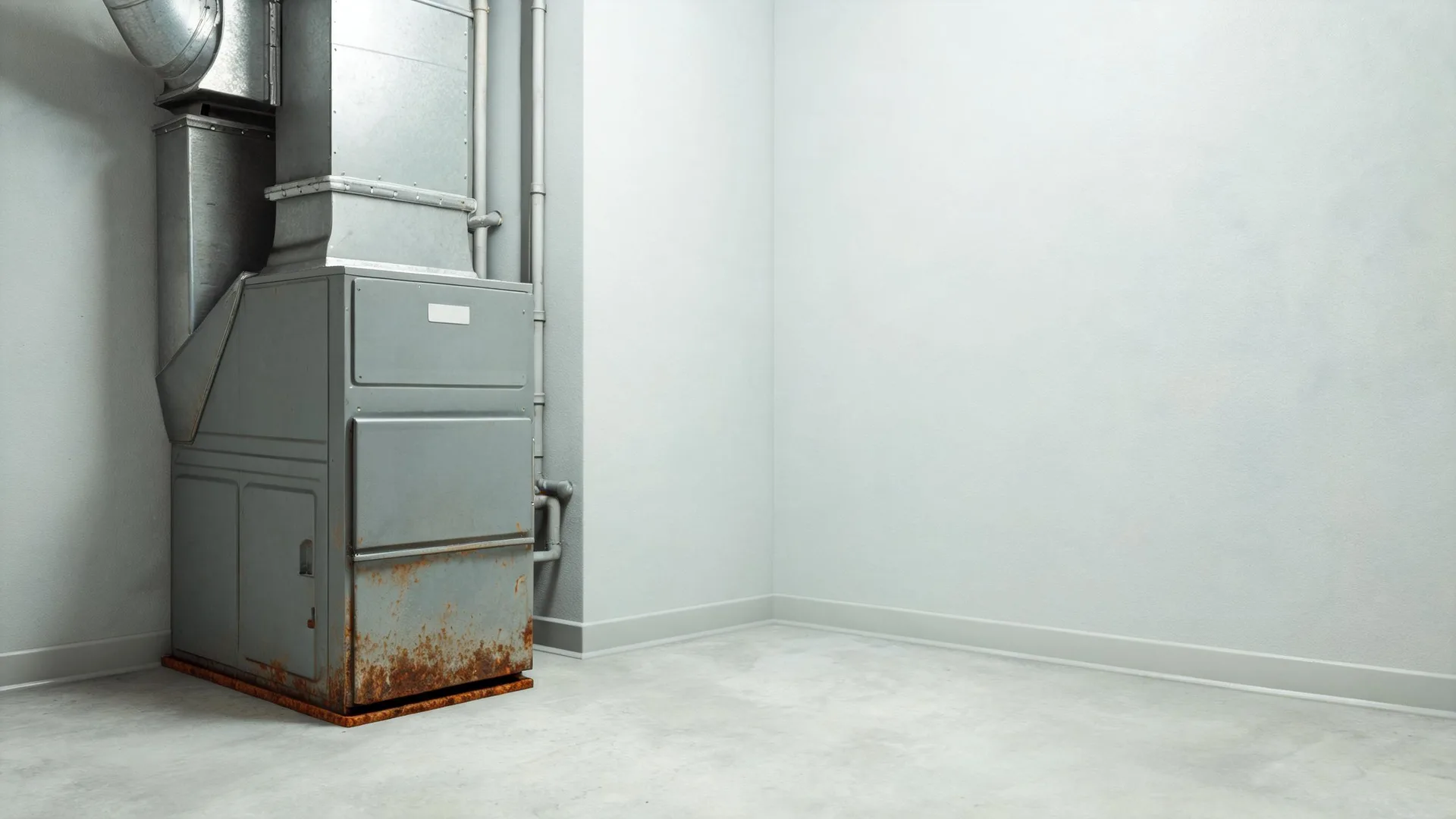
A normal winter for a furnace
Princess Anne runs heat from October through April. Overnight lows average 30°F in December, January and February. That is ordinary work for a furnace, not a strain on it.
Takes about a minute. No obligation.
Princess Anne runs heat from October through April. Overnight lows average 30°F in December, January and February. That is ordinary work for a furnace, not a strain on it.
A furnace here breaking down is almost always one of the same problems that show up anywhere. A failed igniter. A dirty flame sensor. A clogged filter choking off airflow. Find the part actually at fault and the repair is straightforward.

NOAA nClimDiv, 1991–2020 normals
Some furnace problems are worth fixing even on an old unit, because the part failing has nothing to do with the rest of the system's age.
A cracked heat exchanger is the one exception, since it means the furnace itself is no longer safe to run.

Half the houses in Somerset County were built in 1986 or later. If yours is one of them, the furnace is probably not old enough to be the problem on its own. Furnaces last for years of normal winters like the ones here, and a newer system has little reason to be failing outright. That points back to a specific part acting up rather than the unit being worn out. Worth checking if yours came with the house, since that tells you roughly what you're working with.
Electricity here isn't cheap, and a furnace short cycling or running long to make up for a bad igniter or a clogged filter burns through it fast. Once you know which part is causing the trouble, fixing it stops the extra cost along with the noise and the cold spots.
Find a contractorA furnace with a bad part doesn't fail clean. A cracked heat exchanger gets worse every cycle it runs, because the metal keeps flexing against the crack with every burst of heat. A clogged filter left in place makes the blower work harder, and that strain moves to the motor next. A dirty flame sensor will keep letting the burner shut off early, so the furnace short cycles over and over trying to satisfy the thermostat, and short cycling wears the igniter and the control board faster than normal runtime ever would. None of these sit still. The part that's failing drags at whatever depends on it, until the day it stops the whole system instead of just bothering it.
Check that the thermostat is set to heat and the setting is above room temperature. Go to the breaker panel and make sure the furnace circuit hasn't tripped. Look at the furnace switch, the one that looks like a light switch on or near the unit, and make sure it's on. Pull the filter and hold it up to a light. If you can't see light through it, that alone can be enough to shut a furnace down or make it run constantly trying to keep up.
Don't open the burner compartment or go near the gas valve. If you smell gas, leave the house and call the gas company before anyone touches the furnace. Don't reset a breaker more than once if it trips again right away, that's a sign something downstream is pulling too much current. A furnace that won't stay lit, or that trips its breaker repeatedly, needs a technician with a meter, not more guessing.
Most furnace failures trace back to one of a handful of parts, and they tend to go in the same way every time. An igniter wears out from repeated heating and cooling every time it fires, until one day it doesn't glow hot enough to light the burner. A flame sensor doesn't fail, it just gets coated with a film from normal combustion, and once that coating is thick enough the sensor can't tell the furnace a flame is there. A blower motor usually gives out after something else has been straining it for a while, often a filter nobody changed. Control boards fail less often, but when one does, it tends to take the whole system down at once instead of giving a warning sign first. Knowing which of these is actually failing is most of the job. The fix itself is usually quick once that part is found.
A diagnostic visit starts before any panel comes off. A tech will ask what the furnace was doing right before it quit, whether it was making noise, short cycling, blowing cold, or not starting at all. That answer narrows things down fast. Then it's a meter, not a guess. Testing the igniter for resistance, checking the flame sensor's microamp reading, watching the sequence of a full cycle from thermostat call to burner light to blower start. Each step either clears a part or points at it. Once the bad part is found, the tech will usually show it to you before replacing it, so you know what actually failed and why.