



A long white picket fence runs along a mown grass lawn in front of a row of single-story houses with gray siding and shingled roofs, surrounded by large leafy trees.

Furnace Repair in Hagerstown, MD

Tell us about the job

Takes about a minute. No obligation.

RepairFurnace or heatingWashington County, MD
Step 1 of 2

What ZIP code is the job in?

Furnaces in Hagerstown run about seven months, October through April, and whatever was marginal last spring is still sitting there in September. A cracked heat exchanger, a weak igniter, a blower motor that was already loud, none of that fixes itself over the summer. The first cold stretch is usually when it gets found, often at night, when the thermostat is finally asked to do something. Getting it looked at in September means a tech is working on it before the system has to run every day.

7 months
October through April, your furnace is on duty
25°F
the average winter night it heats against
21 winter storms
in ten years, the nights a failure hurts most
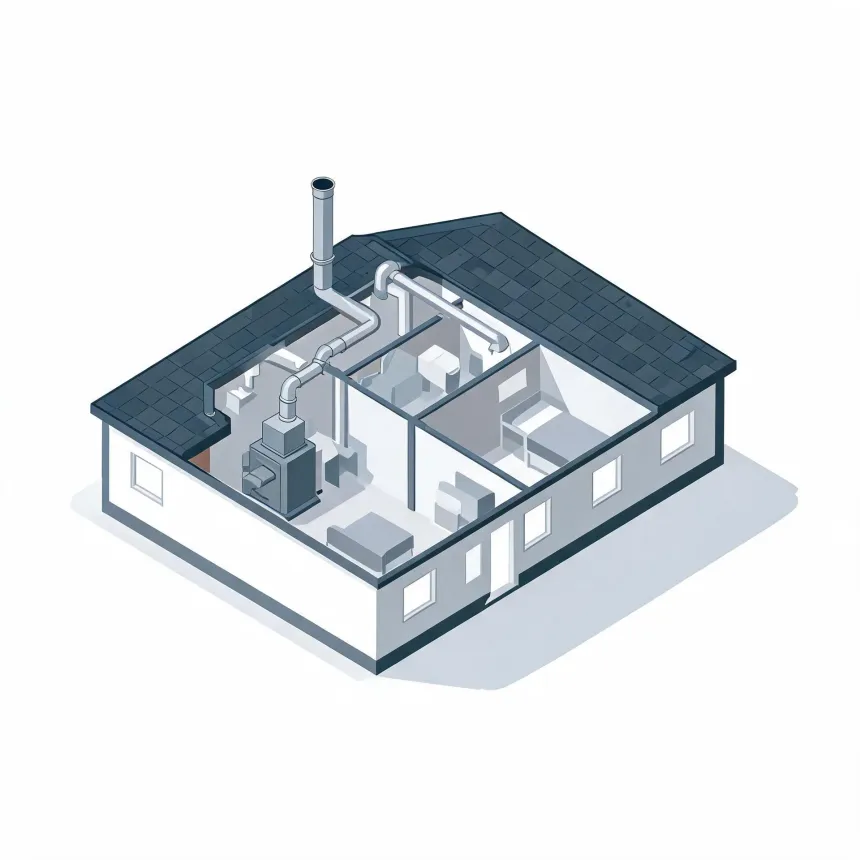
Isometric cutaway illustration of a single-story house with a dark shingled roof, showing interior rooms with furniture and a furnace connected to ductwork and a flue pipe extending above the roof.
Your furnace works hardest from November through March.

NOAA nClimDiv, 1991–2020 normals

A furnace in Washington County runs from October through April, about seven months straight.

A weak igniter or a tired blower motor has a long stretch to get through if nobody looks at it first.

The weather here isn't what's hard on a furnace

201 severe weather events from 2015 to 2024
11% of homes statewide lost power a day or more in 2024
148 damaging wind events from 2015 to 2024

Electricity in Maryland ran $52.34 per million Btu in 2024, and Hagerstown isn't a cheap place to run a furnace. A unit that's short cycling or pushing air through a clogged filter still has to burn enough fuel to hit the thermostat's setting, just with more waste along the way. That waste shows up on every bill while it keeps running, not just the one. A tech can find the actual cause in one visit. Waiting doesn't change what's wrong, it just runs the bad version of it longer.

Your furnace's age and your house's age are two different questions

Half the homes in Washington County were built in 1974 or earlier, half in 1974 or later. Either way, a furnace breaks down for ordinary reasons. A weak igniter. A cracked heat exchanger. A blower motor that was already loud before the weather turned. Nothing about a house here makes any of that more likely, and nothing about it changes the fix. A tech can find the real cause and get it running right.

Find a contractor
A man in a cap, navy long-sleeve shirt and tan work pants carries a canvas tool bag up steps toward a dark front door, with a potted shrub beside the porch.
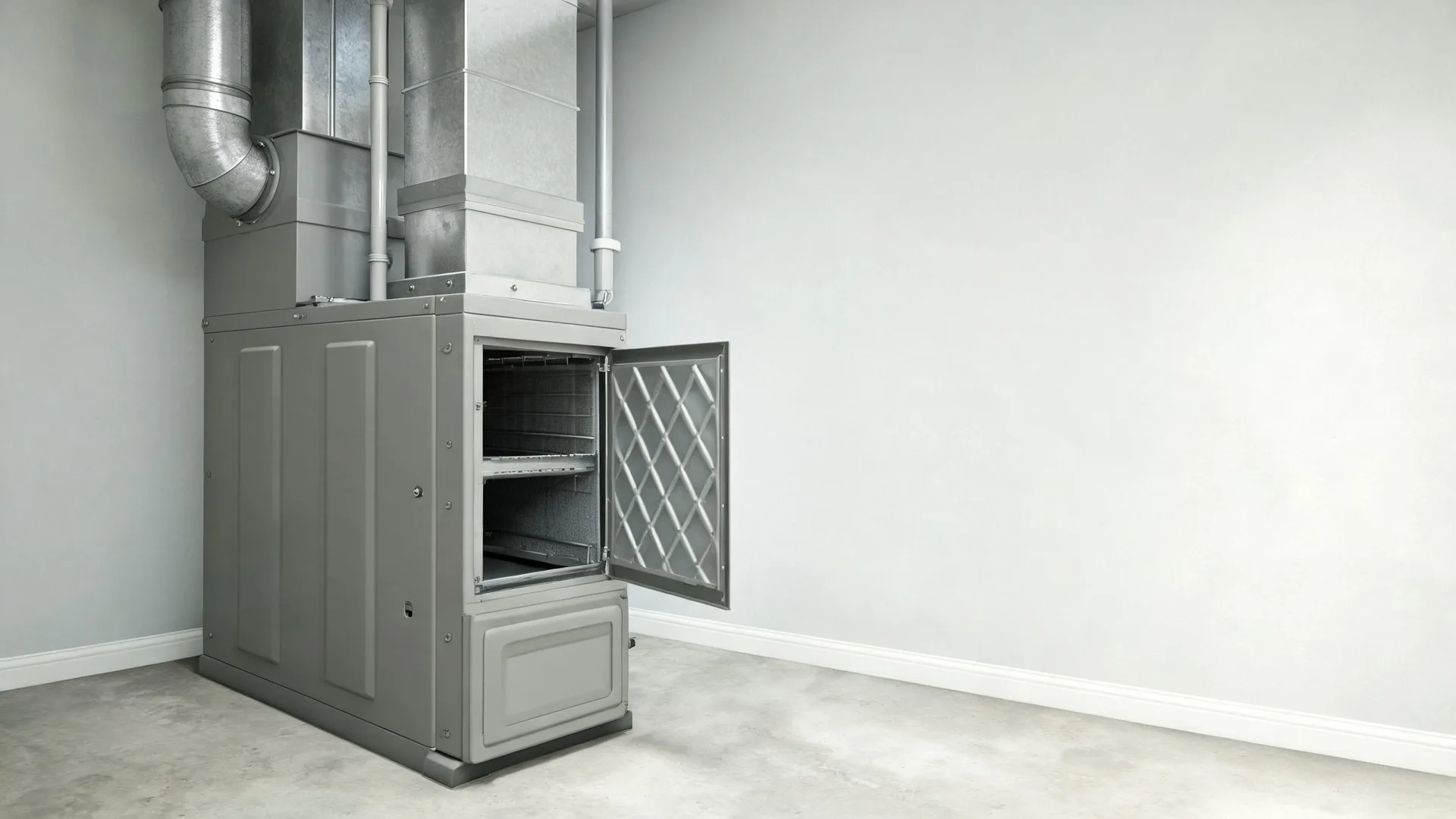
A gray residential gas furnace installed in an unfinished basement, surrounded by ductwork, a metal flue pipe, and a gas supply line.

Running it doesn't give a problem time to go away

A small problem in a furnace rarely stays small once the burners keep lighting on it. A crack in the heat exchanger spreads a little more with every heat cycle, as the metal expands hot and contracts cold. A blower motor with worn bearings keeps grinding until it seizes, usually at the point you need it most. An igniter that glows weak instead of bright is burning out, not pausing. None of these fix themselves between one run and the next. Running the furnace is also what gives a bad part the chance to take something else down with it, a cracked exchanger can let exhaust mix where it shouldn't, a dirty flame sensor can lead to a shutdown that leaves you with no heat at all. The part doesn't rest when the system idles for a few hours. It just waits for the next cycle to get worse on.

What you'll actually notice first

The furnace runs longer than it used to before the house feels warm. Short bursts of heat followed by the blower running cold air for a while. A burner smell that shows up when it kicks on and fades after a minute. A clicking at the igniter that doesn't catch into a flame. These are the things you feel from another room, not things you'd see if you opened the cabinet yourself.
What decides if it's worth a call tonight

A furnace that won't light at all, or one that trips its switch repeatedly, needs a tech before you run it again. A furnace that's just louder or slower to warm the house can usually wait for a daytime appointment. The difference is whether the system is failing to do its job or just doing it worse. Either way the part causing it isn't going to improve on its own.

There are a few things worth checking before anyone comes out. Look at the filter first, pull it and hold it up to a light. If you can't see through it, air isn't moving the way it should and that alone can cause short cycling or a furnace that won't hold heat. Check the thermostat has fresh batteries if it takes them, and make sure it's actually set to heat and not just fan. Walk over to the furnace itself and see if the switch on it or near it got bumped off, it looks like a light switch and people brush past it in a basement or closet. If there's a reset button on the unit, you can press it once, but if it trips again after that leave it alone and don't keep resetting it. Check that the vent hood outside hasn't gotten blocked by anything, leaves, a nest, debris. None of that calls for taking a panel off or touching anything with power to it, just a look.

Repair or replace usually comes down to what else is going wrong at the same time. A furnace that needs an igniter and nothing else is an easy call, that part fails on its own and fixing it brings back a furnace that was otherwise fine. It's a different conversation when the heat exchanger is cracked, the blower motor is shot, and parts for that model are getting hard to find. At that point you're not fixing a furnace, you're fixing one piece of it while the rest keeps aging toward the same spot. A tech can tell you which situation you're actually in, because the part that failed and the condition of everything around it are different questions. Neither one is something you can judge by how the furnace sounds from another room.