






An unfinished basement interior showing a gray furnace unit beneath a bare incandescent bulb, surrounded by exposed joists, concrete walls, cardboard boxes, and utility pipes.

Furnace Repair in Elkton, MD

Tell us about the job

Takes about a minute. No obligation.

RepairFurnace or heatingCecil County, MD
Step 1 of 2

What ZIP code is the job in?

Furnaces in Elkton start working in October, and that first cold stretch is when a weak part usually gives out. A furnace sits idle most of the summer, and the moment it's asked to run every day, anything that was already weak gets found. If yours is acting up now, in September, that's worth checking before the cold sets in. Homes here run heat about seven months, October through April, so a furnace that fails early tends to keep failing unless the real cause gets fixed.

7 months
October through April, your furnace is on duty
27°F
the average winter night it heats against
8 winter storms
in ten years, the nights a failure hurts most
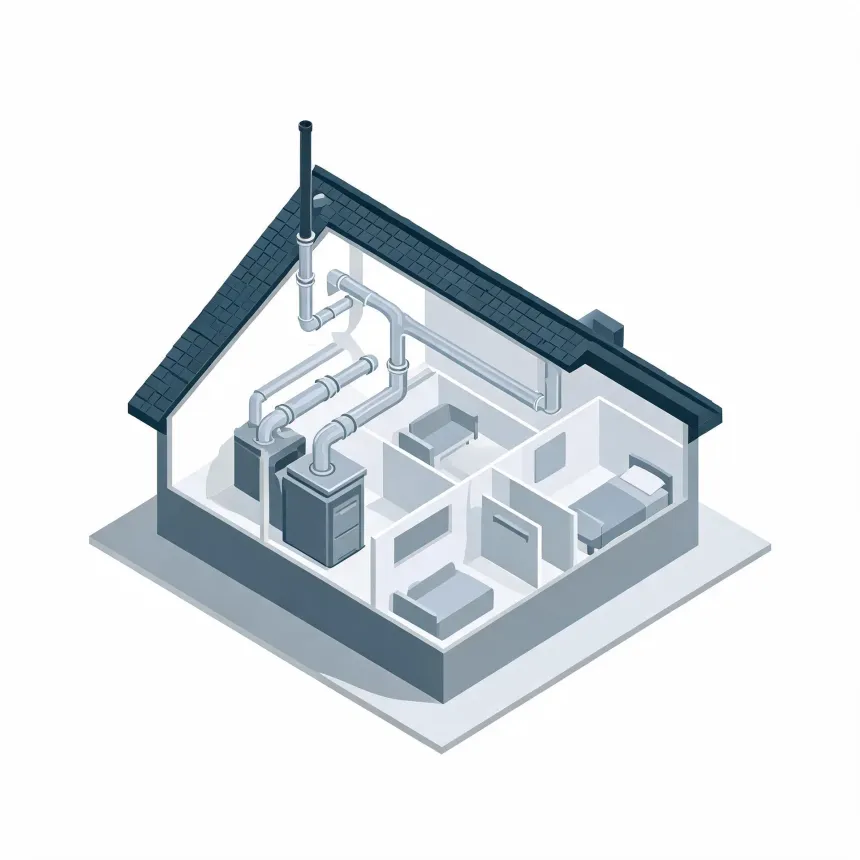
Isometric illustration of a cutaway house showing a furnace unit with ductwork and a flue pipe running through the interior rooms, which contain simple furniture.
Your furnace works hardest from November through March.

NOAA nClimDiv, 1991–2020 normals

A furnace that shuts off before the room warms up is short cycling.

A dirty flame sensor causes that, far more often than the thermostat.

A furnace running badly here costs you every month it's broken

Heat runs October through April
Winter nights average 27°F
Climate zone 4A
Elkton sees normal storms, not a harder furnaceCecil County logged 175 damaging wind events between 2015 and 2024. That's weather, not a reason your furnace fails more often.

Half the homes in Cecil County were built in 1987 or later. If yours is one of them, the furnace inside it is probably not old enough to be the reason it's struggling. A furnace built in the last couple decades should have plenty of working life left in it, which means a breakdown now is usually one bad part, not the whole unit giving out. That's worth knowing before anyone tells you to replace it.

A broken furnace costs you every day it stays broken

Electricity in Maryland runs $52.34 per million Btu. A furnace that's short cycling or running longer than it should is burning that every day it's not fixed. Get the real cause found now.

Find a contractor
A man in a cap, dark shirt and tan work pants, seen from behind, carries a worn canvas tool bag up steps toward a dark blue front door beside a tall planter of flowers.
A gas furnace with attached ductwork, gas piping, and condensate lines installed in a concrete-block basement.

A newer furnace is worth repairing

If your house was built in the last couple decades, that furnace has years left in it. A failed igniter or a bad flame sensor doesn't mean the unit is done, it means one part is done. Get that part found and replaced instead of pricing out a new system. If your home is older, or the furnace came with the house rather than being swapped in later, it's worth checking the install date on the unit itself before deciding anything.

A cracked heat exchanger gets worse every hour it runs

A heat exchanger that's cracked lets combustion gases mix into the air the blower pushes through your house. Running the furnace on a cracked exchanger doesn't just leave the crack alone, the metal keeps flexing with every heat cycle and the crack spreads. What starts as something a tech can catch on inspection turns into a part that has to be replaced.
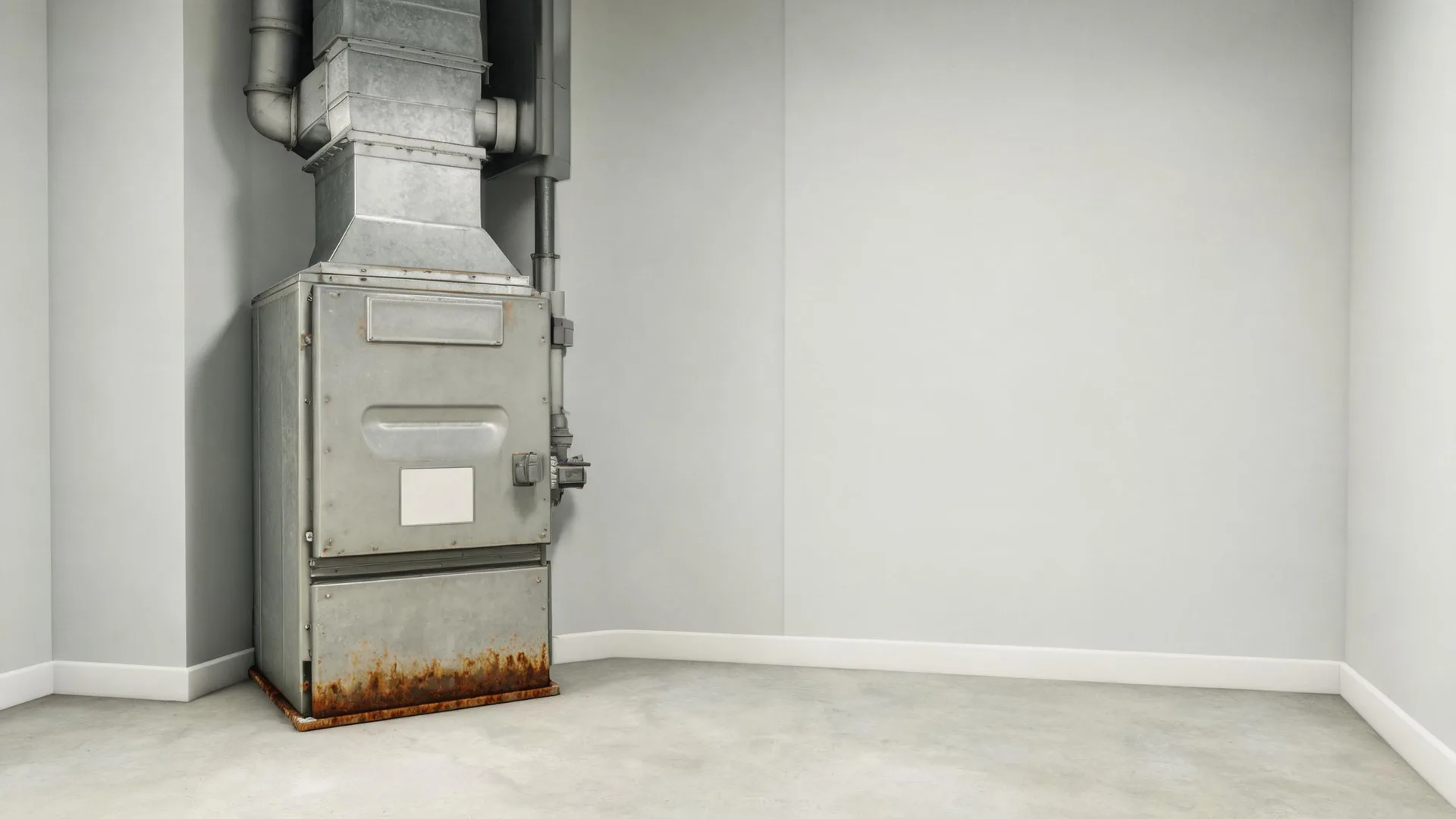
A failing inducer motor can take the heat exchanger with it

The inducer motor clears exhaust out of the furnace before the burners are allowed to fire. If it's running weak and still getting past the safety checks, it's not venting the way it should, and that leaves heat and exhaust sitting where they shouldn't. Shutting it down when you first hear it struggling protects the parts around it, not just the motor itself.

A few things are worth checking first. Go to the thermostat. Make sure it's set to heat, not cool, and that the set point is actually above room temperature. If it runs on batteries, swap them. Next check the power switch on or near the furnace itself, it looks like an ordinary light switch and gets bumped off more often than people think. If the furnace has a standing pilot, see if it's lit. Check the breaker panel too. A tripped breaker will keep the whole unit from starting. Last, pull the air filter and look at it. A filter packed with dust chokes off airflow, and some furnaces shut themselves down rather than keep running against it.

A diagnostic visit starts before any panel comes off. A tech asks what the furnace was doing right before it quit. Short cycling, blowing cold air, a noise that wasn't there before, each of those points somewhere different. Then the panels come off and the tech watches it try to run a full cycle, from ignition through burner flame to the blower kicking on. Most failures show up somewhere in that sequence. The flame sensor gets cleaned or tested. The igniter gets checked for a crack. The inducer motor gets watched to see if it's actually pulling exhaust out ahead of the burners firing. The safety switches get checked too, since those shut the furnace down on purpose before a bad part turns into a dangerous one. By the end, you should hear which part failed and why, not just that something did.