A two-story red brick house with dark shutters and a dark roof sits behind a manicured lawn and large deciduous trees, viewed over a dry-stacked stone wall in the foreground under an overcast sky.

Furnace Repair in Easton, MD

Tell us about the job

Takes about a minute. No obligation.

RepairFurnace or heatingTalbot County, MD
Step 1 of 2

What ZIP code is the job in?

Seven months of real work

Furnaces in Easton run from October through April, with overnight lows averaging 29°F in December, January and February. That is a normal winter workload, not a harsh one. A furnace built for this climate is meant to handle it.

So look for the usual cause

When a furnace in Easton acts up, it is rarely the cold itself that did it. Age, a skipped filter change, or a part wearing out on schedule accounts for most calls. Finding which one it is matters more than guessing.

7 months
October through April, your furnace is on duty
29°F
the average winter night it heats against
9 winter storms
in ten years, the nights a failure hurts most
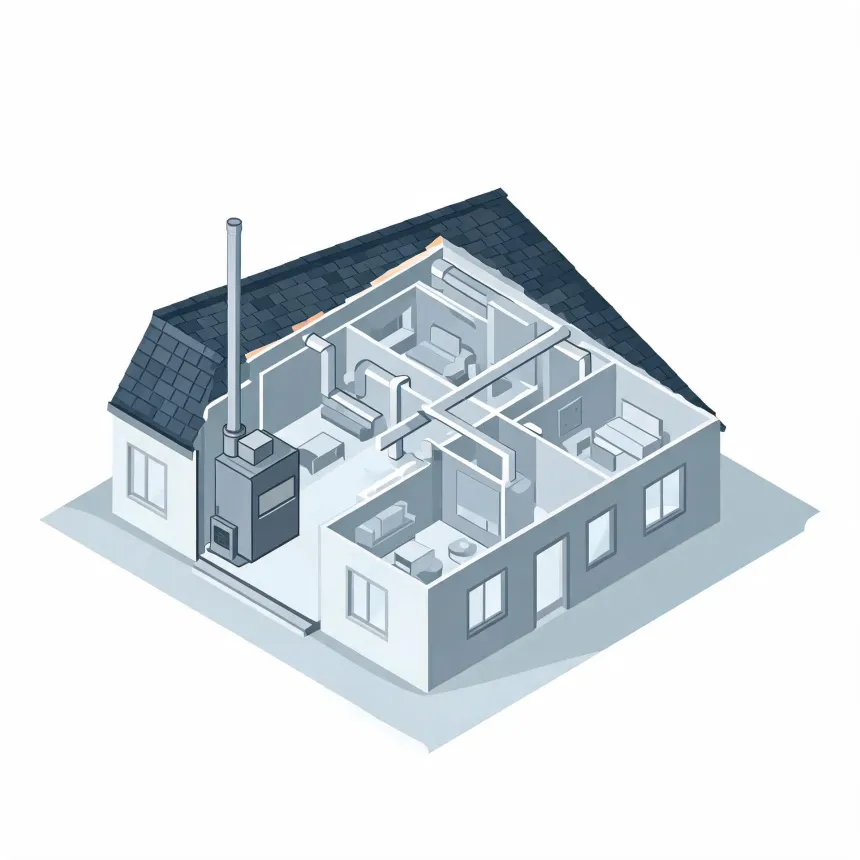
Isometric cutaway illustration of a single-story house showing interior rooms, ductwork, and a dark furnace unit with a tall flue pipe rising past the shingled roof.
Your furnace works hardest from November through March.

NOAA nClimDiv, 1991–2020 normals

Furnaces in Easton start working in October.

If a part was already weak, that first cold snap is when it gives out.

Maryland electricity runs $52.34 per million Btu, so a furnace that needs a repair costs you more here than it would elsewhere

Heat runs October through April
Winter nights average 29°F
Climate zone 4A

Half the homes in Talbot County were built in 1983 or later. If yours is one of them, your furnace hasn't been fighting an old, leaky duct system or a unit that's been patched together for decades. A newer furnace that's acting up usually has a specific, fixable problem behind it, a failed igniter, a dirty flame sensor, a clogged filter choking airflow. That's worth repairing. The system underneath the symptom still has years in it, so the question is what broke, not whether the whole thing is done.

Every month it runs wrong, it runs up your bill

A furnace that's short-cycling or running long still pulls power at Maryland's rate the whole time it does it. Getting the actual part diagnosed and fixed stops that cost where it starts.

Find a contractor
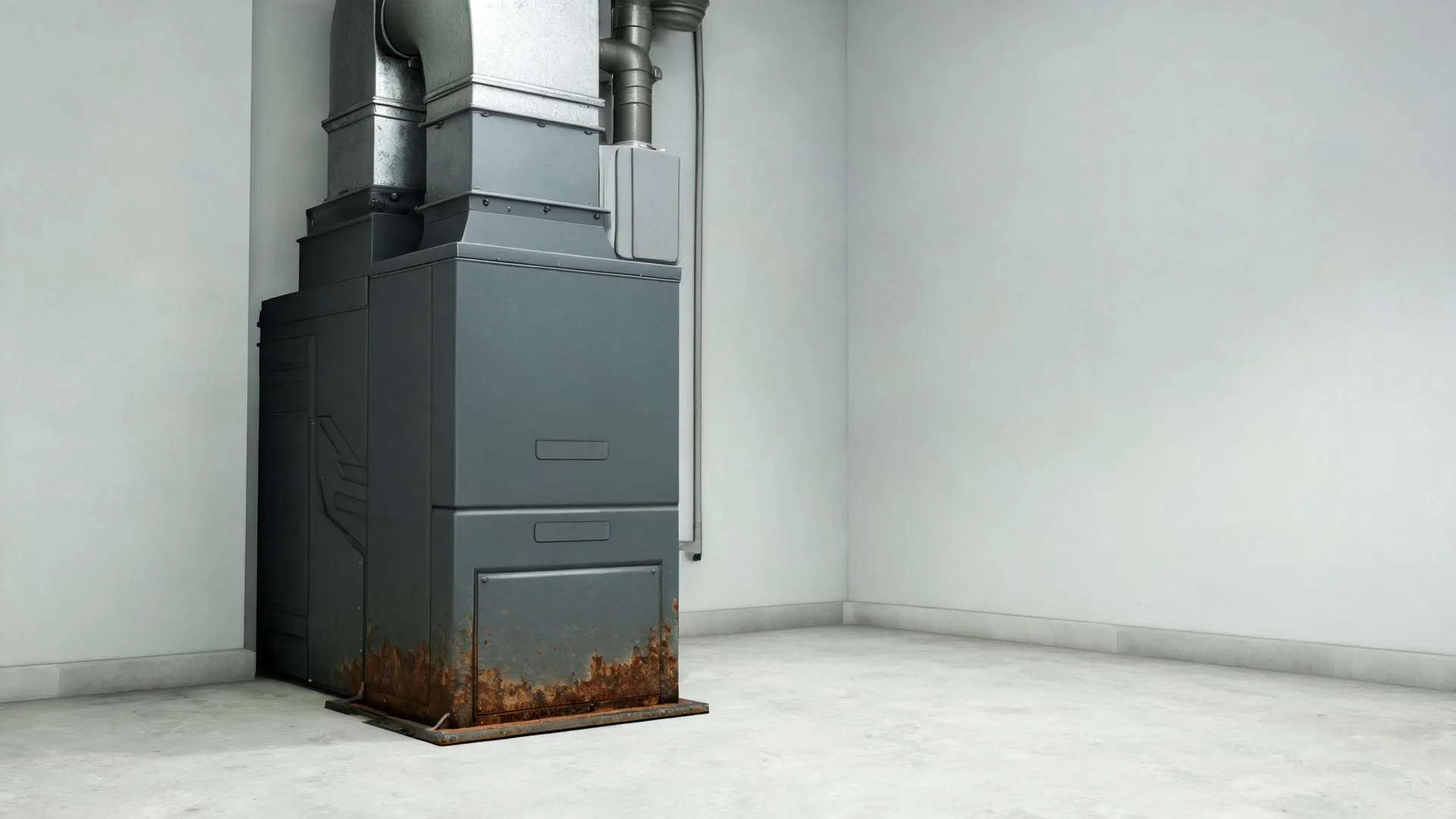
A gray high-efficiency gas furnace installed in an unfinished basement, surrounded by gas lines, a condensate drain, and sheet-metal ductwork.

Built recently, worth fixing now

A furnace that came in with the house in the last few decades hasn't put in the years that justify a replacement call. Get the part that failed named and swapped. That's the repair this age of system is supposed to get.

Check the thermostat and the filter first

Make sure the thermostat is set to heat and the set point is above room temperature, and swap the battery if it takes one. Then look at the filter. If you can't see light through it, airflow is choked enough to cause overheating, short cycling, or a furnace that blows cool air. Both take a minute and rule out the most common false alarms.

Check the breaker and the switch before you call

Furnaces run on both gas and electricity, so a tripped breaker will shut the whole thing down even though the problem looks like a gas issue. There's also a power switch on or near the unit, often mounted to look like a light switch, that gets bumped off by accident. Check both before assuming the furnace itself has failed.

Past the filter and the switches, most furnace failures come down to a handful of parts. The igniter is the one that goes most often. It glows to light the gas, and it's built to eventually burn out the way a bulb does, usually without warning. The flame sensor sits right next to the flame and tells the furnace it's actually burning. A film builds up on it over time, and once it can't sense the flame, the furnace shuts itself off as a safety measure, sometimes right after startup. The draft inducer motor pulls exhaust out before the burners light, and if it's slow or seized the furnace won't fire at all. Any of these can fail on a furnace that's otherwise in good shape. None of them mean the furnace is done.

A diagnostic visit starts with the tech watching the furnace try to run, not taking it apart first. They check the thermostat call, confirm the furnace is getting power and gas, and watch the sequence from there. Does the inducer motor start. Does the igniter glow. Does the flame catch and hold. Where it stalls in that sequence points straight at the failed part. If the furnace fires but shuts off a minute later, the flame sensor usually gets checked and cleaned before anything gets replaced. If it never tries to light at all, the tech looks at the control board, the switch, and power to the unit before touching the burners. A good diagnosis ends with the failed part named, not a guess at a list of things that might be wrong.