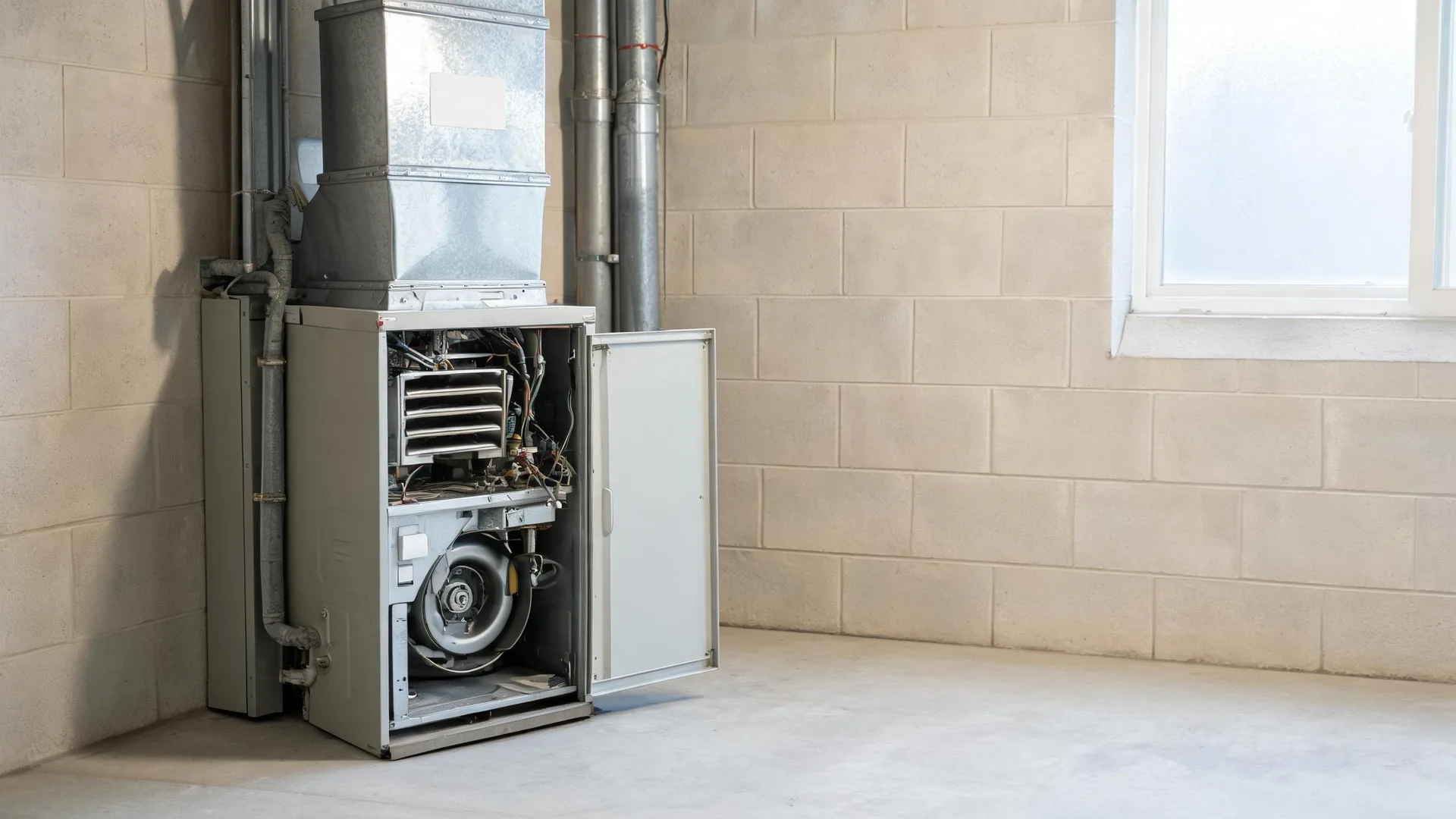
Your furnace earns its keep here
Furnaces in Dundalk run from October through April. Overnight lows average 26°F in December, January and February. That is a normal winter workload for a furnace, not an extreme one.
Takes about a minute. No obligation.
Furnaces in Dundalk run from October through April. Overnight lows average 26°F in December, January and February. That is a normal winter workload for a furnace, not an extreme one.
A furnace that runs seven months a year wears the same parts any furnace wears. The igniter weakens. The flame sensor coats over. The blower motor ages out. When one of these acts up, the fix is almost always a known one, not a mystery to chase down.
NOAA nClimDiv, 1991–2020 normals
Furnaces in Dundalk switch on in October, after sitting unused since spring.
A weak igniter or a tired blower motor often shows the strain in that first month back on.




A furnace with a problem tends to get worse the more it runs, not better. A flame sensor coated with residue lets the burner shut off and relight over and over, and each restart puts more strain on the igniter. A dirty filter starves the blower for air, so the heat exchanger runs hotter than it was built to, and metal that keeps overheating is more likely to crack. A blower motor that's starting to fail draws more current trying to keep up, and that extra strain is what burns a motor out for good. None of these settle down on their own. A furnace showing one of these signs is telling you something, and it is worth having someone look before the next cold snap asks more of it.
Nothing about this area is especially hard on it. It's most likely the usual problem with the usual fix.
Find a contractorA few checks take little time and rule out the easy stuff before anyone comes out. Start at the thermostat. Make sure it's set to heat, not just fan, and that the set temperature is actually above room temperature. If it runs on batteries, swap them. Next, pull the filter and hold it up to a light. If light doesn't come through, that's enough to choke the blower and shut the whole system down on purpose. Check the breaker panel for anything tripped, and look near the furnace for a switch that resembles a light switch. That's usually a service shutoff, and it's an easy thing to bump without noticing. Outside, look at the vent hood or flue. If snow, a nest or debris is blocking it, the furnace may be shutting itself off as a safety measure rather than failing outright. None of this tells you what's wrong inside the unit, but if the cause is one of these, it's worth ruling out first.
An igniter has a limited number of times it can heat up and cool down before it cracks. A capacitor that starts a motor weakens a little with every cycle until the motor can't start on its own. A flame sensor builds up a thin coating from normal combustion until it can no longer sense the flame. None of this comes from a defect. It's what happens to parts that turn on and off thousands of times over years of use.
A furnace that can't move enough air runs into trouble fast. A clogged filter, a blocked return, or a duct that's come loose all starve the system the same way. The blower works harder to compensate, the heat exchanger runs hotter than it should, and a safety switch may shut the whole thing down before anything gets damaged. Restoring airflow is often the actual fix, even when the symptom looks like something else.
Estimates for a typical Baltimore County home, compared with an older unit built to the previous federal minimum, from EIA household energy data, Maryland fuel prices and NOAA climate normals. Your home will differ.
Repair makes sense when one part has failed and the heat exchanger is sound.
Replacement makes sense when the heat exchanger is cracked or the furnace keeps needing parts.
A diagnostic visit starts before any panel comes off. A tech asks what the furnace was doing right before it quit, since a system that short cycles points somewhere different than one that won't fire at all. Then the covers come off and the tech watches it try to run, because a lot of failures only show themselves mid-cycle. The igniter gets checked for a steady glow, the flame sensor gets pulled and looked at, and the blower gets watched for how hard it's working to move air. Readings on the control board can point to a part that's failing before it fails completely. The goal isn't just to get it running again for the visit. It's to find the part that's actually wearing out, so the fix holds.